Your cart
There are no more items in your cart





In September 2012, at the Eurobike trade fair in Germany, Etxeondo executives received an unexpected visit.
“Tom Davies, sponsorship manager at Giant — one of the world’s leading bike manufacturers — came up to us and said, just like that: ‘You’re going to make the kit for Team Rabobank next season,’” Paco recalls.
Giant supplied bikes to the Dutch Rabobank team. But Paco Rodrigo had heard nothing about Etxeondo supplying the team’s clothing.
“I was stunned. I said, ‘This is going to cost you a fortune…’ He replied, ‘Don’t worry. It doesn’t matter what it costs. It’s done.’ Giant had just appointed Stan Mavis as CEO, and he had convinced Rabobank that the best clothing was Etxeondo’s.”
The men’s Rabobank team was among the big hitters of the pro peloton, with riders such as Bauke Mollema, Steven Kruijswijk, Wilco Kelderman, Michael Matthews, Juanma Garate and Luis León Sánchez on their books. The Rabobank Liv Giant women’s team was the best in the world, with Marianne Vos, Annemiek van Vleuten, Pauline Ferrand-Prévot and Lucinda Brand.
By then, Etxeondo’s strategy for gaining visibility no longer focused solely on dressing the very best professional teams, as it had in the 1980s and 1990s. Racing was becoming just part of a much larger puzzle. More and more people saw the bike as a means of tourism, leisure, travel, health and wellbeing. Etxeondo was already working in those areas. But Rabobank opened other doors — to a much wider world.
Paco Rodrigo was convinced Etxeondo had to succeed abroad too. So he asked Paul Santen, a Dutch expert working for a global sportswear giant, to examine the company from top to bottom.
“He came to check everything: the machines, the materials, the processes, our production capacity… We wanted to confirm whether we truly had the quality we thought and the capacity to manufacture everything that would be asked of us. It was very useful. After many successful years at home, there’s always the risk you start believing you’re very handsome. It’s good to have someone from outside look at you and tell you whether you really are — or not quite.”
Countries with the strongest cycling traditions — France, Italy, Spain, Belgium, the Netherlands — each had their own dominant local brands, but few crossed borders. In the 21st century markets internationalised rapidly, and Etxeondo wanted a piece of the action. Sales grew in the Netherlands and Belgium; they also made ground in Germany and France; gradually they expanded into around thirty countries across three continents.
“Supplying Rabobank gave us an international stamp of prestige,” says Patxi. “We’re a Basque brand; until then we’d made kit for teams from our own part of the world. But we proved we had the quality to do well anywhere.”
In September 2012 they agreed Etxeondo would make Rabobank’s race clothing for the 2013 season. They designed and manufactured the kit… and in mid-October Rabobank announced it would stop sponsoring the men’s team, following the United States Anti-Doping Agency report on Lance Armstrong’s doping programme and the scandals of previous years. Rabobank would continue paying, as required by contract, until a replacement sponsor was found — but it did not want the team to bear its name or colours.
“We had the entire Rabobank kit ready… and suddenly we had to start all over again.”
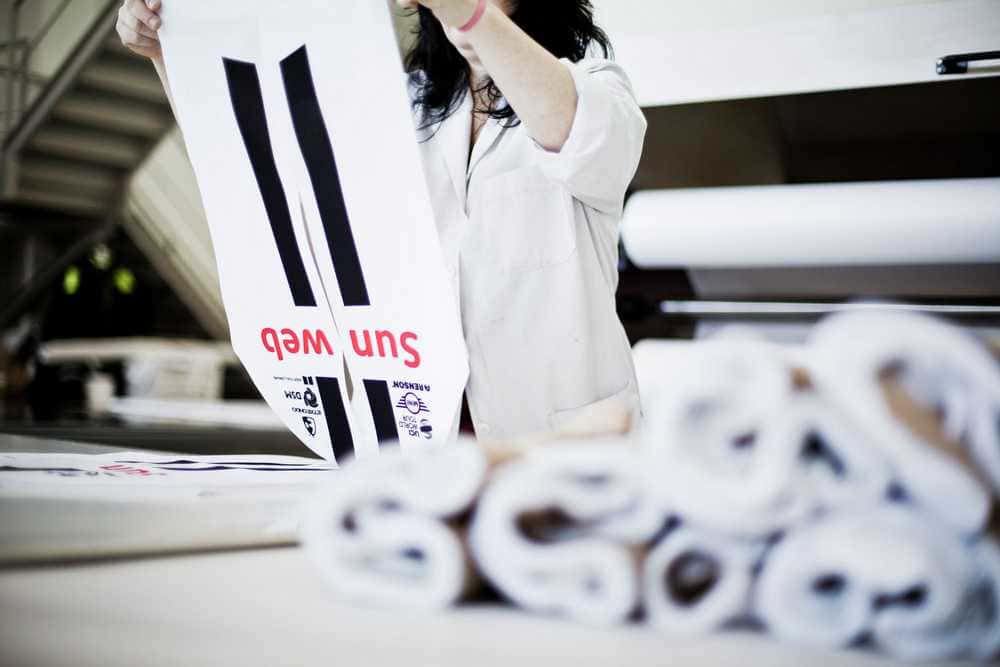
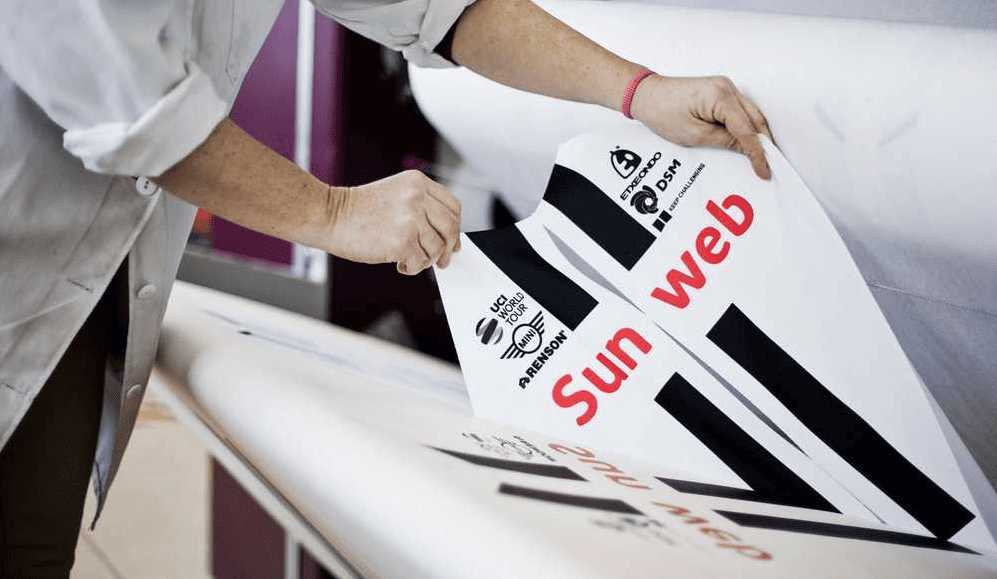
They designed a jersey with black, white and blue vertical stripes and the same three colours around the cuffs. The space on the torso usually reserved for the main sponsor’s logo was occupied by a word, a name, reflecting Rabobank’s wishes to remain invisible: Blanco, literally “white” or “blank”. It was one of the most unusual jerseys in cycling sponsorship history.
“Not only that, but halfway through 2013 they found a new sponsor: Belkin, an American company that makes phone and electronic accessories,” Paco says. “There were only two weeks before the Tour and we had to design yet another kit in double quick time. They were very clean, very beautiful jerseys, with green, white and black horizontal stripes.”
Between Rabobank, Blanco, Belkin and the Rabobank Liv women’s team, Etxeondo produced four different kits in eight months.
THE RISE OF DUMOULIN
In 2013, executives from the Dutch team Argos-Shimano travelled to Ormaiztegi (Gipuzkoa) to purchase a team bus from Irizar. At Irizar they were told that just around the corner they could also find the best cycling clothing — at Etxeondo.
“They came to meet us, told us about their project, and we really liked it,” says Paco. “It was a mid-level WorldTour team with an ambitious growth plan and clear ideas. They were very innovative. We’ve always liked that kind of project — getting involved from the ground up and growing together, as we had with Reynolds, Orbea, Caja Rural, Clas, Once, Euskaltel… We recommended the project to Giant.”
And so Giant-Shimano was born in 2014, a Dutch team backed by the Gipuzkoan companies Irizar and Etxeondo. Its talisman was German sprinter Marcel Kittel, winner of three Tour stages in 2013. There were also promising youngsters like French climber Warren Barguil and German classics specialist John Degenkolb. And a 22-year-old Dutchman who was yet to score a pro win: Tom Dumoulin.
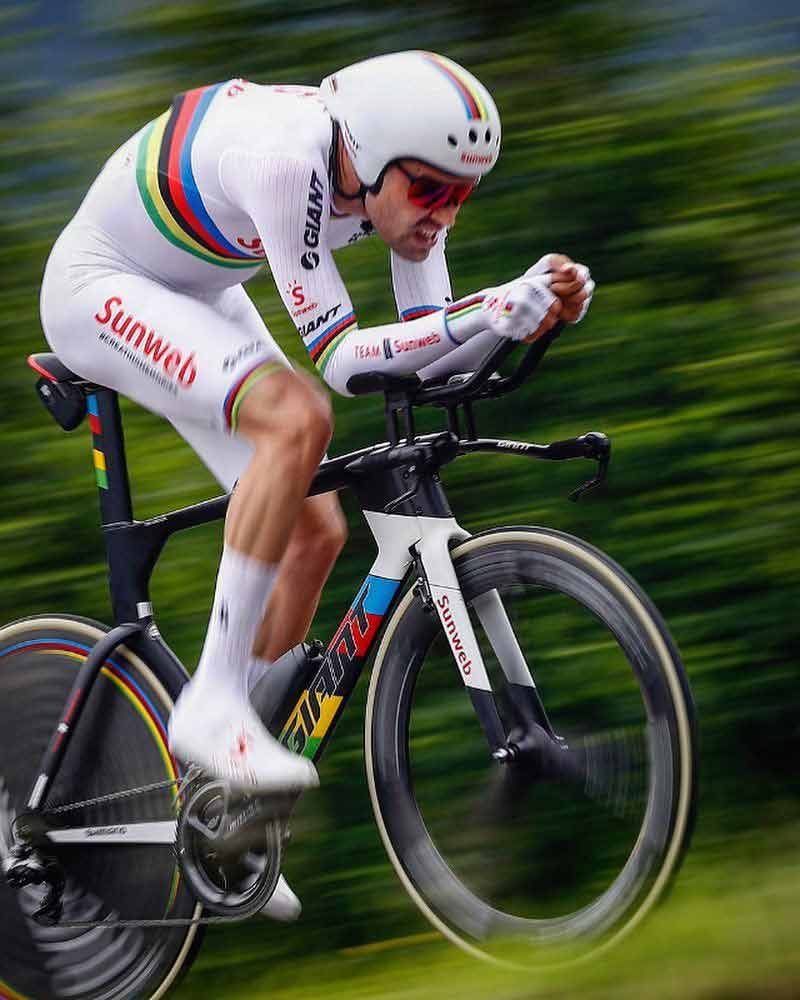
“They didn’t have the biggest budget, so they squeezed the maximum out of everything. They were extremely well prepared in every area — engineers, tacticians, meticulous coaches focused on bikes, nutrition, training… and they demanded a lot from Etxeondo with the clothing too. That was great for us. We developed very special technical pieces with them, like the Dyneema bib shorts.”
These were anti-crash shorts — as elastic and comfortable as any others, but incorporating an extremely resistant fibre that protected riders from cuts and abrasions. They won the award for best garment at Eurobike 2015 and, above all, were appreciated by the riders. Barguil crashed in the Tour de France and shredded the skin on his arms, but his thighs were untouched. Hence, in the next few stages, the cuts didn’t affect his performance.
“I loved that team,” Patxi continues, “because you could see how they paid attention to every detail and tried to outsmart the bigger teams. I remember how they set up the lead-outs for Kittel — that’s how he won so many Tour stages… Or the two stages and mountains jersey Barguil won in 2017… In the Classics there were much stronger, more established teams, but Degenkolb shows up and wins Milan-San Remo and Paris-Roubaix in the same season. Only Sean Kelly had ever done that before, in 1986 — and he was also wearing an Etxeondo jersey, with Kas.”
Of Mathieu van der Poel achieving the same double in 2025, Paco says with a rueful smile, “That ruined our exclusivity.”
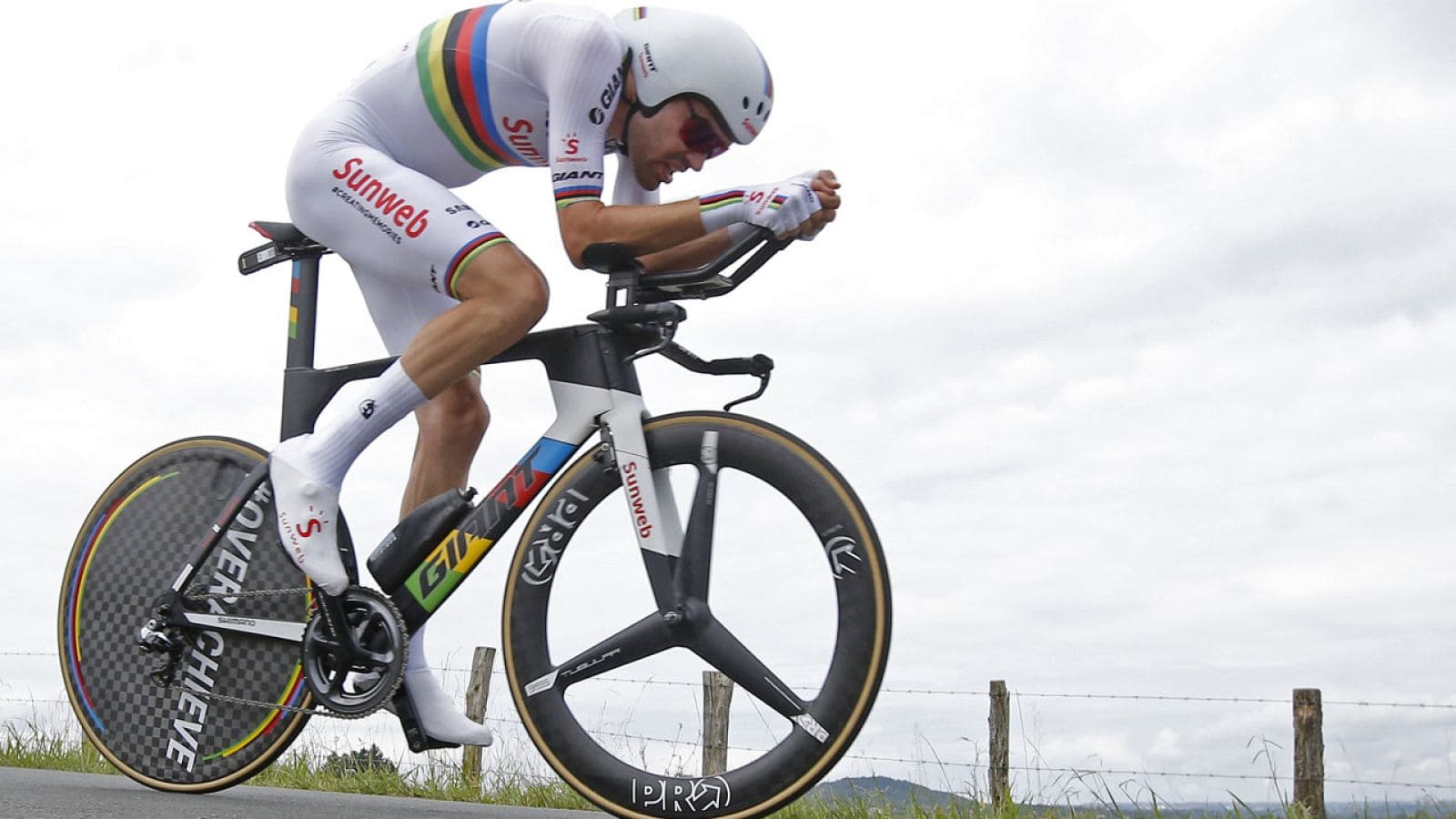
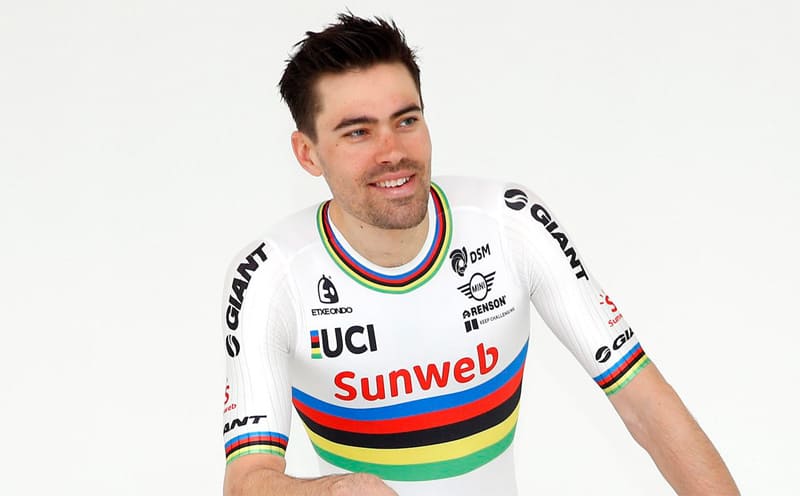
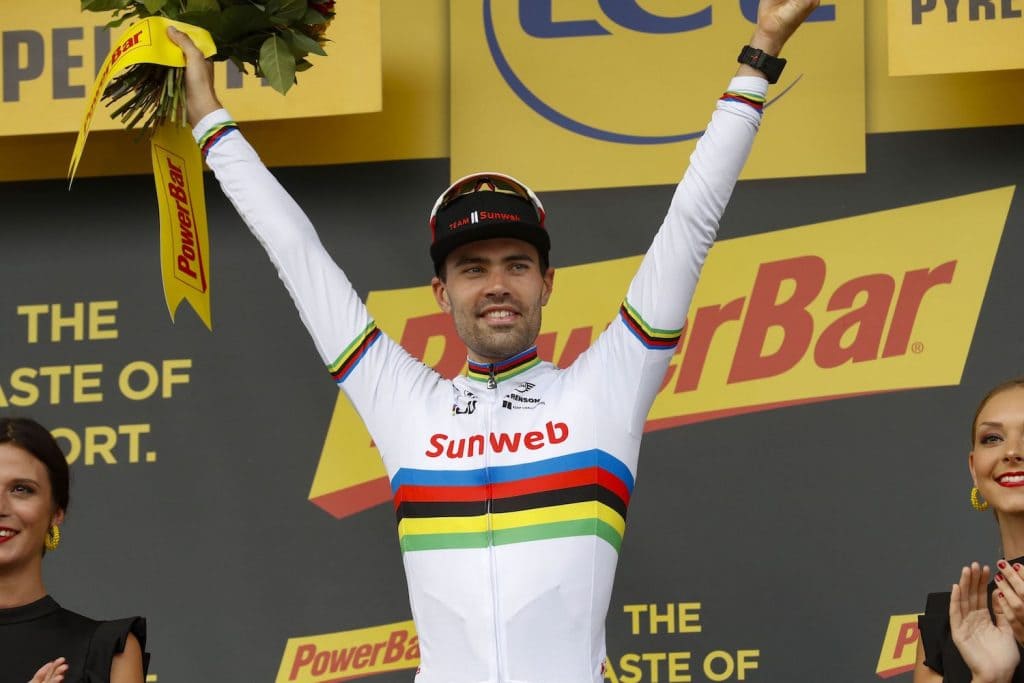
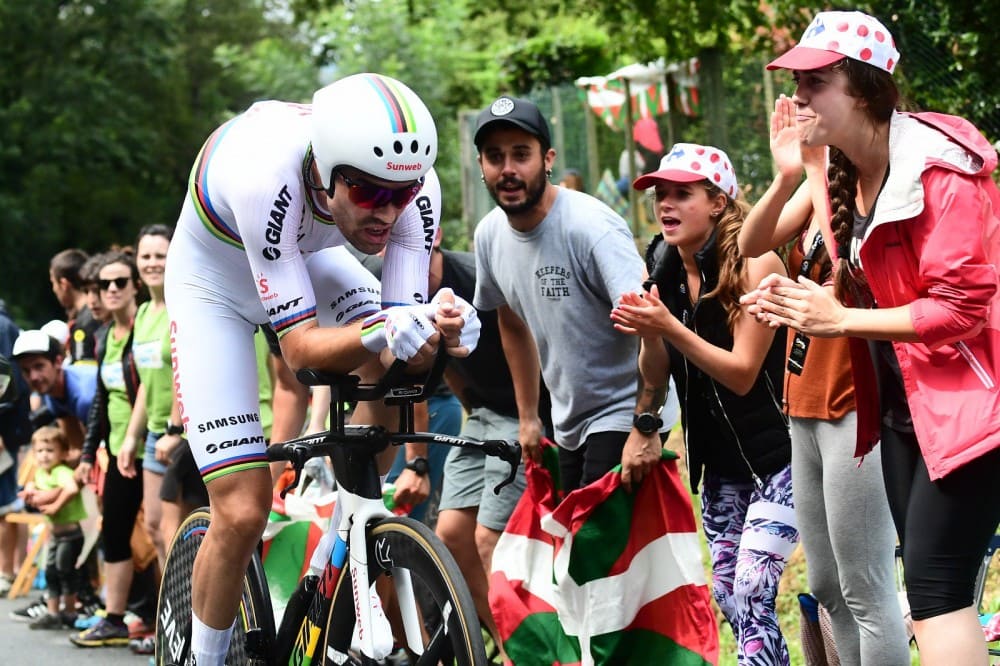
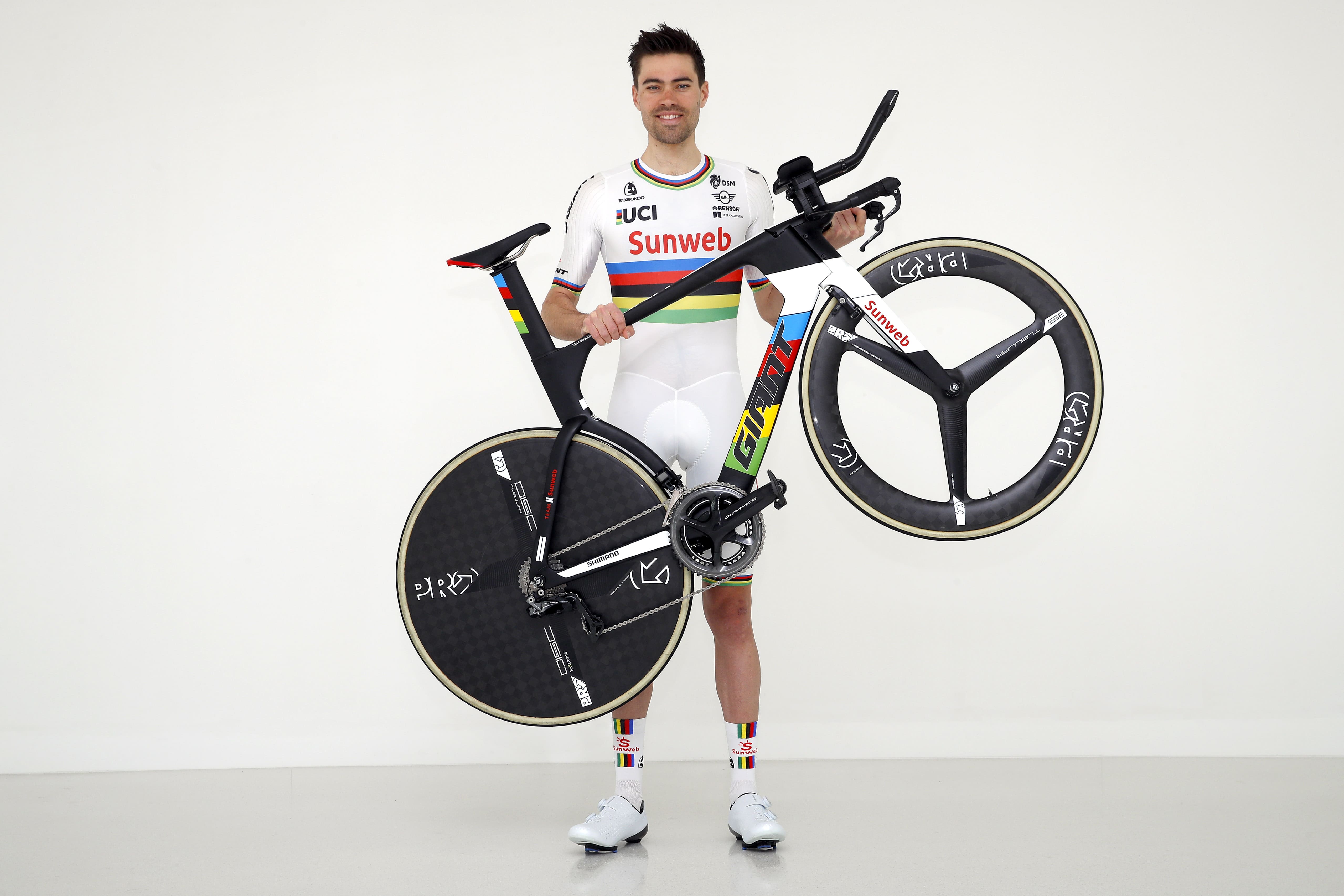
With this team — Giant-Alpecin and Sunweb-Giant in its later iterations, with what became the trademark black-and-white kit — Tom Dumoulin would eventually establish himself as the best Dutch Grand Tour rider of the 21st century. He was tall, powerful, outstanding in time trials and remarkably resilient in the mountains, well capable of limiting his losses to pure climbers in the high mountains. In 2015 he came close to winning the Vuelta a España, losing the lead on the penultimate stage; in 2016 he won the Giro prologue and two Tour stages; and in 2017 he won the Giro in unforgettable fashion, famously stopping during a decisive Alpine stage for a “nature break” in a field adjacent to the race route and losing sight of his rivals before chasing back over the fearsome Umbrailpass. He eventually conceded just two minutes and held on to the pink jersey by the narrowest margin. With his final overall victory in Milan, Etxeondo completed the triple crown of Vuelta, Giro and Tour wins.
Then came 2018, when Dumoulin set his sights on an improbable Giro-Tour double. In the Giro, only Chris Froome’s extraordinary long-range attack over the Colle delle Finestre to the Jafferau denied him a second victory in a row. He finished the race as runner-up, less than a minute adrift of Froome.
“In the half-century Etxeondo has been in cycling, Dumoulin has given me some of the highest highs and lowest lows,” says Paco. “He’s such a good person — friendly, always trying to be polite. He’s all heart. And he was a fabulous rider who could have built one of the greatest palmarès in history — that’s my great regret. If he’d had stronger domestiques, like the big teams did, he would have won the Vuelta in 2015, the second Giro in 2018, and maybe even the Tour that same year.”