Sign in

The Rider Who Kept Pedaling For 50 Hours

by Ander Izagirre 

El ciclista que pedaleaba 50 horas seguidas

por Ander Izagirre 

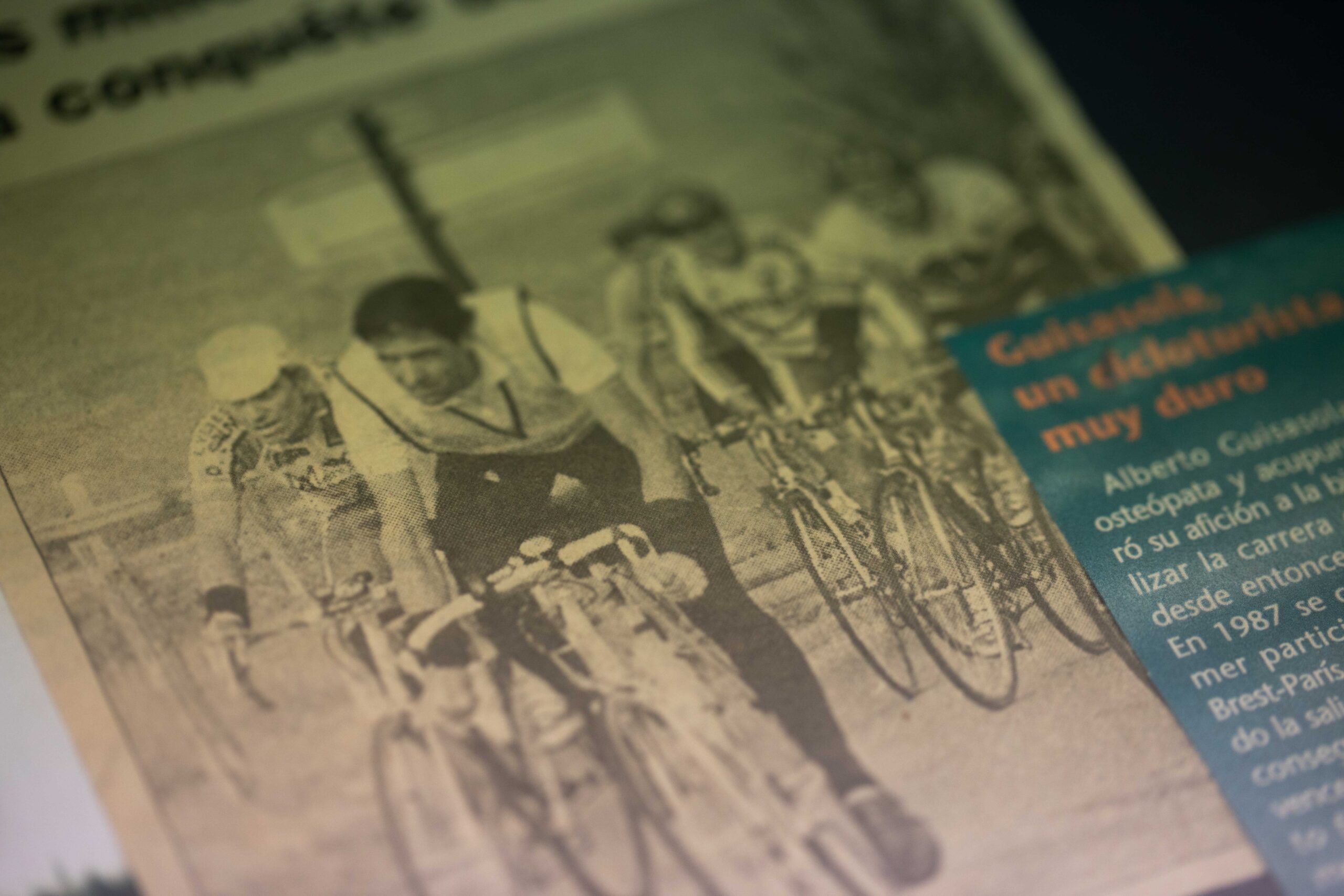
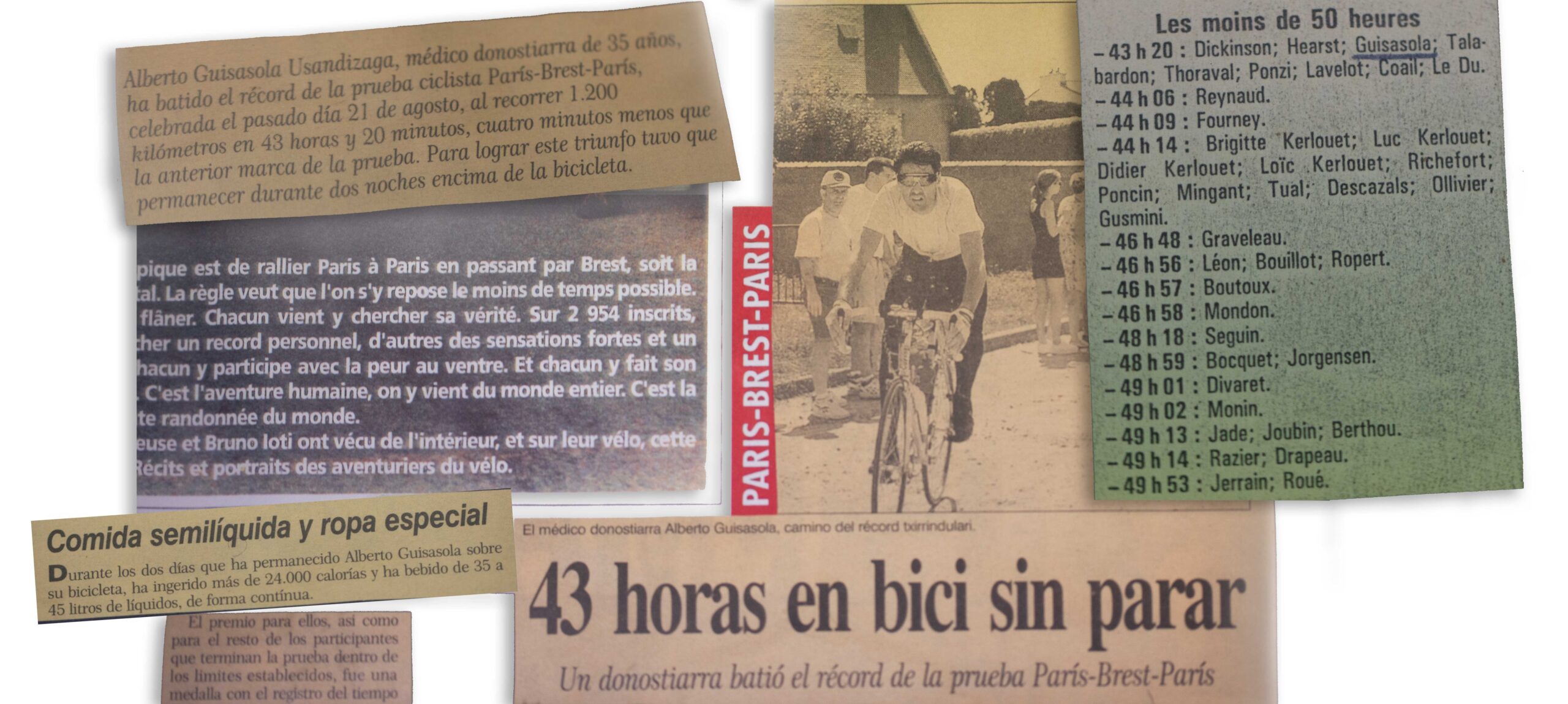
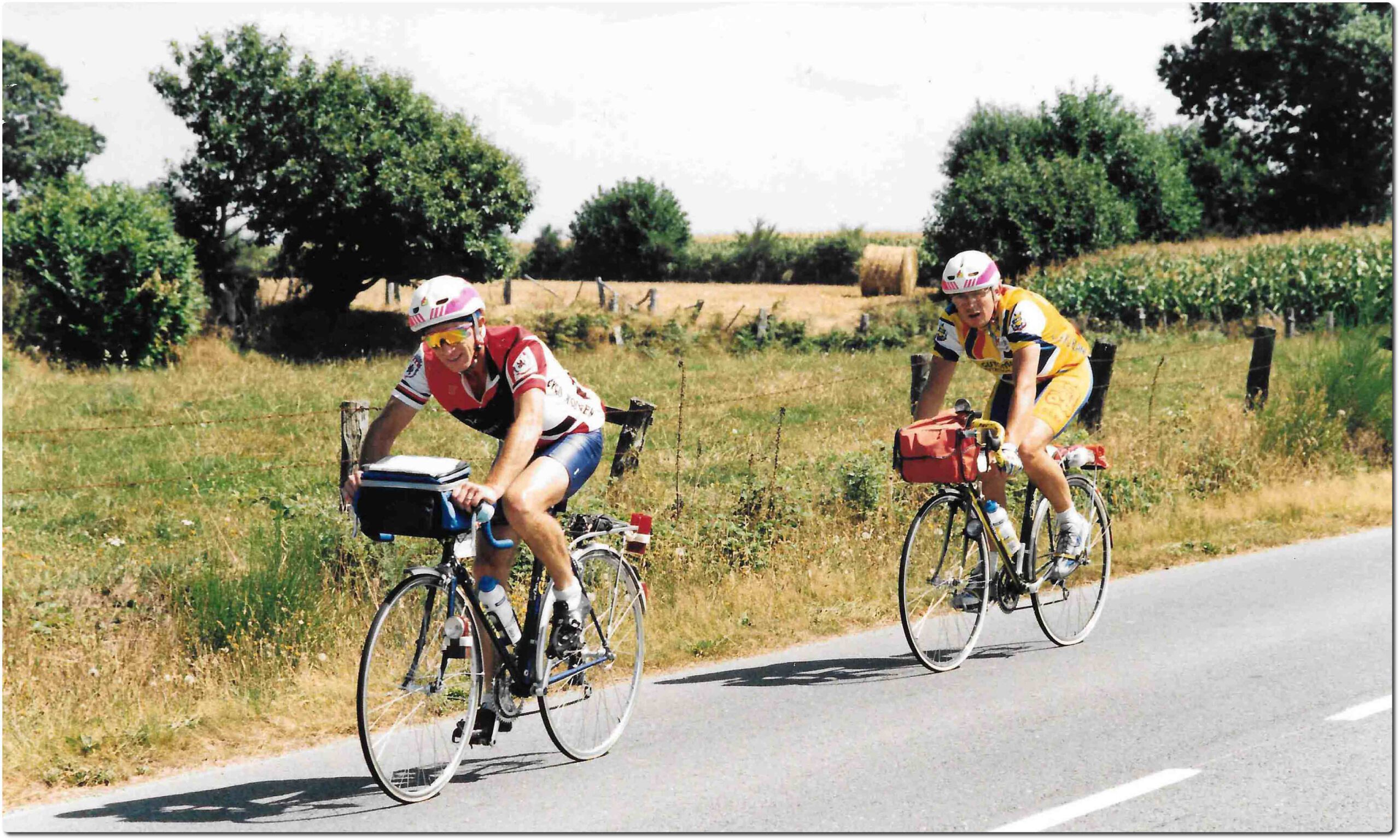
In the 1990s, a little-known cyclist wore Etxeondo’s most advanced garments even before the professionals did: Alberto Guisasola, a doctor from San Sebastián with a passion for ultra-distance events like the 1,245-kilometre Paris–Brest–Paris. In 1995, with eight other riders, he set a record in the event: 43 hours and 20 minutes. He wore the same pair of bib shorts throughout. 

Guisasola developed a passion for riding long distances early in life. At age thirteen or fourteen, even before riding his first age-group races, he’d set off on his bike at dawn, ride 160 or 180 kilometres, and return home at dusk.

“I’d head into the French Basque Country and ride on roads I didn’t know, eat whatever I found along the way, discover new places… I always liked going a bit further, pushing the boundaries. There’s always something further on, calling you.”

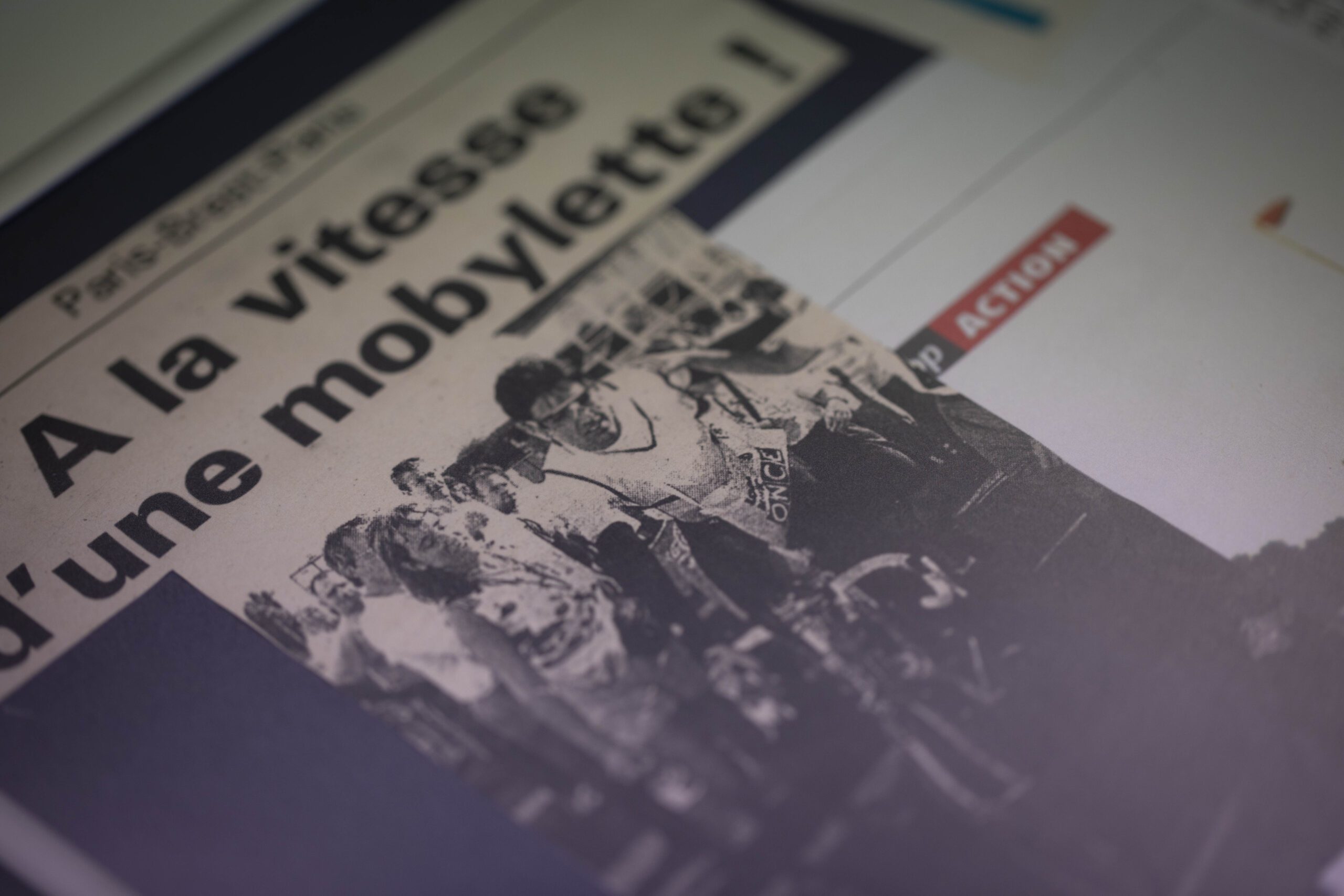
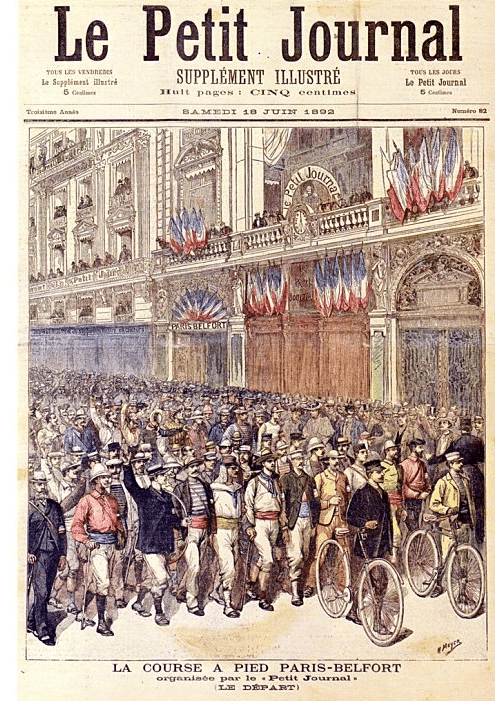
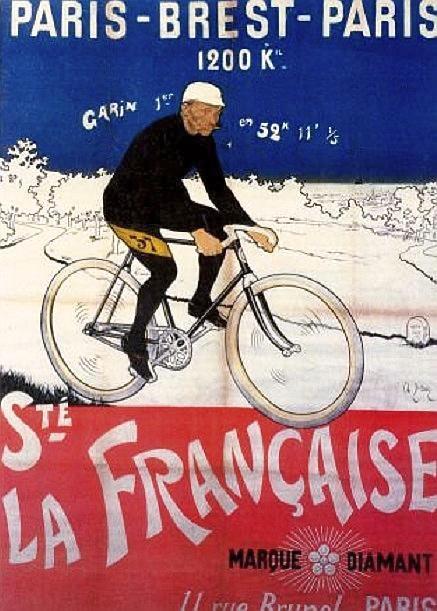
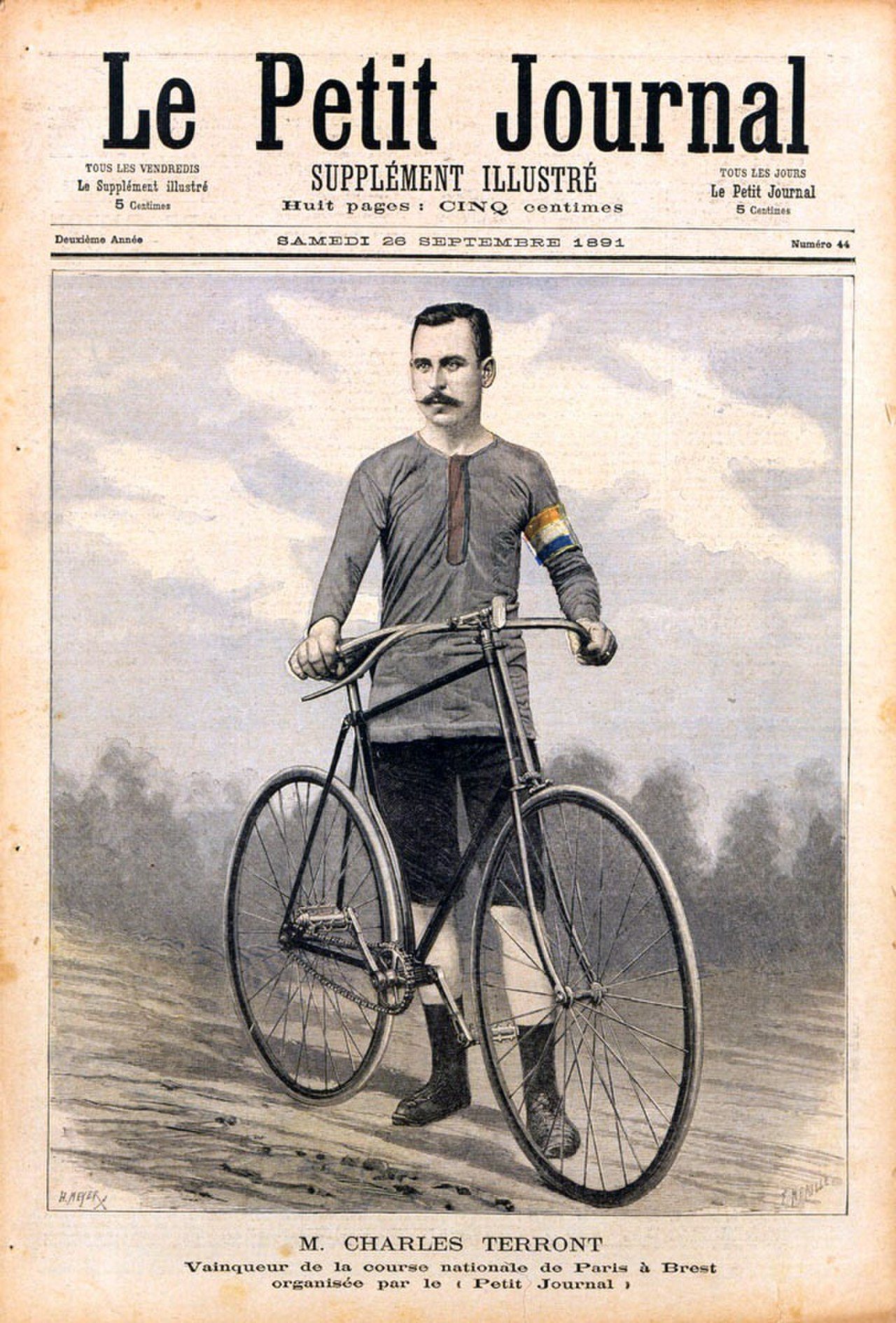
Guisasola raced as an Under 16 and Under 18 but learned that ultra-endurance rides were where he could excel. In 1987 he signed up for the so-called brevets: the certified 200, 300, 400 and 600-kilometre rides a cyclist must complete within a maximum time to register for the legendary Paris–Brest–Paris. The event was born as a professional race in 1891 and was considered so gruelling and exceptional that it could be organised and contested only once a decade. The 1901 edition was won by Maurice Garin, who would become the first winner of the Tour de France in 1903. In the mid-twentieth century it became a randonnée (“outing” or “excursion”) and is now held every four years. Some participants aim simply to finish within the ninety-hour time limit, sleeping a little along the way. Others barely even stop at the feed stations, treating it like a time-trial. 

Guisasola lined up for the 1987 edition, felt good straight away and was immediately dropping riders. Soon, though, he paid the price for his inexperience. “At night I got lost a couple of times. I went fifteen kilometres down the wrong road and fifteen back. Back then the rules required us to carry mudguards and a dynamo headlight that rubbed against the tyre to generate light at night — it made you visible, but it didn’t put out much light. We were always on minor roads with hundreds of junctions, and it was easy to get lost. There were some arrows, but sometimes some bastard would turn them around and send us off in the wrong direction…”

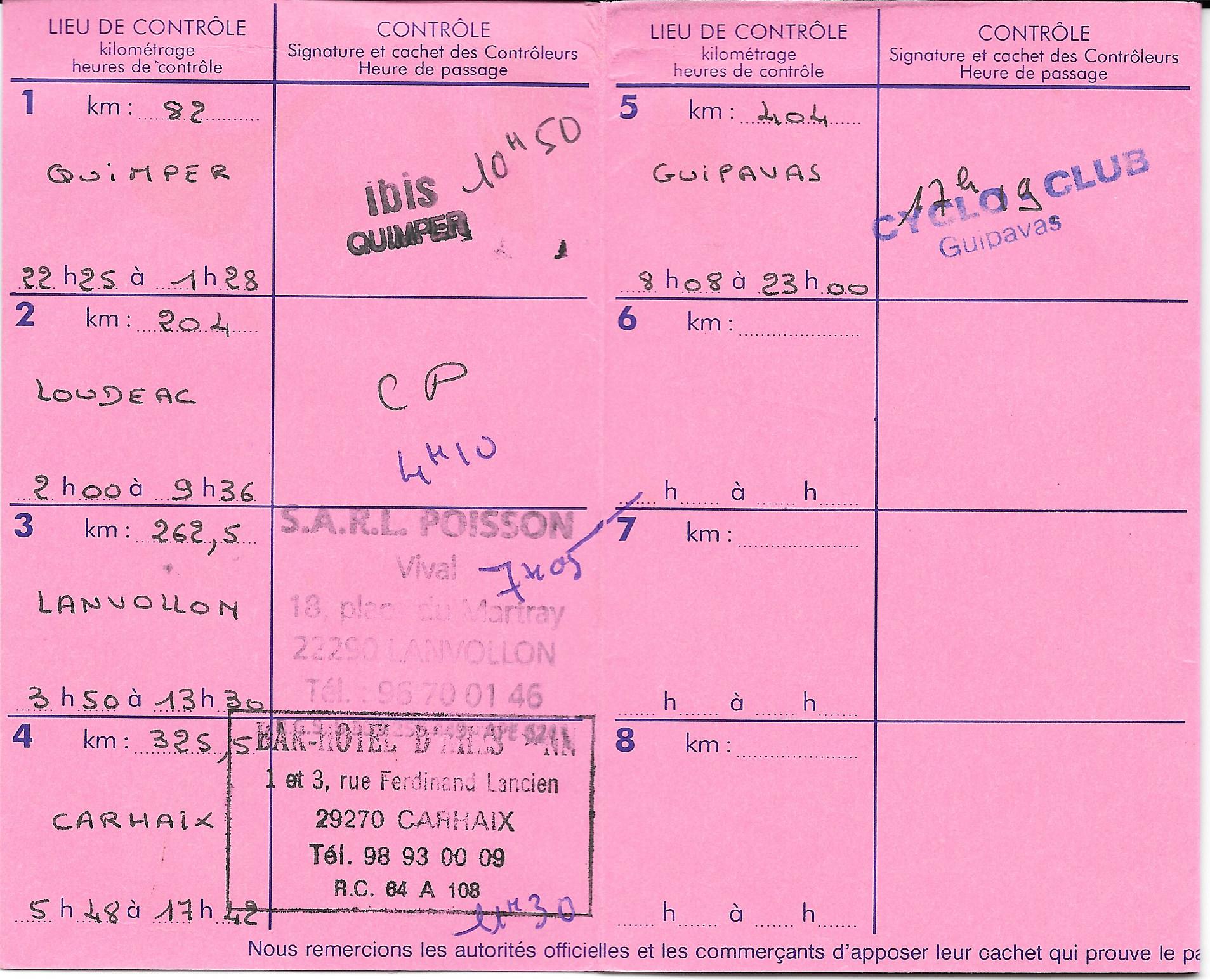
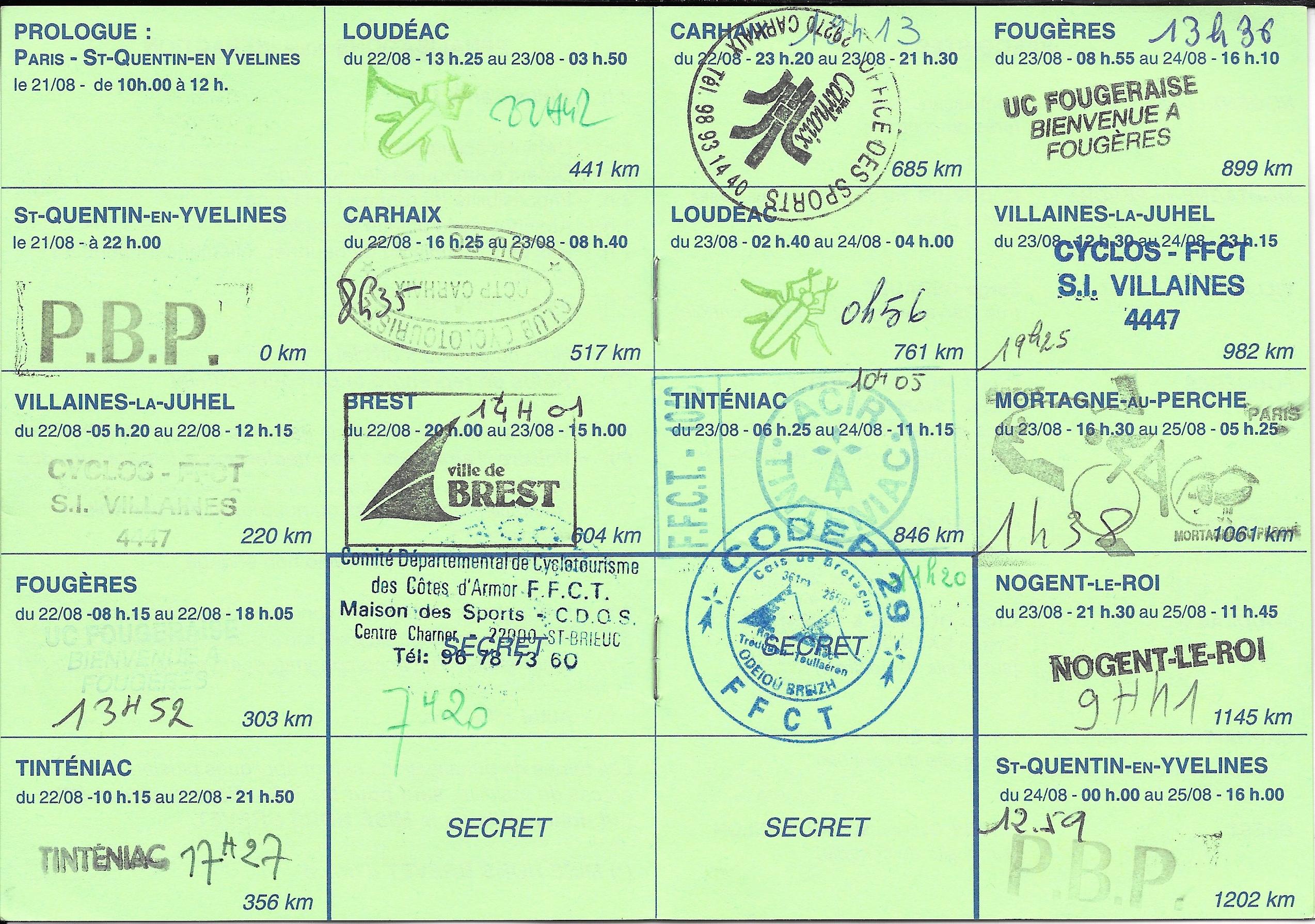
Every ninety or hundred kilometres, riders came to checkpoints in towns that were also their mental punctuation marks. Only at checkpoints could they receive food, drink and clothing from their support cars, which had to travel by different roads between those points. With two hundred kilometres to go, Guisasola’s support team told him that the American Scott Dickson — one of the few riders who had previously gone under the 50-hour barrier considered by many to be the event’s gold standard — was closing in. Dickson had started six hours behind Guisasola, in the fastest group.

“I was riding with a French guy. We decided to ease off a little to wait for Dickson. We saw a light in the distance and there he was, hammering along in some enormous gear — I don’t know, a 53x12 or something like that. He climbed the small hills seated, in the big ring. He asked us to take turns with him because he wanted to drop De Munck, the Belgian who held the best time up to then and who was close behind. We helped him and we were the first into Paris: Dickson broke the record in 44 hours and one minute; the Frenchman and I did 50 hours and one minute.”

Guisasola was frustrated, having missed the mythical fifty-hour mark by a minute. But the experience stood him in good stead for later editions. He now knew the terrain, how to train, what and when to eat and drink. 

“And the psychological side, which is crucial. You go through very hard moments — fatigue, boredom — you feel like throwing the bike away. But you learn that if you hold on for half an hour, the body turns things around, switches on and goes even better. Your physiology adapts. It’s remarkable.”

It’s the norm among racers to sleep at least a little on the second night, but Guisasola never did in his three appearances. 

“On the second night without sleep you enter another dimension. You don’t see the road properly, you start seeing things, your eyes start playing tricks… There was a moment when I kept crouching in the dark because I thought I had to pass under some kind of bridge that didn’t actually exist. A lot of riders fall asleep and end up in the ditch. You can’t train for that, but you have to be prepared for the moment when it comes. You’re exhausted, it’s cold, your eyelids are drooping but you have to concentrate. And you have to maintain the pace, because speeds don’t drop during the night. When dawn breaks it’s incredible — it’s as though the light is charging your body’s battery. You get a surge and finish much stronger.”

Changes in temperature, rain and wind are also constant obstacles. That — and pedalling for so many hours in the same position — makes clothing a key consideration.

“In 1987 I started in a pair of Etxeondo bib shorts, ones I’d bought myself because they were the best. They already had seven thousand kilometres in them; I didn’t want to take the risk of wearing something new that might chafe. By the end the chamois was like cigarette paper, practically falling apart, but I had no discomfort at all.”

Guisasola had raced on the Insalus-Danena junior team, alongside Jokin Mujika, Valentín Dorronsoro and Modesto Urrutibeazkoa — riders who went on to race for Orbea as amateurs and professionals in the first cycling team kitted out by Etxeondo. This was also where he’d first come across Paco Rodrigo.

“When I finished my first Paris–Brest–Paris, Paco called me, delighted: ‘Alberto, come over to Etxeondo.’ We’re talking about when Etxeondo was still the farmhouse, mind you. ‘Come and I’ll give you some bib shorts. When you’ve ridden in them for this many kilometres and put them through this many washes, bring them back and we’ll see how they hold up.’ He tested things on me: instead of putting one layer of padding in the shorts he’d put two, or add an intermediate fabric to improve cushioning…”

For the next Paris–Brest–Paris, in 1991, Guisasola tested the Etxeondo bib shorts that the Banesto team would wear in that year’s Tour, the first one won by Induráin.

“They weren’t synthetic; back then they were still leather chamois. A very fine chamois, wonderful, but you had to look after it carefully. I didn’t use cream on them because if you clog the pores of the leather you take away its breathability. I washed them and let them dry slowly, never in the sun, so they wouldn’t stiffen. It was better to put them on slightly damp and massage them so the leather stayed supple.”

In such a long race, every item of clothing could potentially become the difference between success and failure. Guisasola fondly remembers the base layer that kept him warm without getting soaked with sweat, the overshoes that kept rain off his feet, and the first garments Etxeondo made with a Gore-Tex membrane, and which were somehow waterproof, breathable and windproof.

“Before that, when it rained we wore those transparent plastic capes and you’d just stew in your own sweat and get dehydrated.”

Guisasola got to wear Gore-Tex even before the ONCE riders.

“I was amazed, truly. María Jesús and Paco saw it as a chance to use me as a guinea pig in extreme conditions and they threw themselves into it. That was their spirit: to find the best solution to the most complicated problem. They made the garments to measure — the pattern, the cut, every detail. In 1991 they even opened the factory in August, during the holidays, to finish my Paris–Brest–Paris kit. I was amazed by their attention to detail. And I was just an amateur, a leisure rider…”

But surely it must also have been good publicity for them — a cyclist riding for two straight days and breaking the Paris–Brest–Paris record in Etxeondo clothing.

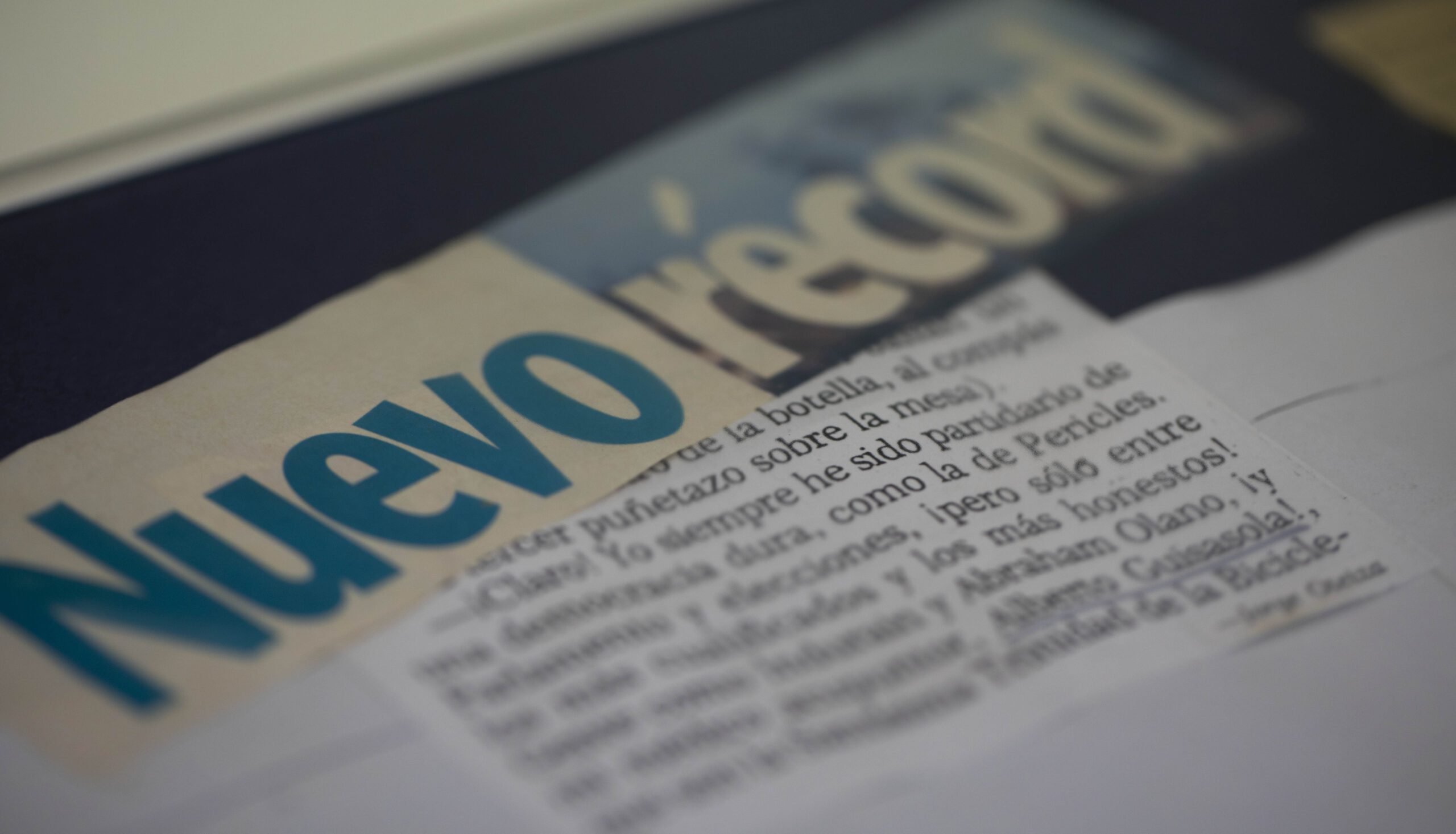
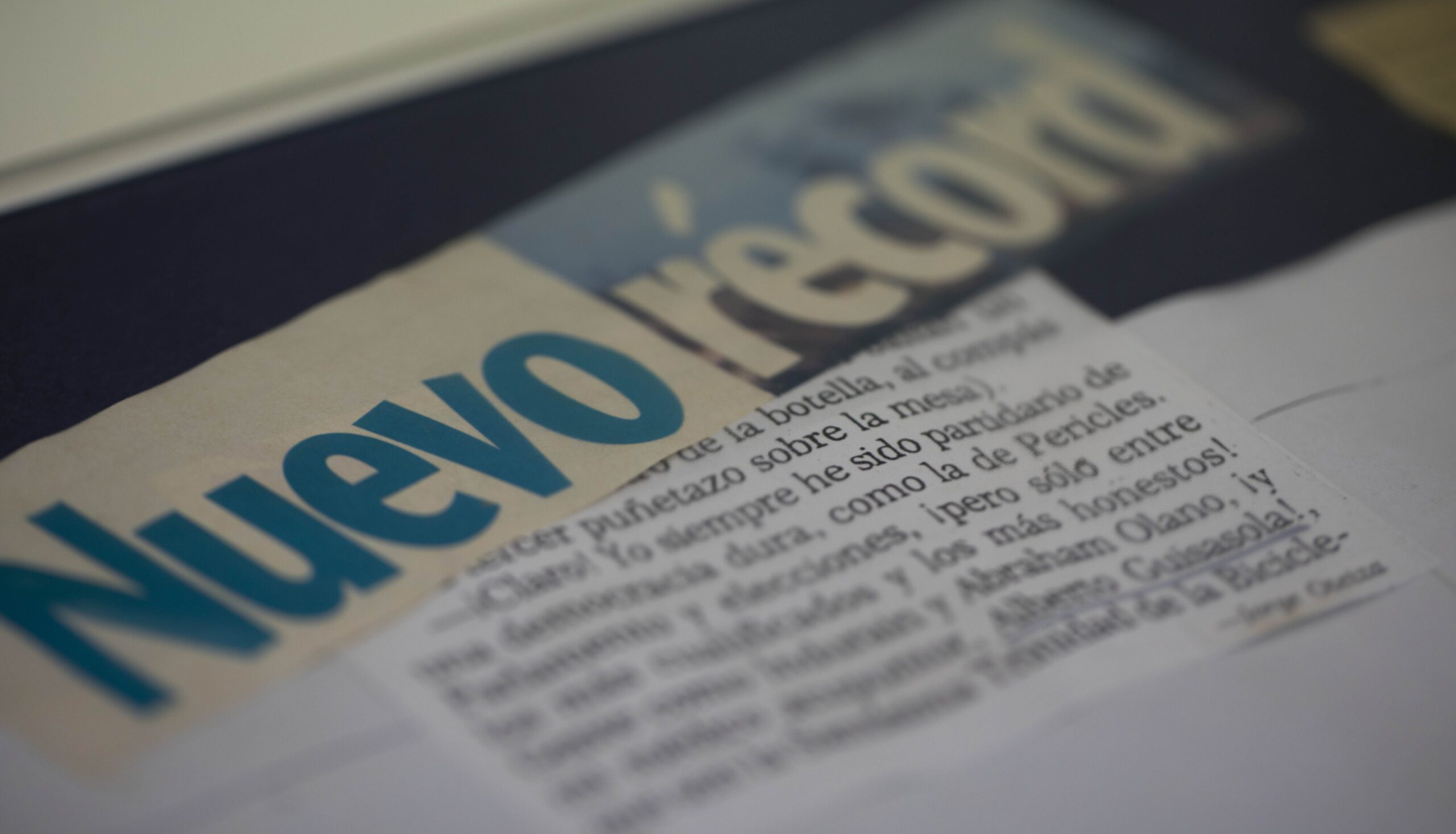
“Not at all,” Guisasola says emphatically. “I hardly appeared in the press. When I broke the record in 1995 I did interviews on radio, in newspapers, on television, but before that almost nothing — I brought Etxeondo no publicity at all. Paco didn’t care. He had Induráin, Perico, Kelly, the best teams in the world! What could I possibly add? What drove him was his curiosity, his desire to research and experiment.”

Guisasola recalls Paco Rodrigo’s determination to get him a high-visibility jersey for the night-time sessions.

“They didn’t make clothing like that then. Do you know what he did? He turned up with a tin of reflective paint, grabbed a brush and started painting parts of the jersey to see how it looked, how the fabric’s elasticity responded, what happened after washing… All those experiments energised him. And they motivated me: he committed himself so wholeheartedly that I had to deliver — I couldn’t abandon at the first sign of trouble.”

For his second participation, in 1991, Guisasola prepared meticulously. He carried on working in his medical practice, escaping only on Wednesday afternoons to ride three hundred kilometres and return home in the early hours. On weekends he’d clock up five hundred kilometres. Four days before Paris–Brest–Paris, though, disaster struck when he thought he was stepping out onto a sunkissed terrace in Artajona (Navarra) and instead walked straight into a floor-to-ceiling window. The glass shattered and large shards buried themselves in Guisasola’s skin. He was taken to hospital wrapped in towels. After doctors had painstakingly removed the glass, they stitched up his legs, arms and tongue.

“Four years preparing for the event and then that happened a few days before… I didn’t want to give up. I had to try, whatever it took. The next day I rode from Artajona to San Sebastián, 150 kilometres, all stitched up and bandaged. I thought that if I could do those 150 kilometres, I could do a few more.”

And he did. He completed Paris–Brest–Paris. Fading in the last few hours, because of the discomfort and fatigue, but still improving his personal best time, to 48 hours and 38 minutes.

“I finished tired but feeling pretty good. Despite the stitches, I was quite comfortable. The clothing helped enormously: when I finished I didn’t have that desperate urge to take off the bib shorts because I couldn’t stand them anymore. I had no chafing, no sores, nothing. Of course everyone ends up with some numbness — the perineum from saddle pressure over so many hours, the wrists from the handlebars — you can’t avoid that. But otherwise, that year the clothing was crucial in minimising discomfort.”

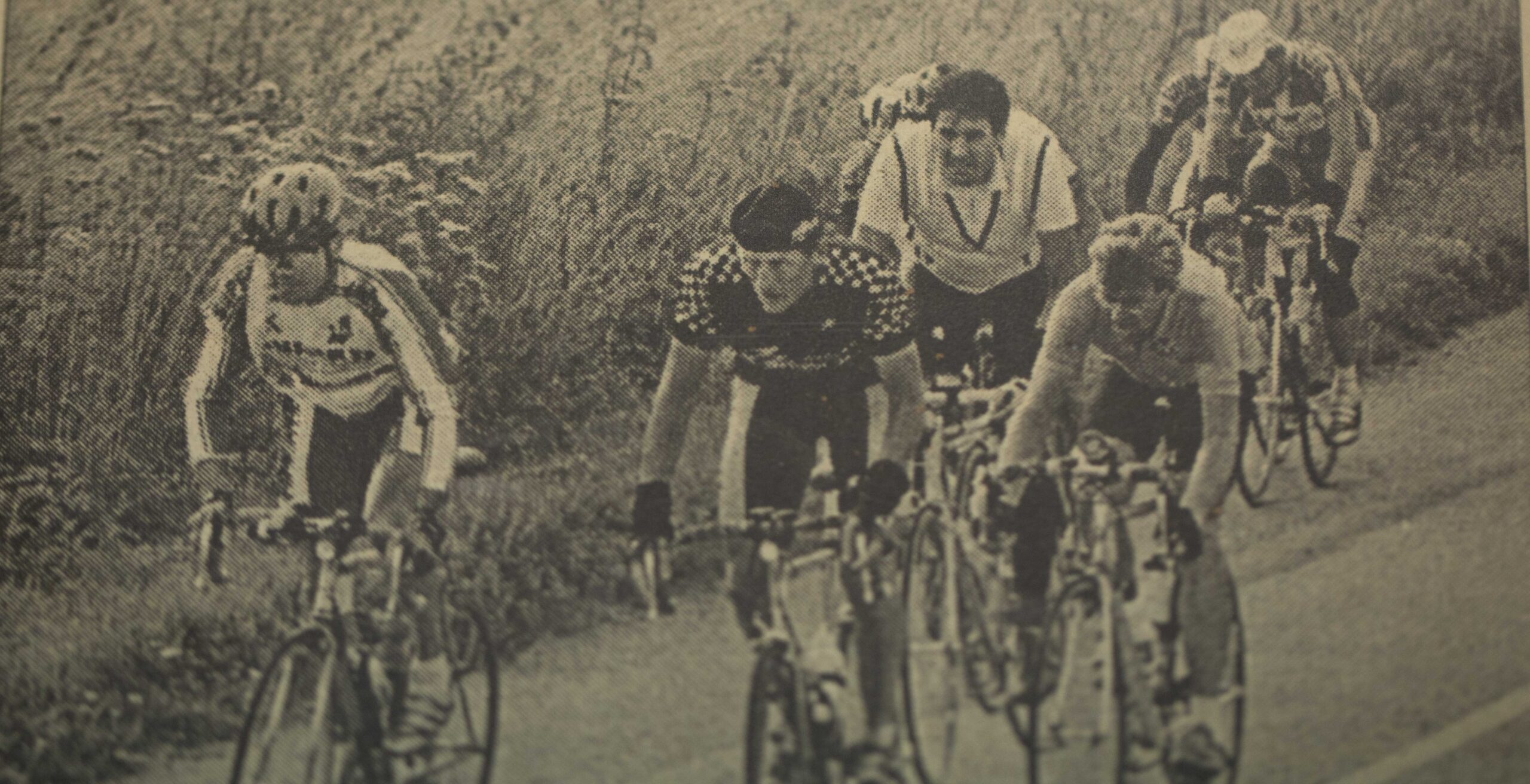
Finally, it was a case of third time lucky, for, in 1995, Guisasola broke the event record. With a brisk tailwind helping them, the leading riders covered the 620 outbound kilometres in just nineteen hours. On the return leg they worked together to combat the headwind.

“With four hundred kilometres to go there were nine of us left at the front. We calculated that if we stayed together to the finish, taking turns, we could break the record. In the final two hundred kilometres we averaged 34 or 35 km/h. It’s incredible how the body responds when you train it properly, when it’s well fed and well hydrated: after a thousand kilometres, you can ride two hundred at the same pace as if you were starting fresh.”

The nine riders — six French, two Americans and Guisasola — swept into Paris together and eventually set a time of 43 hours and 20 minutes. Since then, only eight riders have gone faster, all in the 2015 edition, led by Bjorn Lenhard with 42 hours and 26 minutes.

Guisasola has not returned to Paris–Brest–Paris, but at 62 he says he still feels young and may yet ride the event again in future — that’s if he hasn’t found another outlet for the same powers of endurance he discovered and developed there. 

“Paris–Brest–Paris helps me every day. In the end, you train your ability to push beyond your limits, to endure in bad moments, to become stronger. That serves you in life’s hard times. And it’s curious: I still have dreams where I’m pedaling towards Paris.”

¿TE HA GUSTADO?

Suscríbete para no perderte ninguno de nuestros artículos aquí
TAMBIÉN TE PUEDE INTERESAR

Guía de cómo vestir este Otoño-Invierno 24/25 ROOTS AT HOME, BRANCHES OPEN TO THE WORLD

While expanding internationally, Etxeondo also took care to maintain and nourish its deep roots in its home region, supporting the growth of teams such as Kern Pharma and the new Euskaltel-Euskadi. In 2026 the company celebrates its fiftieth anniversary while ushering in a new phase in the company’s history and renewing its commitment to sustainable growth, a strong historical identity and the enduring quality of its cycling kit.  

Read more
Guía de cómo vestir este Otoño-Invierno 24/25 The evolution continues: the Spring/Summer 2026 collection

New garments, technical innovations and a renewed vision in the year we celebrate our 50th anniversary
Read more
Guía de cómo vestir este Otoño-Invierno 24/25 TRAMA JERSEY: A DESIGN WITH SOUL, BORN AT HOME

Inspired by a handmade print created more than 40 years ago

Read more
Guía de cómo vestir este Otoño-Invierno 24/25 The Evolution of Excellence: Etxeondo’s New Spring/Summer Collection

Every new Etxeondo collection is the result of a meticulous process, where tradition and innovation converge in perfect harmony.

Read more
Guía de cómo vestir este Otoño-Invierno 24/25 Alde Metalic, design and performance united in a jersey.

Every line, every curve, blends seamlessly with the urban landscape, becoming an integral part of the environment that technology and design have helped to redefine.
Read more
VOLVER A LA MAGAZINE

Comments (0)

No comments at this moment
Added to the comparator
No more products can be compared.