Sign in

THE ORANGE YEARS

Article by Ander Izagirre

The Euskadi team came to life in an unusual way: it was paid for by subscribers. For the 1994 season, almost 3,500 private individuals dipped into their own pockets and 720 companies made up the rest of the budget to create a professional team of Basque riders. A project engrained in the social and industrial fabric of the Basque Country could hardly have aligned more closely with Etxeondo. The company had already kitted out teams from its home region in the 1980s — Reynolds, Orbea, Kas, Fagor.

“And it wasn’t just because they were local,” says Paco Rodrigo. “It was because they allowed us to learn. Those teams had world-class riders — Pedro Delgado, Peio Ruiz Cabestany, Marino Lejarreta, Rubén Gorospe, Miguel Induráin, Sean Kelly — and we had to be ready to give them the very best. The best fabrics, the best techniques, the most modern garments. And running those teams were experienced heads who knew cycling inside out — Ramón Mendiburu, Txomin Perurena… We learned an enormous amount.”.

In the 1980s and 90s, Etxeondo's commercial strategy revolved around sponsoring professional teams, winning races with them and extending the brand’s reach. The Fundación Euskadi was a different kind of partnership. The team had humble beginnings and ambitions, with a blend of respected veterans in their final seasons — Pello Ruiz Cabestany, Javier Murguialday, Rubén Gorospe, Juan Tomás Martínez — and a generation of neo-pros such as Roberto Laiseka, Iñigo Cuesta and Aitor Osa.

“It was an exciting project, but money was tight,” recalls Rubén Gorospe. “We didn’t have a leader capable of winning Grand Tours, so the aim was to get into breakaways and be seen. In hindsight, it was brave of Etxeondo to commit. They were already working with the best teams in the world and this was a homegrown outfit with limited prospects. But what mattered most was the pride of helping a local team in whatever way they could. Not everything boils down to money — emotions count too.”

“Etxeondo started out with Danena,” Patxi Rodrigo recalls, referring to the amateur club from the neighbouring town that later turned professional as Orbea and became one of the most important teams in the peloton. “We’ve always liked that — being involved in local projects and growing alongside the community.” Miguel Madariaga, the driving force behind the foundation, met Paco Rodrigo and quickly agreed that Etxeondo would be one of the pillars holding the project up as the team’s clothing partner. “

We were racing with cutting-edge kit because we had great manufacturers at home,” says Rubén Gorospe, who had worn Etxeondo clothing for much of his nine-year stint with the Reynolds-Banesto team. “Orbea supplied the bikes, Etxeondo the clothing. Paco was always ahead of the competition. We’d come from the era of heavy wool jerseys that soaked through and took days to dry, and he’d turn up with Gore-Tex, Windstopper, the lightest, most waterproof fabrics.”

“Without asking, Paco was always coming up with something,” adds Julián Gorospe, Rubén’s brother. “He’d appear at race starts with new overshoes for the rain, neoprene gloves, a redesigned jacket, a vest for cold descents. Whenever Paco arrived, it was like the Three Kings — always bearing gifts.”

Julián, one of the most charismatic Basque riders of the 1980s and early 90s and a winner of two Tours of the Basque Country and stages in both the Tour and Vuelta, had spent his career with Reynolds-Banesto. He remembers seasons when kit deals forced the riders to secretly source their clothing from other brands.

“They’d give us bibs and jerseys that looked good, but after two washes they’d lose their shape. With Etxeondo — wow — the fabric quality was incredible, but above all the fit was.

Paco’s chamois were famous, the best by a mile. Everything tailored to the millimetre. Riders who moved to other teams would quietly ask Paco to make their shorts. ‘Please, just put your chamois in.’ Or they’d wear Etxeondo base layers or gloves with the labels cut out.” “Paco was obsessive,” Rubén adds. “He’d come to races and inspect us from head to toe. If a zip fluttered even slightly, he’d fix it the next time. We were a humble team, but dressed in Etxeondo — and that alone made us feel like leaders.”

The “pepper” jersey

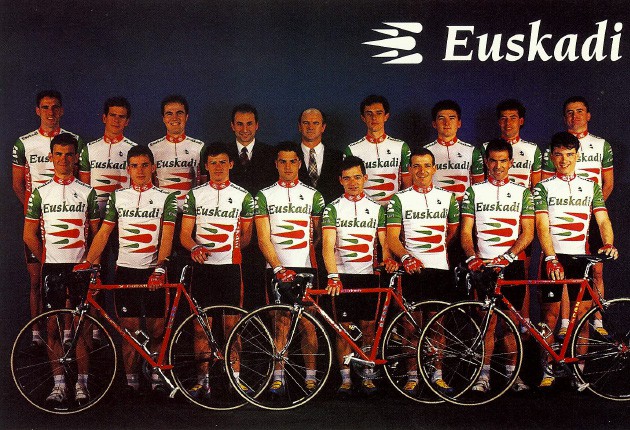
The first Euskadi jersey left no one in any doubt: a Basque team had arrived in the peloton. Predominantly white but with green shoulders and red side panels and collar, the jersey was a clear nod to the ikurriña, the Basque flag. Across the torso, beneath the word Euskadi, red and green flames symbolised what hopefully be the team’s other defining trait: its speed.

“We called it the ‘pepper jersey’,” Patxi Rodrigo laughs.

The jersey itself became a symbol of defiance. With limited chances of beating wealthier teams, Euskadi riders forced their way into nearly every breakaway. In one, on the final stage of the 1994 Itzulia, Agustín Sagasti claimed the team’s first victory in Azpeitia.

The project took a major step forward in 1997 when the telecoms company Euskaltel became title sponsor and increased the budget. A strong generation of riders was also about to be unleashed: Haimar Zubeldia, Iban Mayo, Joseba Beloki, Alberto Martínez, Alberto López de Munain, alongside Roberto Laiseka and, later, David Etxebarria, a former Tour stage winner and the only signing from another team. Victories and high overall finishes followed in the Midi Libre, the Dauphiné, the Volta a Catalunya. In 1999 Laiseka delivered a landmark victory on the Alto de Abantos in the Vuelta a España, ahead of Frank Vandenbroucke and “Chava” Jiménez.

The team now dared to dream of the Tour de France.

The bag with the orange surprise

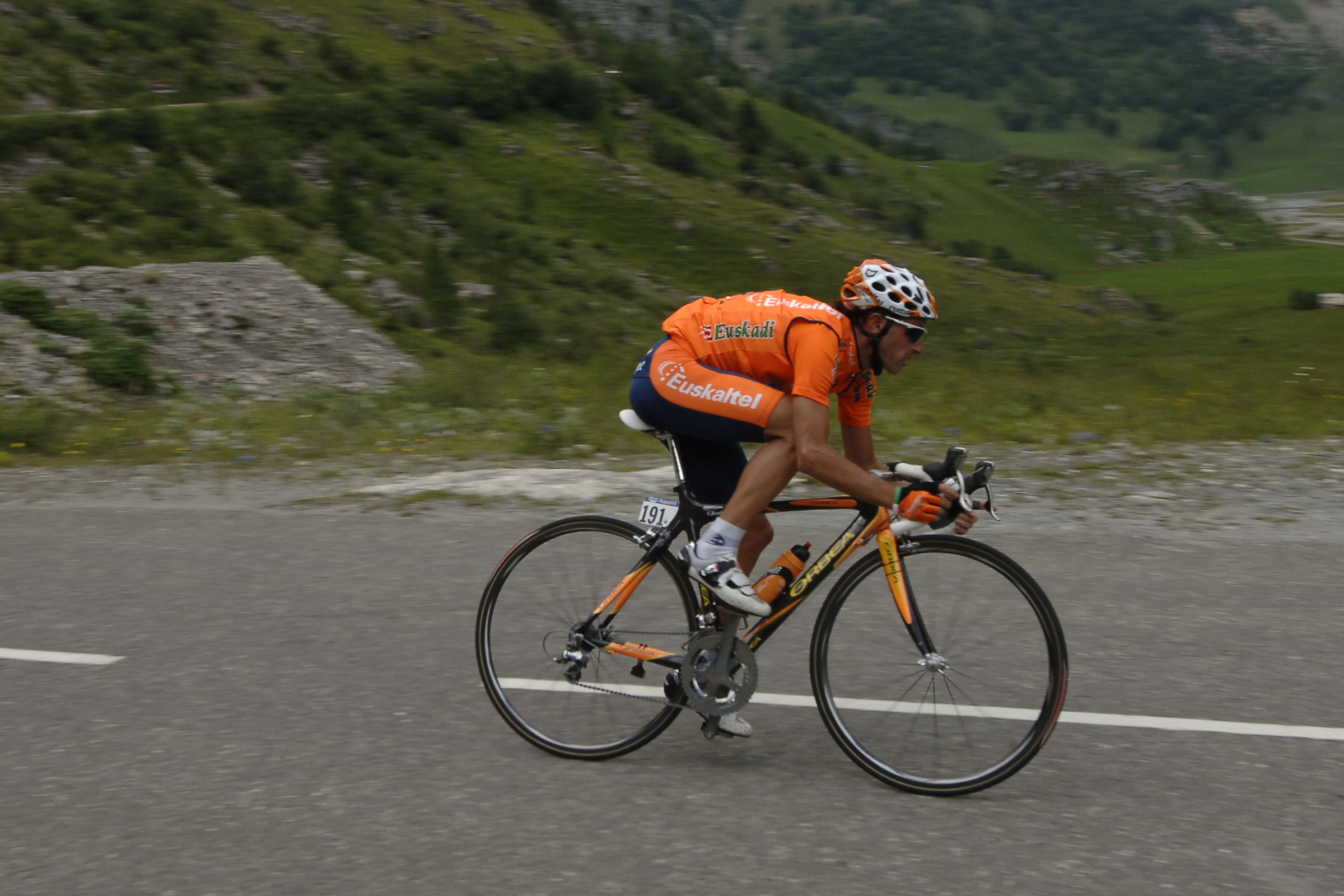
The Euskaltel-Euskadi jersey had evolved towards a design dominated by bottle green and white, with red sleeves. For 2000, Euskaltel wanted its corporate colour added into the mix. They sent Etxeondo the shade of orange in their style guide and requested it be used for a new design.

“I prepared what they requested,” says Paco Rodrigo. “We met José Antonio Ardanza (president of Euskaltel) and Paco Allende (company CEO). They approved it.”

But Paco had slipped a second jersey into his bag.

“I thought that orange looked a bit dirty, a bit heavy,” Paco Rodrigo recalls. “So I took a second, different jersey to the meeting. I mentioned it to Paco Allende — he was demanding, critical, but also bold and ambitious. He wanted to make a statement with the team, with the jersey, with everything. I said, ‘Paco, I’ve brought an alternative to that orange — another option.’ He said, “Have you got it with you?’”

Paco laughs.

“I’m quite smart — I always pick handsome riders to show off the kit — so I handed the bag with the alternative jersey to Rubén Gorospe and asked him to try it on. When Rubén came out… wow. It was stunning.”

“When I walked out, I saw some puzzled faces,” Rubén laughs. “It was a much brighter orange, much more striking. At first they didn’t quite know what to make of it.”

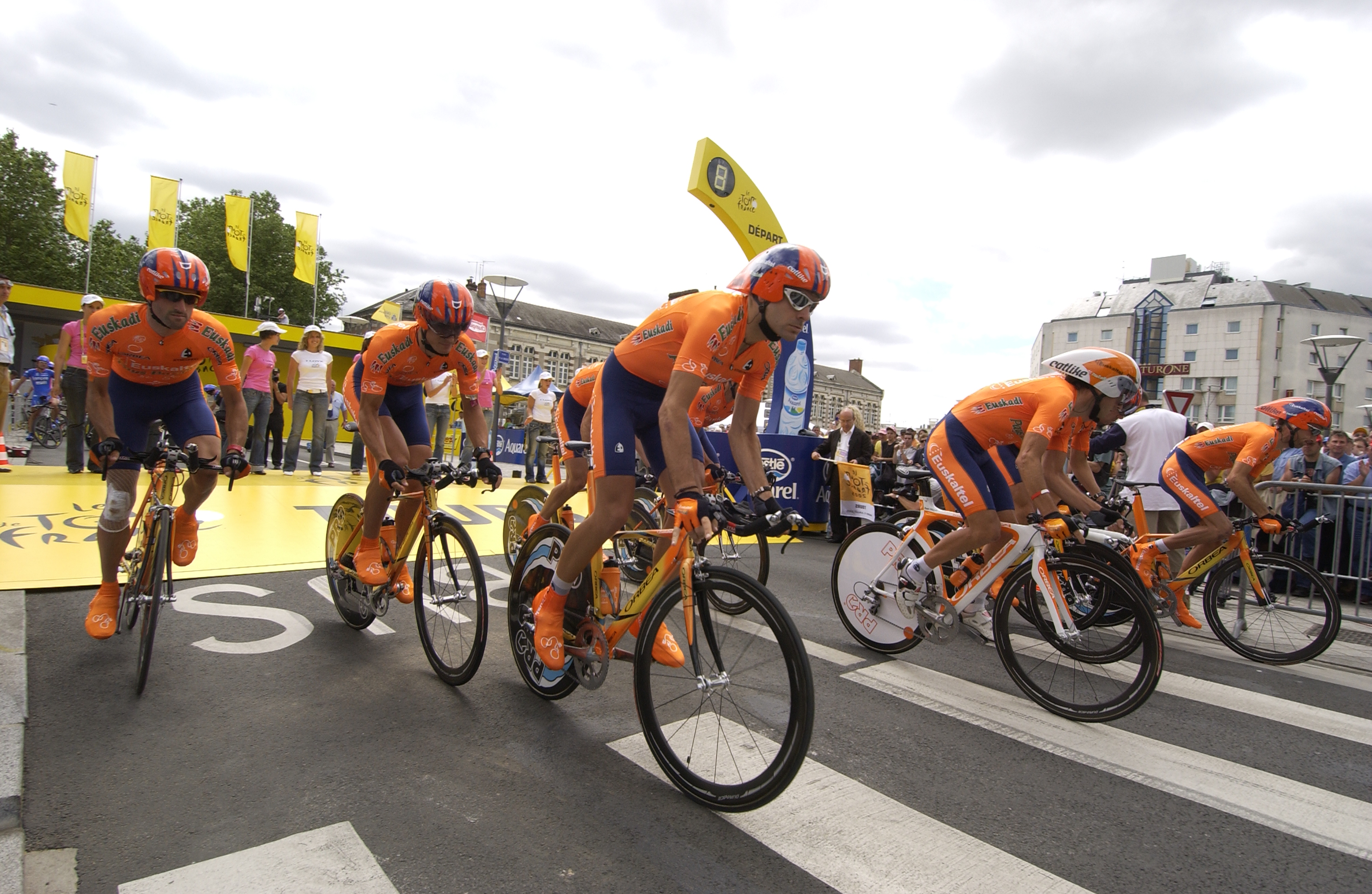
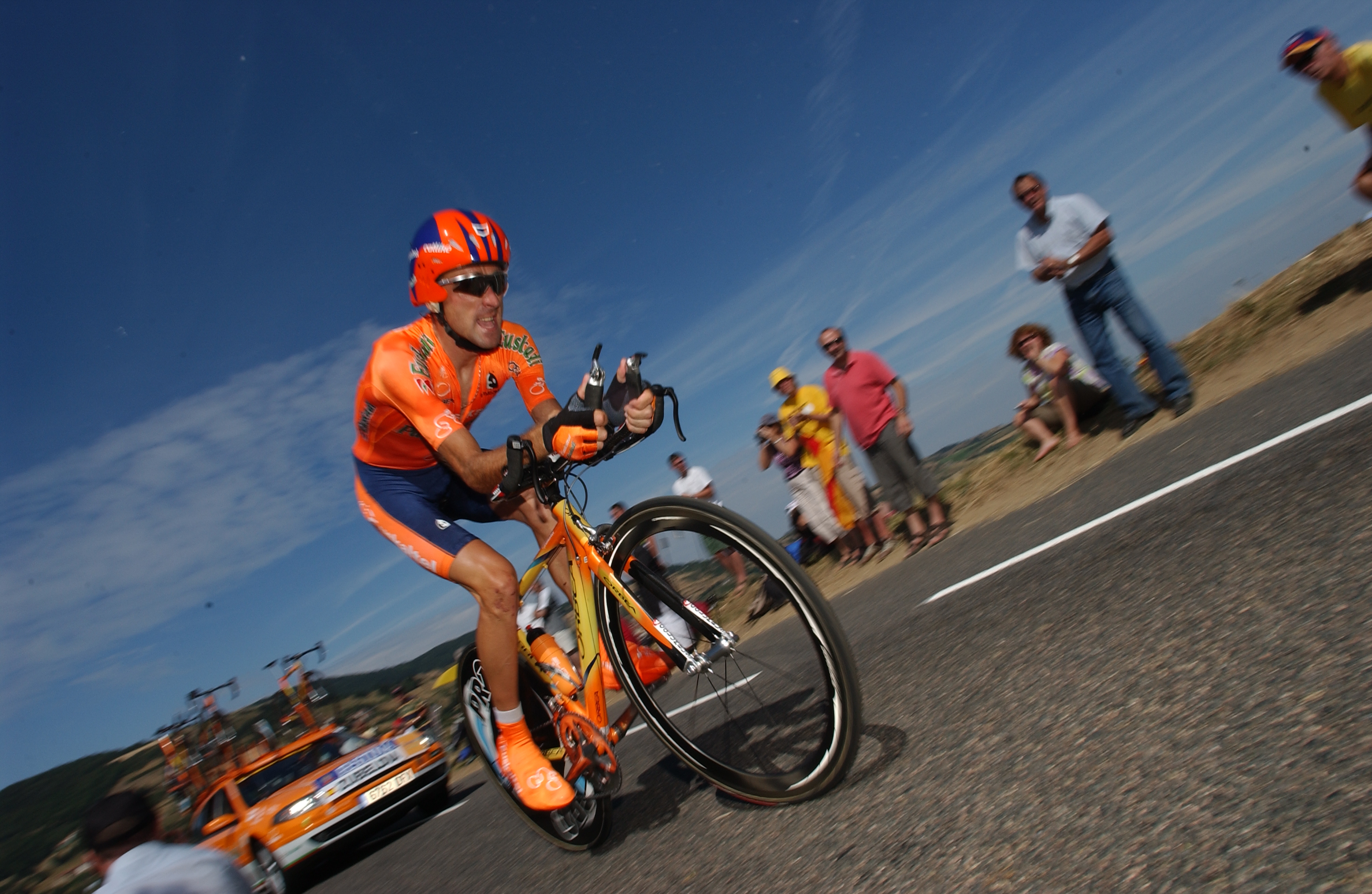
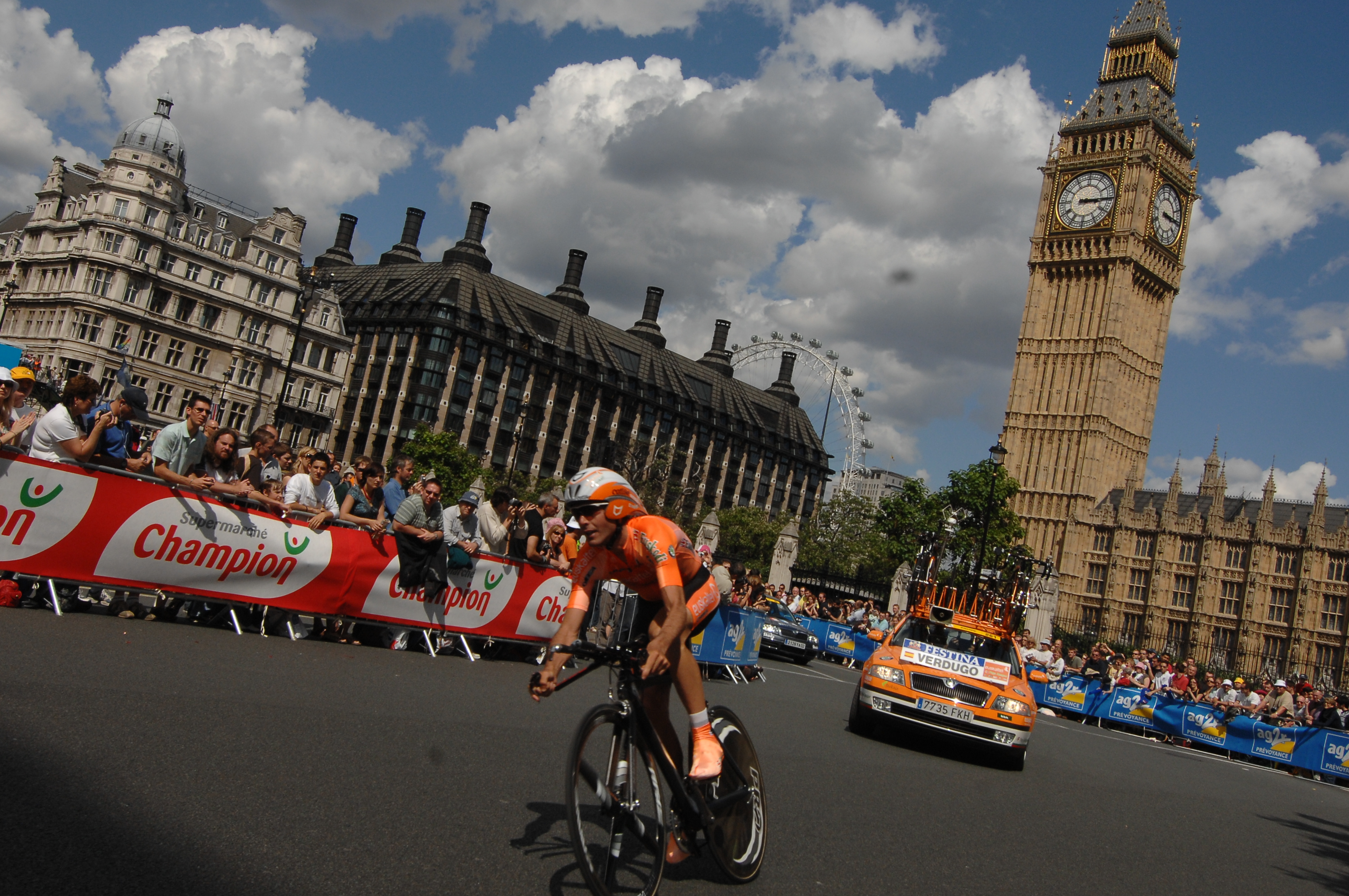
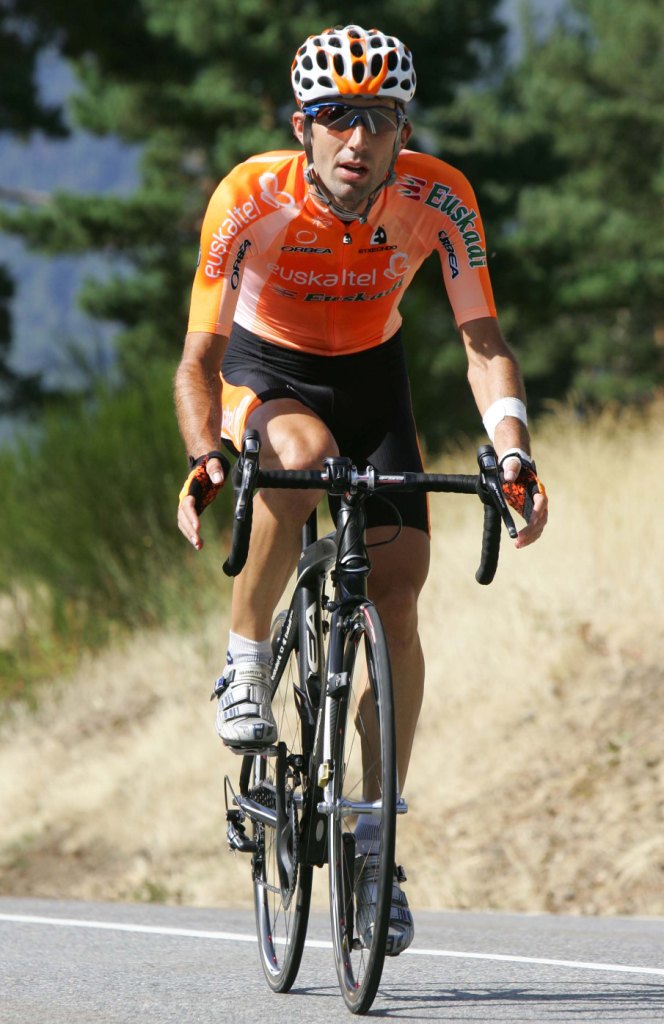
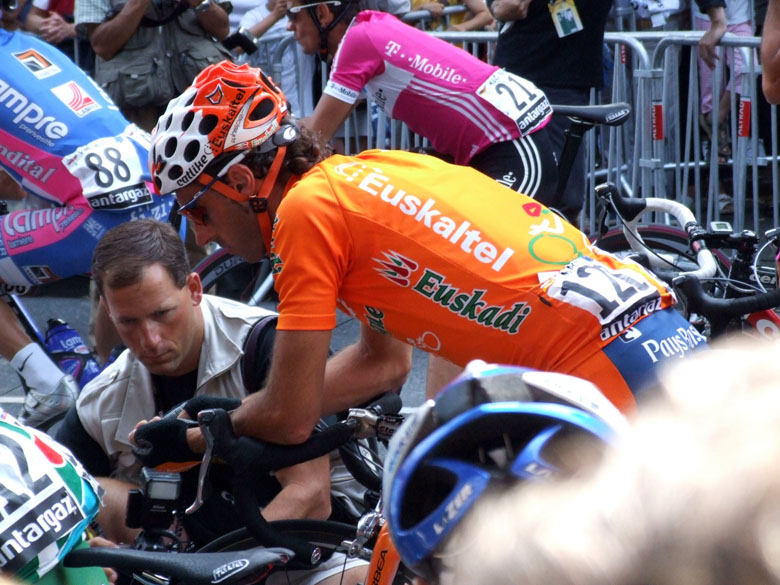
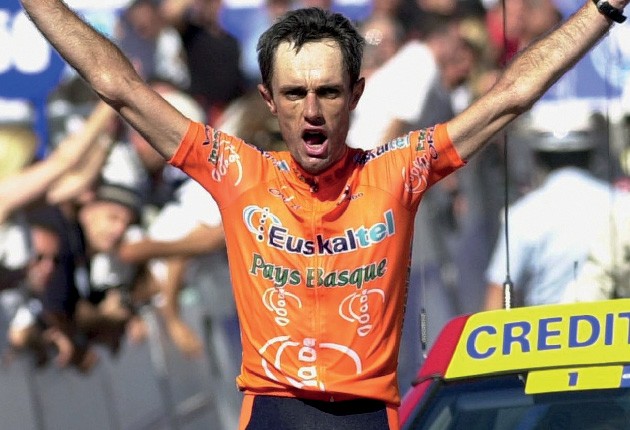
“But they quickly fell in love with it,” Paco says. “It was a really vivid, pure orange, slightly fluorescent — really eye-catching. I worked on that colour endlessly. You have to consider everything: that it stands out in the bunch, that it works in strong light and in low light, that it looks good in photographs and on television, that it doesn’t create strange effects. We studied that orange obsessively. And I dare say we got it exactly right.”

“You can settle for a standard shade and know it’ll behave predictably across different materials — a jersey, a Gore-Tex jacket, gloves, a helmet, overshoes,” Patxi Rodrigo explains. “But at Etxeondo we want to be disruptors. We look for special colours. That means being extremely careful, because they’re new, they’re risky, and depending on the light or the garment they’re applied to, they can produce unwanted effects. Our colour formulas sit outside the usual standards, and sometimes the engineers go a bit mad trying to get the machines to reproduce them properly. They’re risky decisions. It’s more work. But that’s our choice.”

“We always go right to the edge,” Paco adds. “We have an ideal colour in our heads — clean, pure — and we want to translate that onto fabric in the best possible way. We work tirelessly to achieve that ideal colour.”

As Paco often reminds people, though, one more ingredient is required for a colour to become iconic.

“The riders have to win. The La Vie Claire jersey became legendary because it was beautiful… and because they had the best riders in the world. If you design the best jersey ever made but it’s never seen at the front of a race…”

The debut of the orange jersey in 2000 coincided with Euskaltel-Euskadi’s breakthrough onto the international stage. Haimar Zubeldia won the Euskal Bizikleta. At the Dauphiné, the Tour’s dress rehearsal, Alberto López de Munain beat Lance Armstrong in the prologue; Zubeldia pulled on the yellow jersey atop Mont Ventoux and finished second overall. Roberto Laiseka claimed another Vuelta a España stage, this time at Arcalís, now clad in orange. The team closed the season with fifteen victories and a genuine hope of securing an invitation to the Tour de France.

The tide rises in the Pyrenees

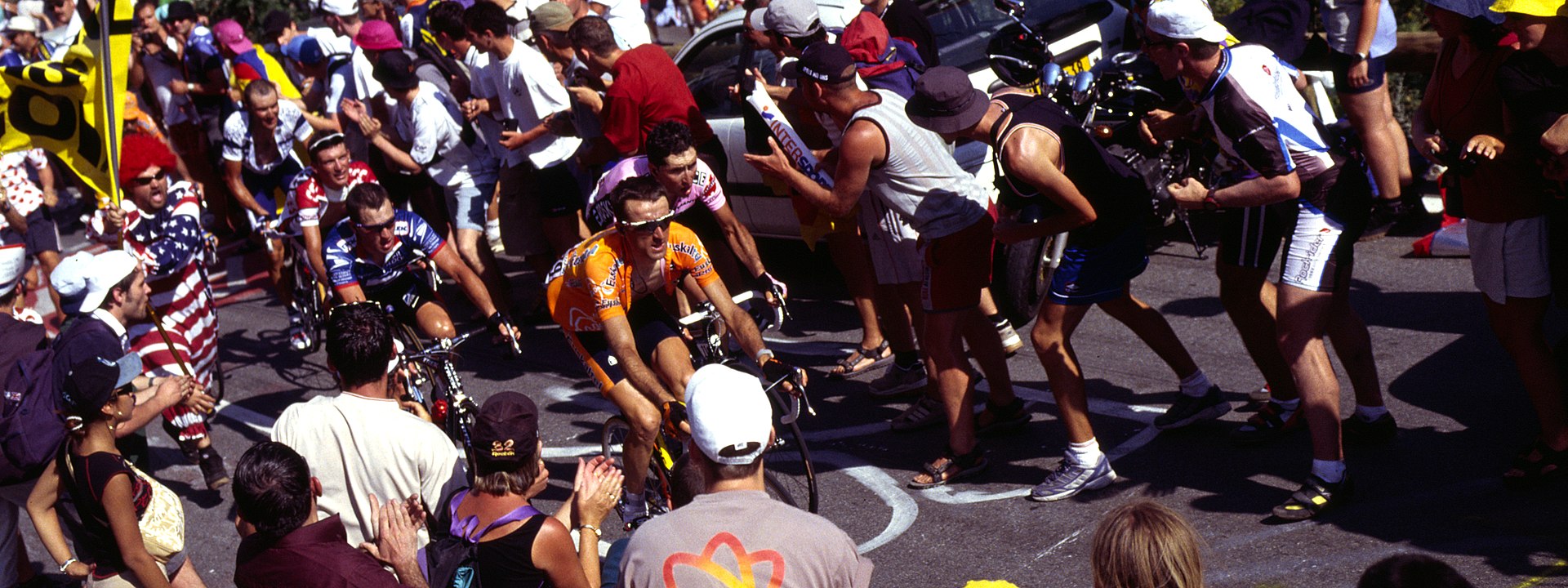
What truly took the team into another dimension, however, was its support. Jean-Marie Leblanc, then director of the Tour, often lamented the disappearance of national teams. Euskaltel-Euskadi acted almost as an unofficial Basque squad. When the race reached the Pyrenees, mountainsides were engulfed by orange jerseys and ikurriñas — a tidal wave of supporters that played no small part in the Tour’s decision to invite them in 2001.

Of the nine riders who started that first Tour, only Iñigo Chaurreau and David Etxebarria had previous experience. From the outset, the scale of it seemed overwhelming.

“I’ll never forget the first week,” says Haimar Zubeldia, one of seven debutants. The year before he had gone toe-to-toe with Armstrong at the Dauphiné and arrived in France with ambitions of a strong overall result. “We started off determined to do well on general classification, but in that first week we were caught out every single day. There were crosswinds one day — echelons — and the entire team finished in the last group, eighteen minutes down, except for Charreau. Another day I crashed heavily in a huge pile-up and reached the finish completely beaten up.”

Zubeldia finished his first Tour in 73rd place, over two hours behind Armstrong.

“It was important to finish. You learn a lot through suffering. The Tour requires experience.” He would go on to ride sixteen editions, finishing fifteen, five of them in the top ten.

The Euskaltel riders survived as best they could, and by the third week their hopes flickered again. The race was heading into the Pyrenees — and the orange tide was waiting.

David Etxebarria remembers riding and suffering near the back of the peloton with Roberto Laiseka in the opening kilometres of the Tarbes–Luz Ardiden stage. Attacks were flying left and right. Finally a large breakaway formed. Etxebarria remembers Laiseka turning to him.

“David, my legs are incredible today — I can’t feel the chain. Tell the team to start chasing. I’m winning this stage.”

Etxebarria stared at him.

“Roberto, what are you talking about? There are twenty riders up the road with a two-minute gap. This is the Tour. We’ve never once set tempo on the front…”

“Today we do. Trust me. I’m winning.”

Laiseka insisted. Euskaltel moved to the front and began to drive the peloton towards a Tourmalet awash with ikurriñas and orange shirts. The gap shrank. Laiseka attacked near La Mongie, picking off the breakaway riders one by one. On the final ascent to Luz Ardiden he caught Wladimir Belli, the last survivor, and pressed on anxiously as Armstrong and Ullrich hammered up the mountainside behind him, locked in their duel for yellow.

“Luz Ardiden was madness,” Laiseka recalls. “I climbed through a narrow corridor of Basque fans screaming my name. It was unbelievable. When I crossed the line, my ears were ringing.”

Haimar Zubeldia, spent from the chase, climbed Luz Ardiden twenty minutes behind.

“We were riding up when suddenly the entire mountain roared. It was like a goal being scored in a stadium — except we were in the middle of the Pyrenees. People started shouting, ‘Laiseka’s won! Laiseka’s won!’”

“We could never have imagined something like that,” says Julián Gorospe. “Winning a stage in our first Tour seemed almost impossible. But to win it in the Pyrenees, in that style, with the mountains full of our people… Laiseka was a gritty rider, a fighter, who thrived on the crowd’s support. That was what made the difference.”

Party on the Tourmalet

Etxeondo had already won two Tours with Induráin and Delgado wearing their kit and claimed other stage victories with powerhouse teams like ONCE. But Paco Rodrigo says Laiseka’s win belonged to a different dimension.

“It was an intense experience for us. It felt to me like a victory for my town, my friends, my work colleagues. It was pure joy for an entire community. And for it to be Laiseka — a rider who debuted in 1994, when the Fundación Euskadi was born, and who had gone on the whole journey with us to win the queen stage of the Tour — it was extraordinary. I was so happy it was him—a loveable curmudgeon I’m enormously fond of. It was overwhelming.”

In the years that followed the Pyrenees became the venue for a sort of vast communion of Basque supporters. Etxeondo staff and their friends would gather at La Mongie on the slopes of the Tourmalet for barbecues and concerts, to ride the climb themselves, watch the race pass, or just to cheer — especially for Euskaltel — with their homemade orange banners draped across the mountainside.

“There were huge numbers of us,” Patxi Rodrigo remembers. “Workshop staff, sales reps, the photo models, countless friends — even politicians from all sides of the political aisle. Very different people, all together because we were cyclists. Cycling brings people together. Etxeondo is a company, yes, but we’ve always been a group of cycling obsessives, mad for the Tour, the Giro, whatever race is on. We love experiencing it at the roadside.”

In 2003 they would witness another unforgettable moment on the Tourmalet. Four riders crested the pass together: Armstrong and Ullrich — the era’s dominant rivals — alongside Iban Mayo and Haimar Zubeldia. Euskaltel riders were fighting with the very best in the world in the Pyrenees, in front of their own people. Mayo had just won on Alpe d’Huez; Zubeldia was riding with remarkable consistency and eyeing a podium finish.

“I’ll never forget that moment,” says Zubeldia. “The Tourmalet was packed with people dressed in orange. They were cheering like mad. The last ramp before the summit is etched in my memory. In a race you’re in a bubble, but there I began to recognise friends, family, familiar faces in the crowd — and in the middle of all that noise I felt something I’ve never felt again.”

“We were happy to see Ullrich at the front too,” Patxi smiles. “My sister thought he was the most handsome rider in the peloton — and he wore Etxeondo base layers even though his team had another clothing sponsor. When he unzipped his jersey you could see the undershirt with a little cut-out where he’d removed the logo to disguise it.”

The colour of the Basques

Paco Rodrigo believes a team like Euskaltel made a mark that went beyond sport.

“In a country going through very difficult years of violence, serious political problems and deep social divisions, suddenly people gathered around a deeply rooted sport and a team of their own, celebrating together.”

The colour orange became an unlikely rallying point.

“The Dutch used to tell us we shared a colour — that orange was to the Basques what it is to them. And gradually everyone began to think that way. The French, the Italians — they saw the images of the orange tide in the Pyrenees and assumed that was the Basque colour. It had never been that before we gave it to the Euskaltel team.”

Marco Pastonesi, for many years cycling correspondent at La Gazzetta dello Sport, remembers feeling that the Tour was somehow entering the domain of the Basques if not their territory when it reached the Pyrenees. The orange tide struck him as unusual: in cycling, fans typically follow individual riders; it is rare for an entire crowd to become fanatical about a team year after year, regardless of who rides for it.

“The Basques are among the most passionate fans in world cycling. And they don’t only appear at the Tour — you see orange jerseys and Basque flags at the Giro, in Belgian classics, almost anywhere. Cycling gives the Basques a strong international presence. And thanks to the team, many of us learned that ‘Euskadi’ means the Basque Country. I always loved the name — ‘Euskaltel-Euskadi’ sounded musical, like wordplay, didn’t it?” he smiles.

The team would enjoy more golden years with Samuel Sánchez, Igor Antón and Mikel Nieve — victories in the Itzulia, the Vuelta, the Giro and the Tour, as well as notable performances in classics and other stage races. There were special Etxeondo designs too: the orange jersey with gold detailing worn by Sánchez to commemorate his Olympic gold medal at Beijing 2008, or the gold bib shorts Egoi Martínez wore to match his leader’s jersey of the same colour in that year’s Vuelta.

As global sponsors entered cycling and budgets soared, survival at the top level became increasingly difficult. Even in leaner years, however, Euskaltel served as a springboard for emerging talents such as Mikel Landa, Pello Bilbao and Ion and Gorka Izagirre, who later moved to the sport’s richest teams.

After years of decline, the team folded in 2013. Yet something curious happened: even with no Euskaltel riders to cheer on and in a generally lean period for Basque riders, fans continued to line the roadsides in orange jerseys and with ikurriñas. The orange tide was no longer dedicated to a rider or team but a way of experiencing and celebrating bike races and their protagonists. 

The Fundación Euskadi returned in more modest form in 2018, with Mikel Landa as president. Euskaltel also returned as sponsors in 2020.

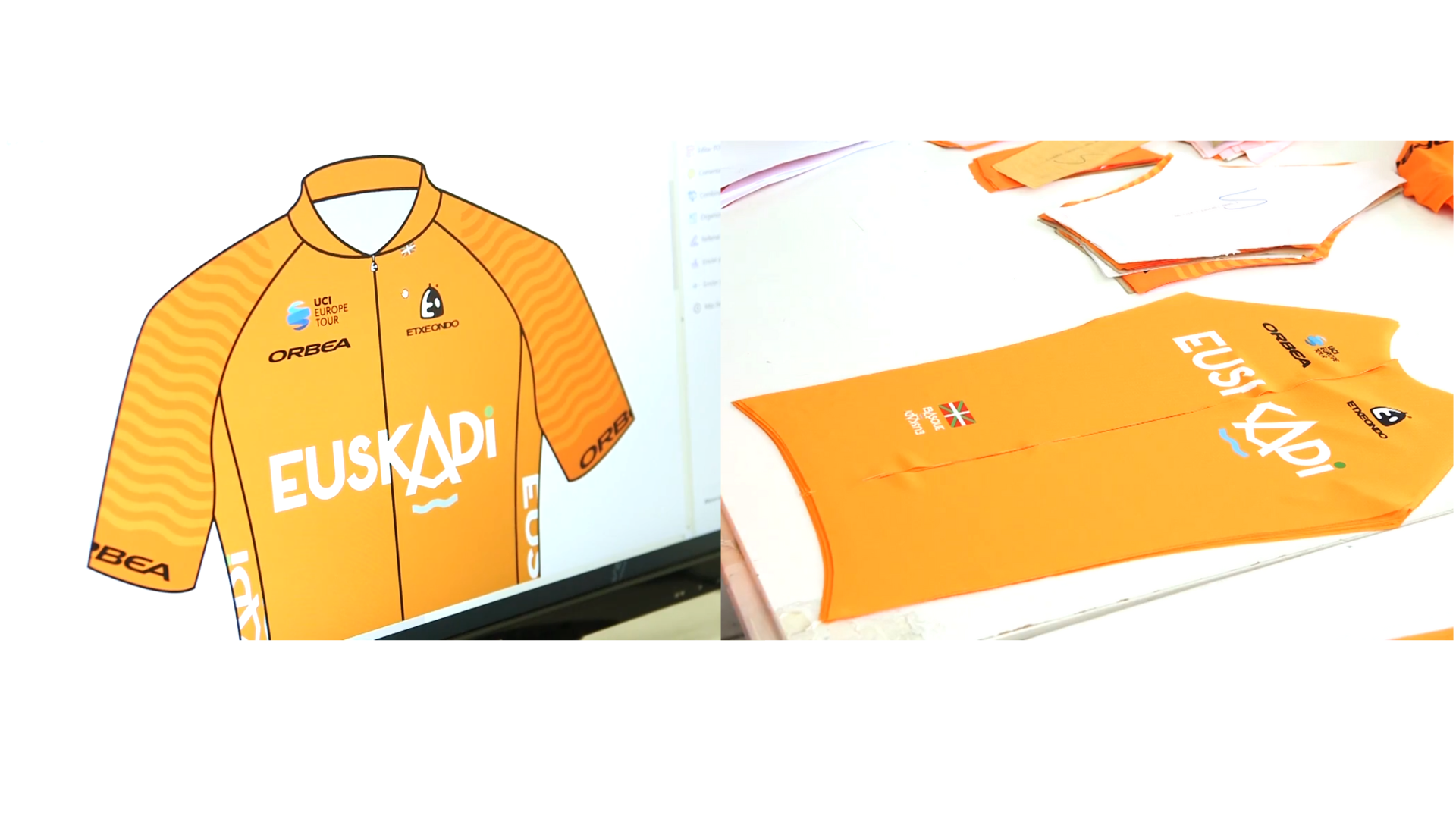
“When it came back, it stirred something deep inside us,” Patxi Rodrigo says. “We all know it’s far harder now to build a top-level team. But we were thrilled to have a Basque team again. That’s why we decided to sign up and design another orange jersey. It’s astonishing how powerful a colour can be. Just seeing Basque riders racing in orange again was enough to rekindle the excitement.”

Elite Basque cycling has known peaks and troughs, fat years and lean ones. But it rests on a tradition of great teams — Orbea, Kas, Fagor, Euskaltel — which were always bigger than any single rider; on a network of local clubs, race organisers, media outlets, bike and clothing manufacturers; and above all on deeply rooted, passionate support.

For three decades, that devotion had an identity that was also a simple visual cue.

The colour orange.

¿TE HA GUSTADO?

Suscríbete para no perderte ninguno de nuestros artículos aquí

TAMBIÉN TE PUEDE INTERESAR

Guía de cómo vestir este Otoño-Invierno 24/25 ROOTS AT HOME, BRANCHES OPEN TO THE WORLD

While expanding internationally, Etxeondo also took care to maintain and nourish its deep roots in its home region, supporting the growth of teams such as Kern Pharma and the new Euskaltel-Euskadi. In 2026 the company celebrates its fiftieth anniversary while ushering in a new phase in the company’s history and renewing its commitment to sustainable growth, a strong historical identity and the enduring quality of its cycling kit.  

Read more
Guía de cómo vestir este Otoño-Invierno 24/25 The evolution continues: the Spring/Summer 2026 collection

New garments, technical innovations and a renewed vision in the year we celebrate our 50th anniversary
Read more
Guía de cómo vestir este Otoño-Invierno 24/25 TRAMA JERSEY: A DESIGN WITH SOUL, BORN AT HOME

Inspired by a handmade print created more than 40 years ago

Read more
Guía de cómo vestir este Otoño-Invierno 24/25 The Evolution of Excellence: Etxeondo’s New Spring/Summer Collection

Every new Etxeondo collection is the result of a meticulous process, where tradition and innovation converge in perfect harmony.

Read more
Guía de cómo vestir este Otoño-Invierno 24/25 Alde Metalic, design and performance united in a jersey.

Every line, every curve, blends seamlessly with the urban landscape, becoming an integral part of the environment that technology and design have helped to redefine.
Read more
Guía de cómo vestir este Otoño-Invierno 24/25 Roelofs' visit to Etxeondo

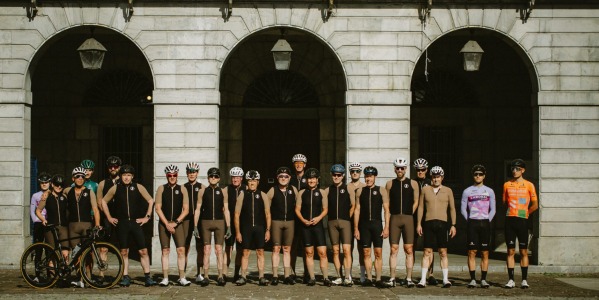
A group of customers from the Fietsspeciaalzaak Roelofs shop in Arnhem, the Netherlands, experience riding in the Basque Country and getting to know Etxeondo first hand. 
Read more
VOLVER A LA MAGAZINE
Added to the comparator
No more products can be compared.