Inloggen

The ‘90s: ONCE and the Years of Innovation

by Ander Izagirre

Manolo Saiz still remembers the day he walked into the Etxeondo farmhouse and opened the boxes containing the kit for the team he had just created.

“That’s when I realised ONCE was real. It was a very physical feeling: opening the boxes, touching the garments, even smelling them… Over the next few days I handed them out to the riders. That’s when we started to dream.”

Those dreams came true quickly. In the opening stage of the 1989 Vuelta al País Vasco, two ONCE riders filled the top two spots: Johnny Weltz and Peio Ruiz Cabestany. The next morning, Paco Rodrigo, Etxeondo’s founder, turned up at the start with more boxes.

“That’s when I understood how much Paco cared about his teams,” Saiz says. “It was pouring with rain that morning, and he arrived with the best rain jackets and overshoes. The riders were delighted.”

Born in Torrelavega (Cantabria) in 1959, Saiz was a strength and conditioning coach who had never imagined becoming a team manager. Innovation was the cornerstone of his cycling venture: new training methods, new materials, a new vision of how a team should function, and bold race tactics. To innovate in clothing, he found a willing partner in Etxeondo. To bring all those ideas together, he created the ONCE team.

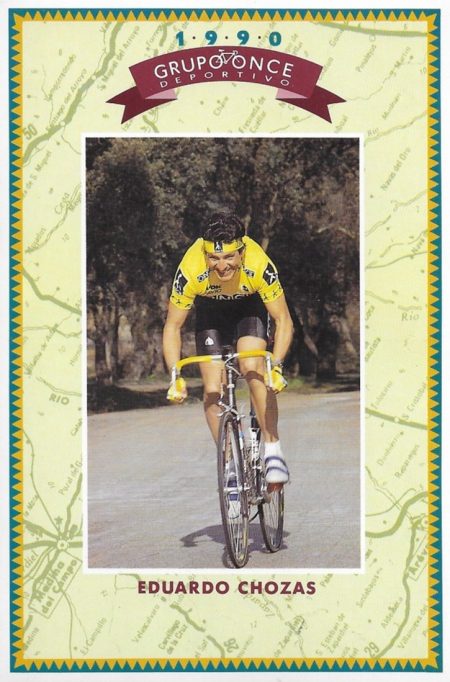
One of the riders he worked with was Eduardo Chozas, whom he had already begun coaching in 1980, when Chozas was a neo-pro and Saiz a second-year student at Madrid’s National Institute of Physical Education (INEF).

“In those days,” Saiz says, “riders would wake up, look out the window to see if the weather was good, meet up with a few others and just ride 100 or 120 kilometres with no plan at all. Maybe they’d race each other up a climb or sprint for the town sign — that helped a little bit. When I was 16 or 17, riding as a junior, we sometimes trained with the González Linares group. I remember him shouting at me once to go to the front and sit in the wind. A fully fledged pro, a man who’d beaten Merckx in time trials… That was their idea of training.”

At INEF, Saiz discovered a powerful tool.

“There was an excellent library, with translators. If you were interested in an article from a foreign journal or book, they would translate it for you. I read a lot about Soviet and East German training methods — they were the most advanced at the time.”

He began coaching riders from Cantabria who had raced alongside him as juniors, as well as Madrid-based cyclists.

“We’d meet in Casa de Campo to train, then head to INEF for gym sessions. There the cyclists mixed with Real Madrid basketball players, track athletes, handball players — they learned from other sports. That was new.”

Until then, winter had been the season of rest… and excess.

“They’d hang up the bike, eat steaks and chorizo with potatoes, and show up at the Ruta del Sol with 300 kilometres in their legs and carrying 12 extra kilos of, erm, padding. The early-season races were always won by foreigners, because they trained for the Classics and rode through cold, rain, snow — it didn’t matter. Whereas the Spaniards, if it rained, stayed home.”

Saiz introduced the notion of cross or off-the-bike training.

“We’d go to Suances or Liencres beach and do plyometric jumps in the sand, at different water depths, or do shuttle runs up stairs. We did steady runs, gymnastics, weight training — all the way until mid-December.”

Did he meet with resistance in the cycling world?

“Yes, especially from older directors. They thought a cyclist only needed to pedal and rack up kilometres. Beaches and gyms were a joke to them. My biggest blessing was having disciplined riders like Rupérez and Chozas.”

Other directors were aghast when they saw Chozas at the first races of the year: “Hey, you’re a lean machine!”

In January 1983, after an already demanding winter, Chozas logged countless kilometres behind the back wheel of Saiz’s Vespa.

“I skipped plenty of classes to train with him,” Saiz laughs.

That season, at just 22, Chozas started like a house on fire, winning one race after the next: the Vuelta a Andalucía, the Camp de Morvedre Trophy, Sabiñánigo… He then finished sixth in the Vuelta a España and eighth in the Giro, winning a stage. At the time, riders typically bounced from race to race with little or no time to rest in between. Saiz not only planned training sessions — he plotted entire seasons: endurance phases, strength blocks, form peaks, rest periods.

“I built mini-seasons within the season. Coaches think about present and future. If he’s 22, we train like this; at 23, like this; at 25, like this… In the end, you’re planning a sporting life.”

In that breakthrough 1983 campaign, Chozas rode for Zor — one of the first professional teams, alongside Reynolds, with kit by Etxeondo. Saiz had seen Paco Rodrigo’s work throughout the 1980s, so when he launched ONCE, he knew where to go.

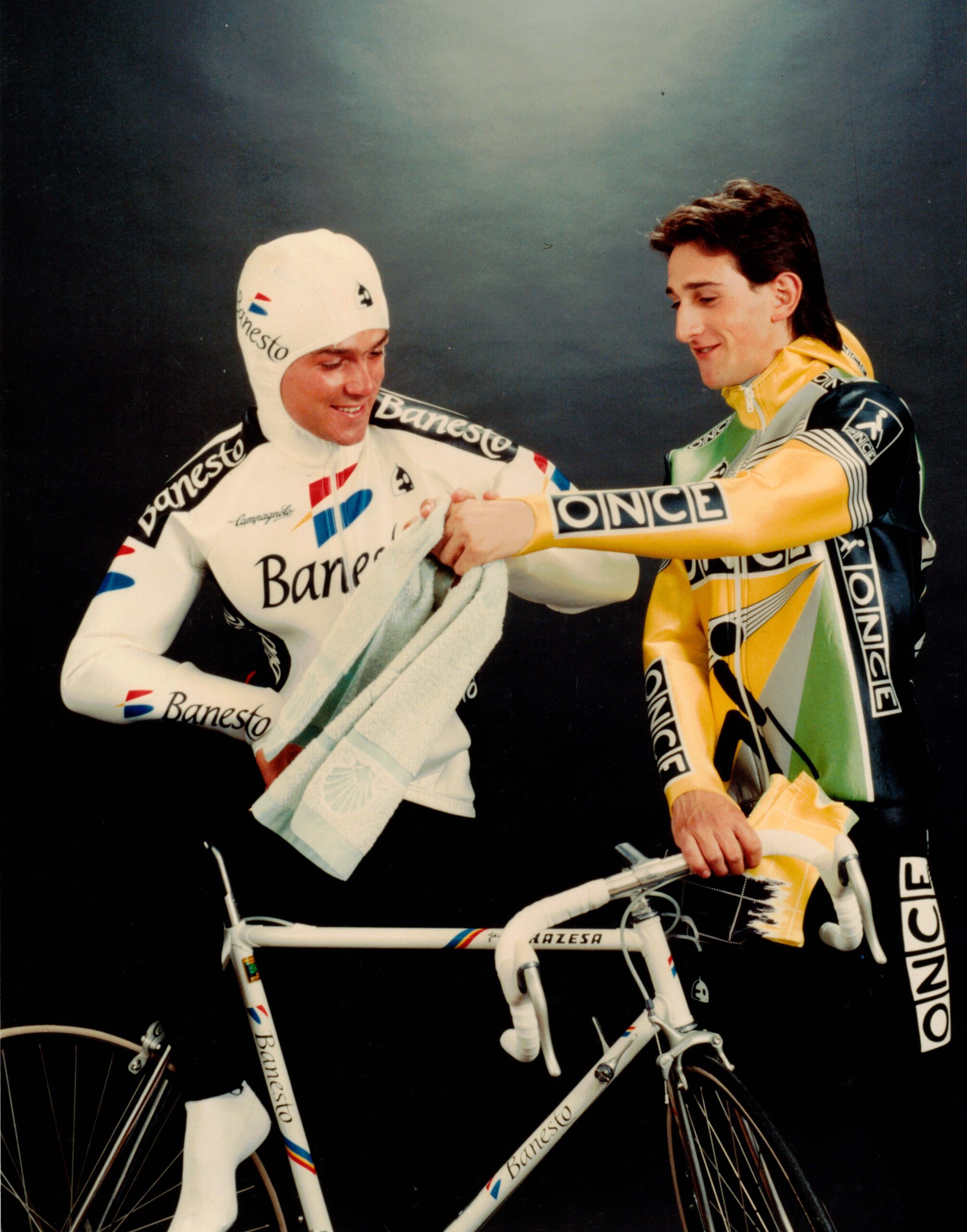
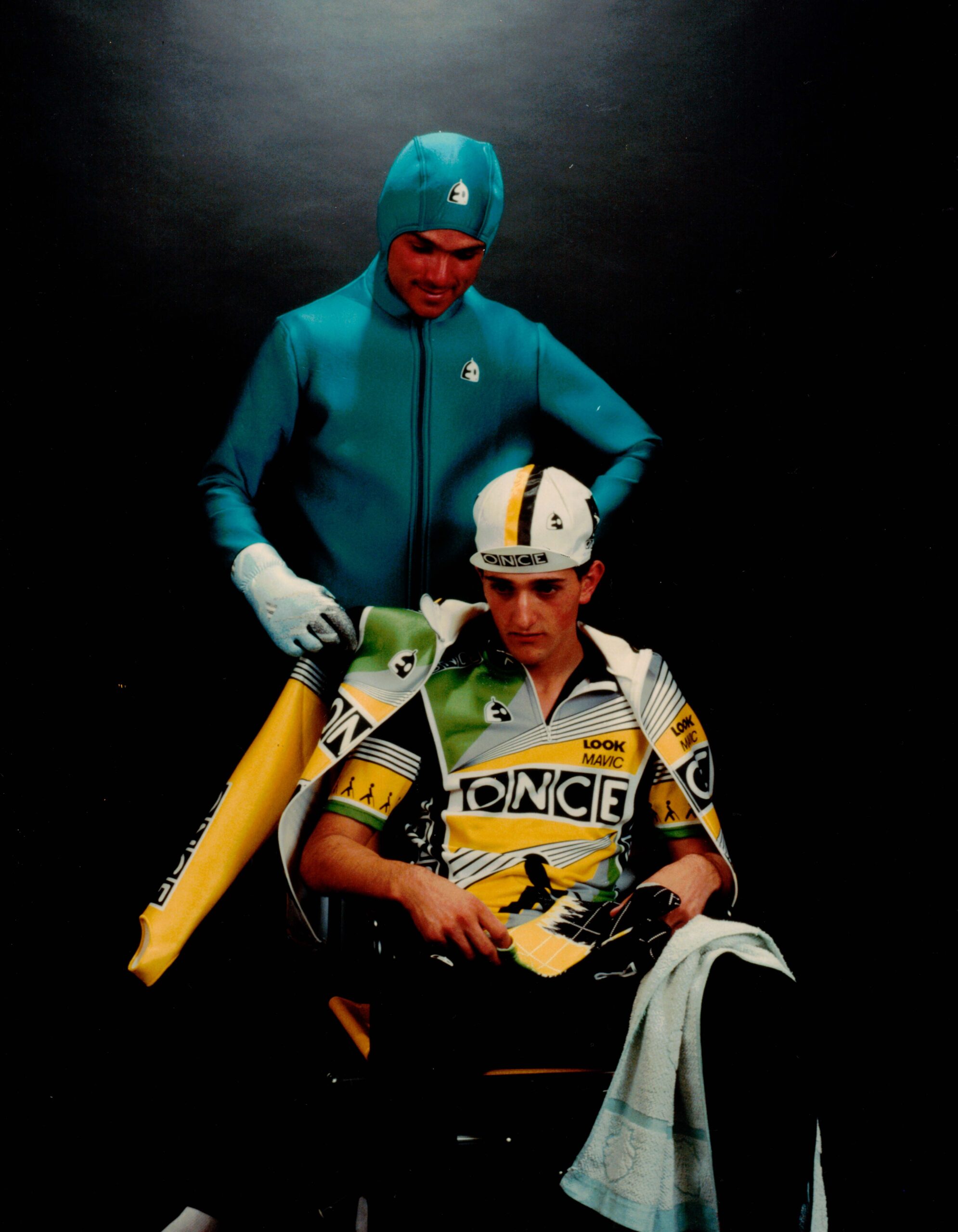
“Paco always knew the best materials, the newest fabrics. I loved how he refined every detail. We understood each other perfectly. I remember the winter jersey with a hood he developed and the shift from wool to synthetic fibres, which were lighter and warmer. We started using Gore-Tex… And that skinsuit for post-stage recovery!”

“I made you a special black suit with Thermolite — a hollow fibre to retain heat,” Paco remembers. “As soon as the riders finished, they’d put it on until they went into the showers or to massage.”

“It was excellent,” Saiz continues. “There’s a psychological side to all this. You explain to riders that they’re on the team that recovers best. They have the right food and drink at the finish. They have a suit to maintain body temperature so blood flow stays optimal… I always explained why we did things, and that really resonated. The riders were in love with Paco’s innovations.”

- Os preparé un buzo negro especial, con thermolite, una fibra hueca, para mantener el calor -explica Paco Rodrigo-. Nada más terminar la carrera, los ciclistas se lo ponían hasta que llegaban a la ducha y al masaje.- Era un buzo muy bueno -sigue Saiz-. Hay una parte psicológica en todo esto: tú se lo vendes a los corredores, les explicas que están en el equipo que mejor recupera, cuando llegan a meta tienen inmediatamente la comida y la bebida idónea, les damos ese buzo para mantener la temperatura corporal, porque así el riego sanguíneo fluye mejor… Yo explicaba a los corredores por qué hacíamos cada cosa y eso calaba mucho. Los ciclistas estaban enamorados de las novedades de Paco.

 The suit was so comfortable some riders trained in it. Saiz had to lightly dissuade them, tell them that it was fine for a light spin but nothing longer. Every garment had its purpose. 

“In time trials everyone used short-sleeved skinsuits,” Saiz says, “whereas we introduced long sleeves, with that thumb hole so the fabric stayed perfectly stretched — no wrinkles, maximum aero gains.”

“We talked constantly about clothing,” Paco says. “Manolo pushed me — he wanted the very best. Sometimes we’d be at dinner and he’d casually mention an idea. I wouldn’t say much, but I’d go home and start thinking…”

“One day I mentioned the suits the Russians used on the track — Ekimov and the rest. Those shiny red ones that looked like plastic. I told you nobody was using that fabric anymore.”

“I made them for you for a Tour time trial,” Paco says. “It was brutally hot.”

“The Puy-du-Fou prologue.”

“That’s it. Printing on that fabric wasn’t easy. I kept thinking: let’s see what happens when they stretch it, how it fits…”

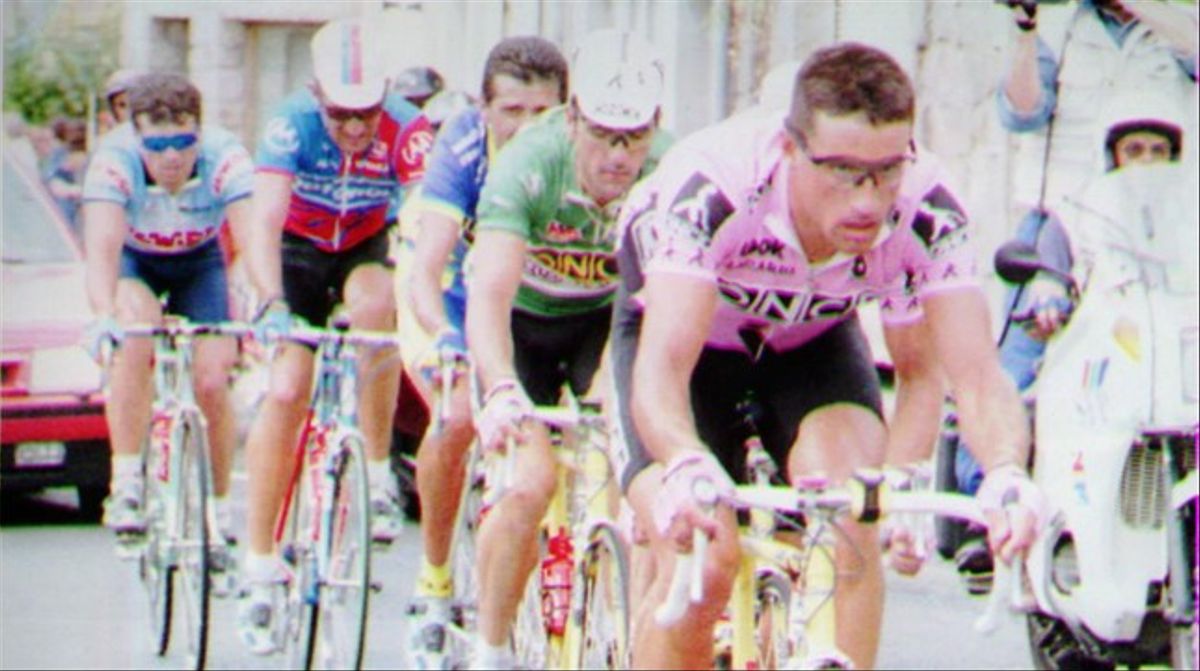
-ONCE rolled down the start ramp in bubblegum-pink long-sleeved skinsuits on their Lotus bikes. Four riders finished in the top 13: Zülle second, Jalabert ninth, Bruyneel twelfth, Breukink thirteenth.

“But there was always one man who beat us in the Tour prologue by a whisker,” Saiz laughs.

Miguel Induráin. In the 1992 San Sebastián prologue, “Big Mig” beat Zülle by two seconds. It was a heavy blow for ONCE, Saiz admits. But the next day there was an intermediate sprint in Zarautz with time bonuses early in the stage. They devised a plan to steal the yellow jersey.

“I got on well with riders from other teams. We helped each other when needed — the usual cycling agreements. At the start I spoke to Cipollini, the sprinters' boss. ‘Mario, Zülle is going to attack on the Orio climb to take the bonus in Zarautz. I’m asking you not to chase him. Sprint for second place and make sure Miguel doesn’t take seconds.’ I doubt Miguel would have contested it, but you have to anticipate everything.”

Saiz worked obsessively on tactics, looking for any opportunity to surprise their rivals or gain an edge. But he also knew that even the best laid plans can and often do go awry in cycling.

“Zülle had taken the bonus seconds he needed for yellow, then suddenly one of his shoes started giving him problems. Mid-stage he took it off and borrowed one from his teammate Xabier Aldanondo — they were about the same size — and we still had Jaizkibel to climb… He saved the day, but we had to sweat.”

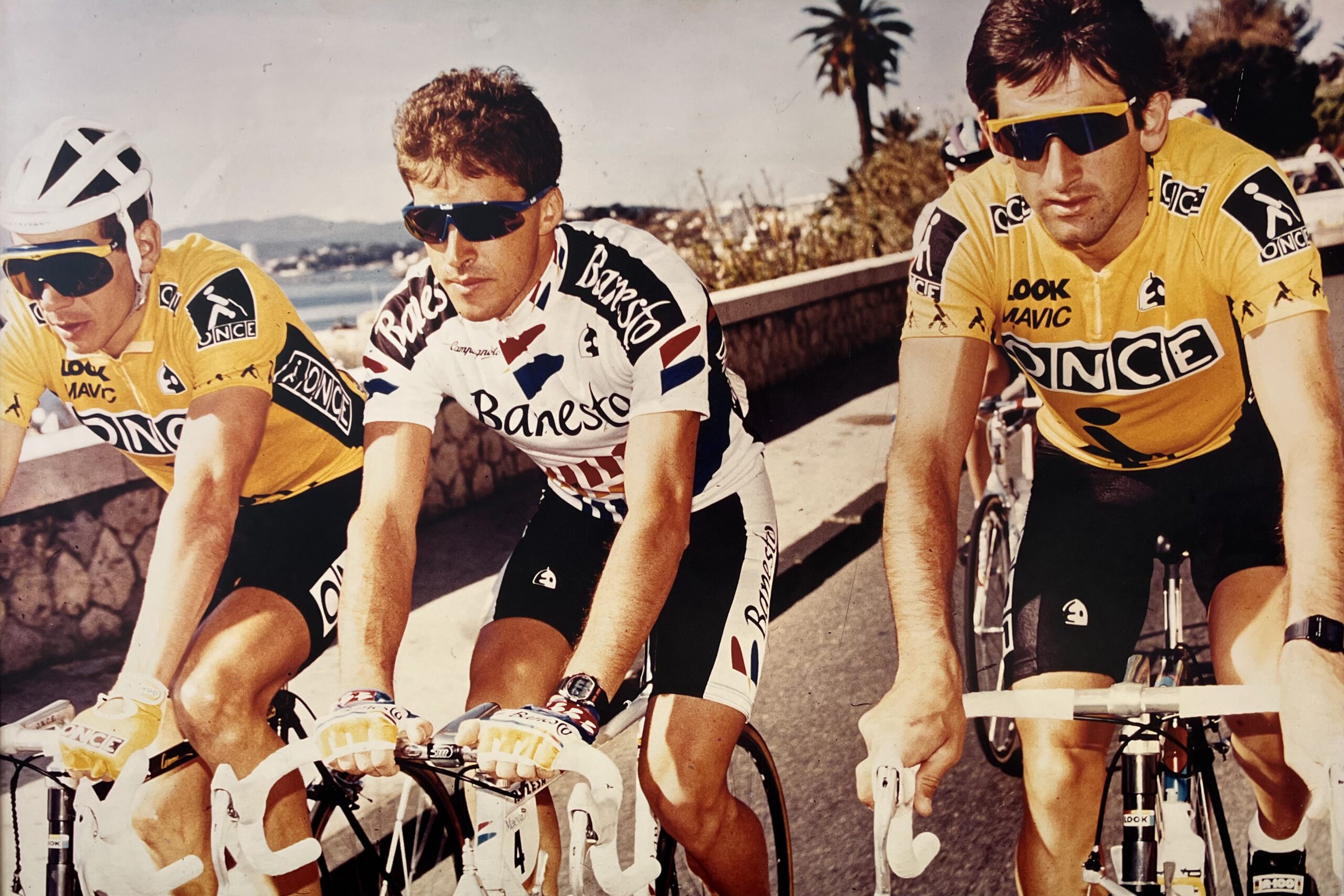
Many of the leading riders of that era— Lejarreta, Mauri, Zülle, Jalabert, Beloki —passed through the ONCE ranks, but above all the team was remarkable for its collective strength. They won team time trials. They launched long-range, multi-rider attacks, like on the legendary medium-mountain stage to Mende in the 1995 Tour: Stephens, Mauri and Jalabert gained ten minutes, put Induráin’s Banesto team under pressure and ultimately clawed back five. Zülle rose to second overall, Jalabert to third, Mauri to fifth. They never toppled Induráin, but their collective might produced some of the most thrilling battles of the decade.

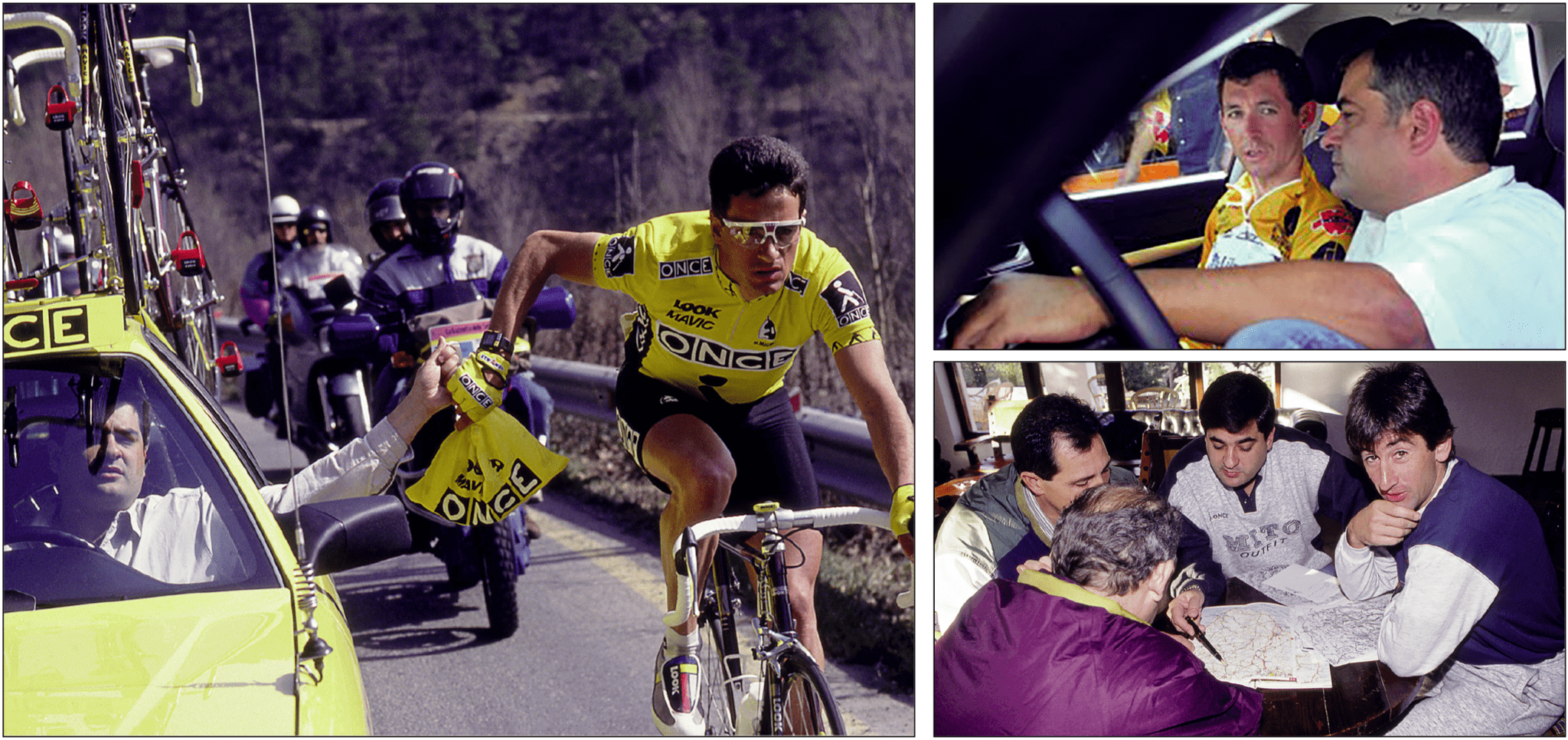
“When I arrived in cycling, teams had one leader and everyone else was a pure domestique — low-paid workers with no personal ambition. I wanted a team model. Yes, we had leaders, but every rider mattered. I treated them all equally. Everyone had opportunities during the season. The team functioned better that way. We won with Zülle and Jalabert, but also with Díaz Zabala, Iñigo Cuesta, Neil Stephens… I wanted everyone to perform at their maximum.”

“ONCE had the best image in the peloton,” Paco Rodrigo says. “Because its director was the boldest. They raced as a block. They changed how races were ridden. Their marketing wasn’t words — it was actions. You could feel it. I sold thousands of ONCE garments.”

¿TE HA GUSTADO?

Suscríbete para no perderte ninguno de nuestros artículos aquí
TAMBIÉN TE PUEDE INTERESAR

Guía de cómo vestir este Otoño-Invierno 24/25 ROOTS AT HOME, BRANCHES OPEN TO THE WORLD

While expanding internationally, Etxeondo also took care to maintain and nourish its deep roots in its home region, supporting the growth of teams such as Kern Pharma and the new Euskaltel-Euskadi. In 2026 the company celebrates its fiftieth anniversary while ushering in a new phase in the company’s history and renewing its commitment to sustainable growth, a strong historical identity and the enduring quality of its cycling kit.  

Lees verder
Guía de cómo vestir este Otoño-Invierno 24/25 De evolutie gaat verder: de Voorjaar/Zomer 2026 collectie

Nieuwe kledingstukken, technische verbeteringen en een vernieuwde visie in het jaar waarin Etxeondo zijn 50-jarig jubileum viert
Lees verder
Guía de cómo vestir este Otoño-Invierno 24/25 TRAMA JERSEY: EEN ONTWERP MET EEN ZIEL, THUIS GEBOREN

Geïnspireerd door een handgemaakte print die meer dan 40 jaar geleden is gemaakt

Lees verder
Guía de cómo vestir este Otoño-Invierno 24/25 De evolutie van excellentie: de nieuwe lente/zomercollectie van Etxeondo

Elke nieuwe collectie van Etxeondo is het resultaat van een zorgvuldig proces waarin traditie en innovatie hand in hand gaan.

Lees verder
Guía de cómo vestir este Otoño-Invierno 24/25 Alde Metalic, ontwerp en prestaties verenigd in een jersey.

Elke lijn, elke curve, versmelt naadloos met het stedelijke landschap en wordt een integraal onderdeel van de omgeving die technologie en ontwerp hebben helpen herdefiniëren.
Lees verder
VOLVER A LA MAGAZINE

Comments (0)

No comments at this moment
Toegevoegd aan de comparator
Er kunnen geen producten meer worden vergeleken.