Sign in

Where It All Began: From a Farmhouse in Amasa-Villabona to the Podium in Paris. Part 1.

by Ander Izagirre.

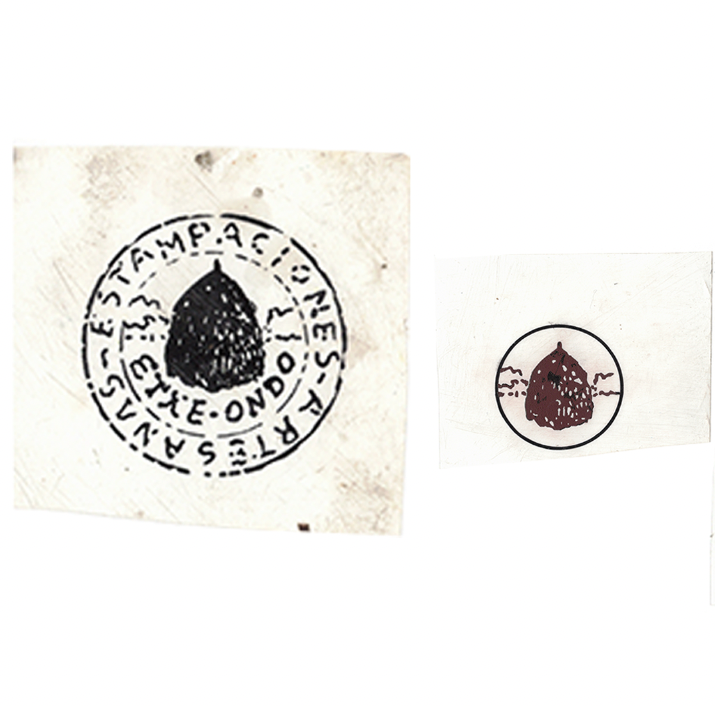
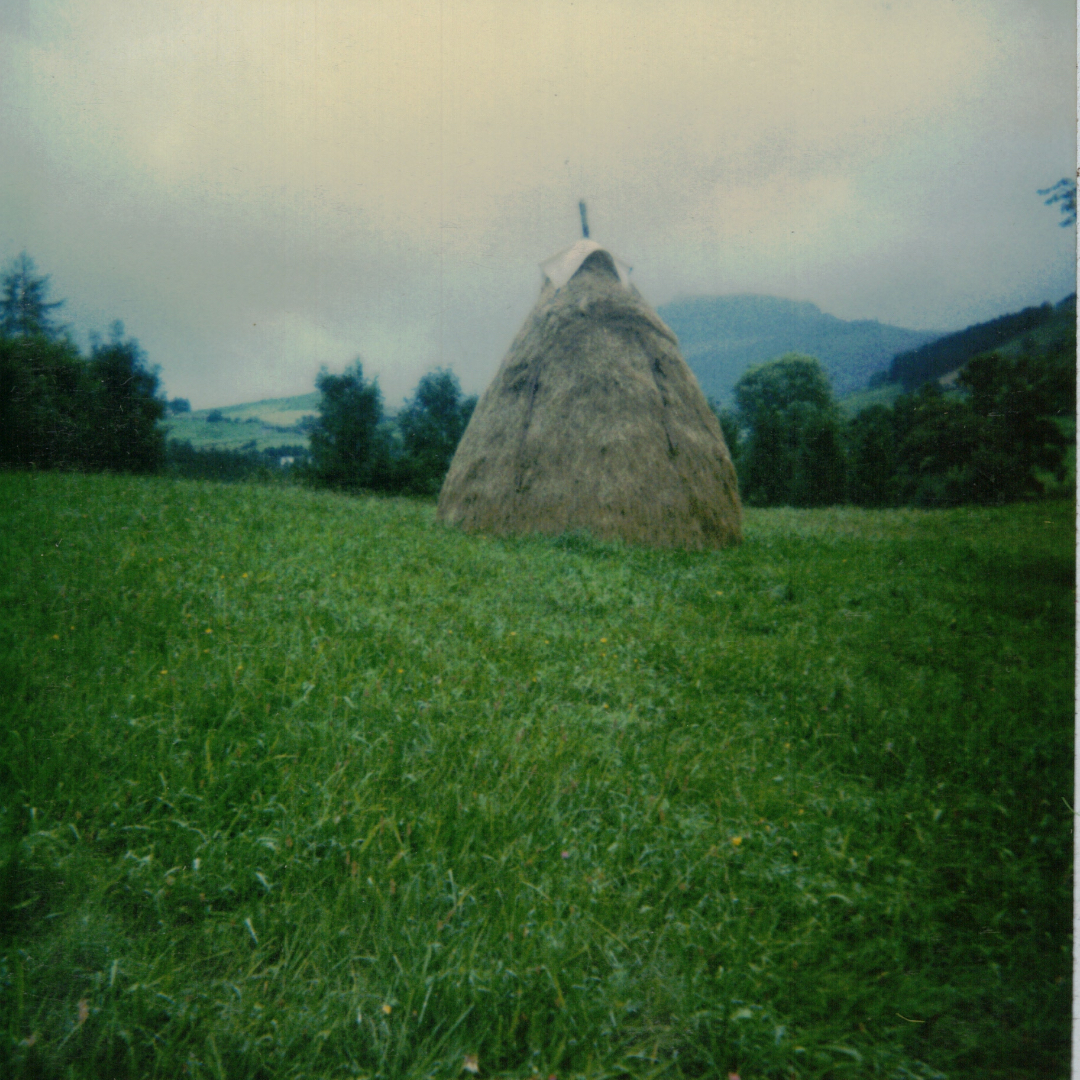
Paco Rodrigo and María Jesús Uranga printed Etxeondo’s first designs in 1976, surrounded by mooing cows in a five-hundred-year-old farmhouse in Amasa-Villabona (Gipuzkoa). The surrealist painter and owner of the property, Vicente Ameztoy, created their logo: a belar-meta — a traditional haystack built around a central wooden pole. Not long afterwards, Paco bought himself a bike and began riding with the touring cyclists of Hernani.

These were the first cornerstones of Etxeondo — the elements that would shape the brand’s character and identity: the farmhouse, a taste for the creative avant-garde, the bicycle.

María Jesús had a gift for drawing. In 1972, at just fourteen, she began working at Subijana, a Villabona factory that had specialized in textile printing since 1860.

“One of the company’s owners was Cristóbal Balenciaga, who brought commissions from his haute couture colleagues in Paris — Christian Dior, Chanel, Paco Rabanne, Givenchy…” María Jesús recalls. “We made fabrics and silk scarves for the top fashion houses, all by hand, completely artisanal. It was an extraordinary learning experience for me.”

A 23-year-old from Navarra arrived at the Subijana textile factory. His name was Paco, the son of butchers from Castejón. He had just finished his military service and was looking for a way to make a living.

“I came to Amasa-Villabona because I had an uncle living here. I started out as an assistant to a married couple who were butchers, but pretty quickly someone recommended me to the manager at Subijana. He asked me a few questions. ‘So, kid—how are you with numbers?’ ‘Fine, fine.’ They put me to work as a colourist.”

His job was to mix chemical compounds, refining the recipes to achieve specific colours. It was complex, technical work—almost mathematical—but Paco soon got the hang of it, and more importantly, he enjoyed it.

“I became a colourist, imagine that—a whole world that was completely unknown to me.”

It was in the engraving department that Paco met María Jesús. They worked with the new printing machines, debated projects, suggested tweaks and corrections—and, along the way… they started looking at each other a little differently.

“We argued a lot about the work, and we had a great time,” Paco recalls. “It was a blessing. We were young, full of energy, and that’s when we realised we were creative too. Sometimes we cheated a bit: they’d ask us for one thing for a collection, and we’d present something else. They never noticed the change—and it usually turned out much better.”

“That’s when we realised we were good at it,” María Jesús adds. “That we liked design, working with colour…”

“You’d look at the fabric from afar, turn it, and let the colour speak—whether it held together, striped or shifted with the light—always keeping the texture in mind so the colour stayed clean and true. We’d retouch, refine, and fine-tune endlessly.”

Half a century later, use of colour is still one of the things that defines Etxeondo—an instantly recognisable signature of the brand’s clothing.

Paco is still a passionate colourist. He pays close attention to what he sees on television, in fashion magazines, or anywhere else a splash or flash of colour could catch his eye. He shares the passion and instinct with his daughter Amaia. Together they decide on the palettes that will shape trends two years down the line.

Vicente Ameztoy painting a mural for a fair in Germany (1988)

Vicente Ameztoy durante una colaboración.

A path of their own

After their apprenticeship years, in 1976 Paco and María Jesús decided it was time to strike out on their own. They received crucial support from painter Vicente Ameztoy, one of Subijana’s owners, who offered them a workspace in his family’s ancestral home in Amasa-Villabona: the Etxeondo farmhouse.

“Etxeondo was a real farmhouse,” Paco says. “It had a vegetable garden, cows in the barn, spaces completely unsuited to the kind of work we wanted to do. So we started from scratch. I built a printing machine, a chemical kitchen for dyes, the lighting setup… We didn’t buy a single machine. Everything was handmade.”

María Jesús kept her morning job at Subijana to ensure at least one steady income. In the afternoons she joined Paco at Etxeondo.

“Everything was a challenge,” she says. “I was very young, and I felt strongly about leaving the factory and proving I could do this work on my own. We jumped in. We started the company, we moved in together without getting married—which at the time was very much frowned upon…”

“We weren’t quite hippies,” Paco laughs, “but close. We’ve always been pretty anarchic. We were excited, we wanted to create something of our own. We understood each other well, we knew what we liked and what we wanted. We corrected each other, criticised each other, and argued constantly about the work. It was pretty exciting.”

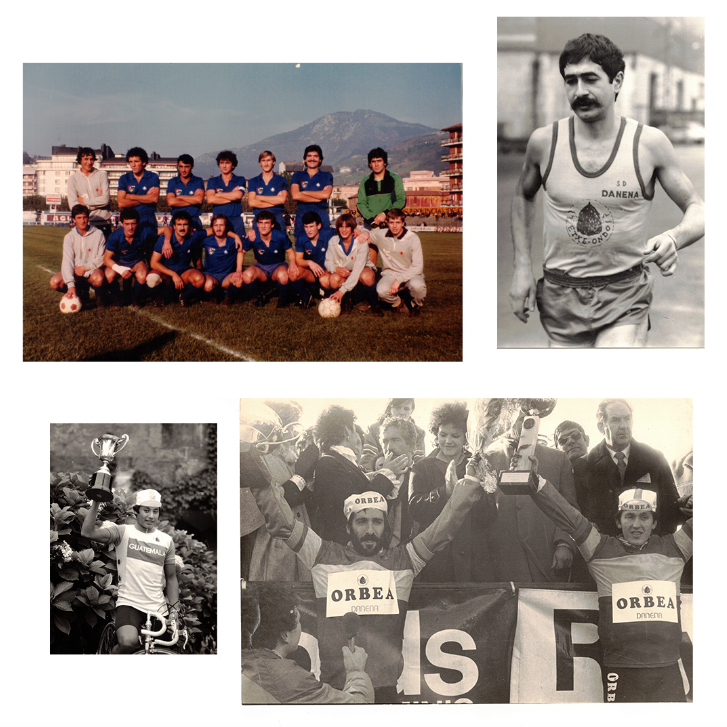
Paco and María Jesús next to one of the athletics teams they collaborated with.

Paco and María Jesús next to one of the athletics teams they collaborated with.

 “We were in love, and that played a part too,” María Jesús laughs. “We were one soul in two bodies. How do you explain that? Some things you just carry inside you.”

“At work, if we argued, I was tough with her,” Paco admits.

“And I did the same to him,” she interjects.

So what did Etxeondo do in its early years?

“Whatever we could,” Paco says. “Little cloths, printing, T-shirts—thousands of T-shirts. Tops for social clubs, for sports teams, for town festivals and for the big Kilometroak festival that takes place every October. When the first Basque expedition climbed Everest, we made a T-shirt with a picture on it. We sold thousands.”

“It wasn’t what we wanted to do,” María Jesús says. “We did it to survive and to get our project off the ground, because we had a bigger goal.”

“A brand. We wanted to create a brand, to develop our own style.”

“Like everyone else, we needed a trade to make a living,” Paco says. “But we also had a spiritual—or creative, call it what you want—need to express ourselves. We were incredibly lucky to work with artists. An artist shows you things you didn’t know how to see.”

“Vicente Ameztoy would bring friends to the farmhouse. We’d print T-shirts with their designs, with the logo of some art gallery—tiny runs of ten or twenty pieces. But we learned so much. They taught us new ways of seeing things, and we soaked it all up.”

They also worked with the Orquesta Mondragón, a band that combined music with transgressive, delirious, provocative and comedic stage performances, fronted by Javier Gurruchaga and featuring the silent clown ‘Popotxo’.

-“We did their album covers, their T-shirts. We had an absolute blast with those people.”

“But we’ve never considered ourselves artists,” Paco says. “We’ve been technicians and businesspeople. Sure, we’re creative—but being an artist is something else.”

“I have enormous respect for true artists,” he continues. “I’ve known many, all very different, and you immediately sense that they’re special—people who see the world in a way that unsettles you, surprises you, challenges you. Some follow a very clear line, with a powerful personal language. We’re technicians. Although,” he adds, “sometimes I see things María Jesús has designed for galleries and I think… wow… this is…”

“…a mess,” she interrupts again.

“You’ll call it a mess,” he replies, “but to me it’s art—or very close to it. The thing is, we never set out to be artists. We weren’t trying to open exhibitions. That wasn’t our purpose.”

So what was the goal?

“To create something of our own, something recognisable. Our priority was never to make lots of money or grow bigger and bigger as a company. It was to make excellent products.”

You insist you’re not artists, yet you clearly take pride in what you create.

“It’s pride in work well done,” María Jesús explains. “Doing things properly has always been our obsession. If a garment comes in with a badly finished seam, or if any detail’s off, we reject it. The normal reaction would be to let it slide, thinking the next one will be better. But not here. At Etxeondo that sample doesn’t pass. We turn it inside out, upside down, a thousand times, until it’s perfect.”

“I’m very clear about this,” Paco says. “If a garment has a flaw, it’s cheaper for us to destroy it. Because if we sell it, we earn that money—but we lose something far more important.”

After two or three years at the Etxeondo farmhouse, Paco and María Jesús realised they needed to specialise. They needed to choose a domain they truly cared about and make the best possible clothing for that. Paco happened to really like bicycles…

Life is many things but rarely predictable: Etxeondo’s route into cycling was the Orquesta Mondragón.

To be continued in Part Two...

¿TE HA GUSTADO?

Suscríbete para no perderte ninguno de nuestros artículos aquí
TAMBIÉN TE PUEDE INTERESAR

Guía de cómo vestir este Otoño-Invierno 24/25 ROOTS AT HOME, BRANCHES OPEN TO THE WORLD

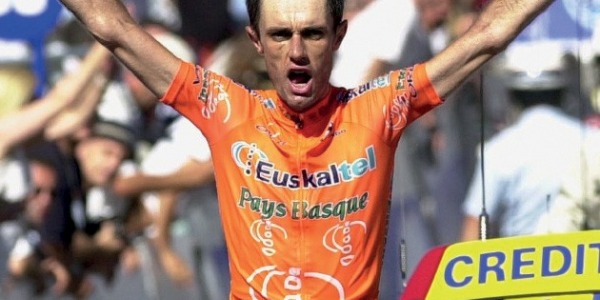
While expanding internationally, Etxeondo also took care to maintain and nourish its deep roots in its home region, supporting the growth of teams such as Kern Pharma and the new Euskaltel-Euskadi. In 2026 the company celebrates its fiftieth anniversary while ushering in a new phase in the company’s history and renewing its commitment to sustainable growth, a strong historical identity and the enduring quality of its cycling kit.  

Read more
Guía de cómo vestir este Otoño-Invierno 24/25 The evolution continues: the Spring/Summer 2026 collection

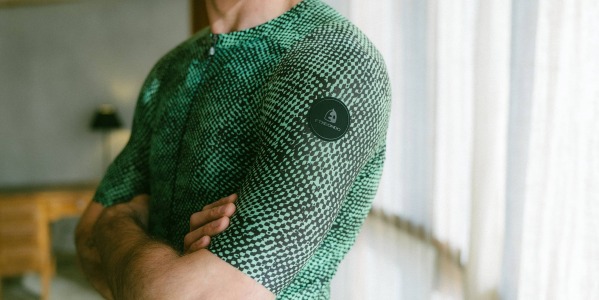
New garments, technical innovations and a renewed vision in the year we celebrate our 50th anniversary
Read more
Guía de cómo vestir este Otoño-Invierno 24/25 TRAMA JERSEY: A DESIGN WITH SOUL, BORN AT HOME

Inspired by a handmade print created more than 40 years ago

Read more
Guía de cómo vestir este Otoño-Invierno 24/25 The Evolution of Excellence: Etxeondo’s New Spring/Summer Collection

Every new Etxeondo collection is the result of a meticulous process, where tradition and innovation converge in perfect harmony.

Read more
Guía de cómo vestir este Otoño-Invierno 24/25 Alde Metalic, design and performance united in a jersey.

Every line, every curve, blends seamlessly with the urban landscape, becoming an integral part of the environment that technology and design have helped to redefine.
Read more
VOLVER A LA MAGAZINE

Comments (0)

No comments at this moment
Added to the comparator
No more products can be compared.