Connexion
fr
  • Español
  • Euskera
  • Français
  • Nederlands
  • Deutsch
  • Italiano
  • English
  • Homme
    • OUTLET
    • VÊTEMENTS
      • MAILLOTS
      • VESTES
      • CUISSARDS COURTS
      • CUISSARDS LONGS
      • GILETS
      • VESTES DE PLUIE
      • CASUAL
      • AERO
      • 50e ANNIVERSAIRE
    • ACCESSOIRES
      • SOUS-VETEMENTS
      • CHAUSSETTES
      • MANCHETTES
      • JAMBIÈRES
      • GANTS
      • COUVRE-CHAUSSURES
      • CASQUETTES-BONNETS
      • BIDONS
      • AUTRES ACCESSOIRES
    • SAISONS
      • PRINTEMPS
      • ÉTÉ
      • AUTOMNE
      • HIVER
    • TYPE DE CYCLISTE
      • PRO
      • ENDURANCE
      • ESSENTIALS
      • LUX
    • ÉQUIPES
      • COFIDIS
      • KERN PHARMA
      • HERITAGE
    • Outlet
  • Femme
    • OUTLET
    • VÊTEMENTS
      • MAILLOTS
      • VESTES
      • CUISSARDS COURTS
      • CUISSARDS LONGS
      • GILETS
      • VESTES DE PLUIE
      • CASUAL
      • AERO
      • 50e ANNIVERSAIRE
    • ACCESSOIRES
      • TOP ET SOUS-VETEMENTS
      • CHAUSSETTES
      • MANCHETTES
      • JAMBIÈRES
      • GANTS
      • COUVRE-CHAUSSURES
      • CASQUETTES-BONNETS
      • BIDONS
      • AUTRES ACCESSOIRES
    • SAISONS
      • PRINTEMPS
      • ÉTÉ
      • AUTOMNE
      • HIVER
    • TYPE DE CYCLISTE
      • PRO
      • ENDURANCE
      • ESSENTIALS
    • Outlet
  • Carte cadeau
  • Comparateur
  • Lookbook
  • 50 Aniversario
  • Revue.
  • Inside Etxeondo
  • Peau de chamois
  • Tissus et materiaux
  • Confection
  • Guide des tailles
  • Contact

Frais de port offerts à partir de 200$

Retours offerts sur toutes les commandes

Duties and taxes included

$ Dollar des États-Unis
  • $ Dollar australien
  • € Euro
  • $ Dollar des États-Unis
  • £ Livre sterling
fr
  • Español
  • Euskera
  • Français
  • Nederlands
  • Deutsch
  • Italiano
  • English
Guide des tailles
Etxeondo
  • Homme
    VÊTEMENTS
    • MAILLOTS
    • VESTES
    • CUISSARDS COURTS
    • CUISSARDS LONGS
    • GILETS
    • VESTES DE PLUIE
    • CASUAL
    • AERO
    • 50e ANNIVERSAIRE
    ACCESSOIRES
    • SOUS-VETEMENTS
    • CHAUSSETTES
    • MANCHETTES
    • JAMBIÈRES
    • GANTS
    • COUVRE-CHAUSSURES
    • CASQUETTES-BONNETS
    • BIDONS
    • AUTRES ACCESSOIRES
    SAISONS
    • PRINTEMPS
    • ÉTÉ
    • AUTOMNE
    • HIVER
    TYPE DE CYCLISTE
    • PRO
    • ENDURANCE
    • ESSENTIALS
    • LUX

    ÉQUIPES
    • COFIDIS
    • KERN PHARMA
    • HERITAGE
    Destacado
    Outlet img-fin-menu Acheter homme
  • Femme
    VÊTEMENTS
    • MAILLOTS
    • VESTES
    • CUISSARDS COURTS
    • CUISSARDS LONGS
    • GILETS
    • VESTES DE PLUIE
    • CASUAL
    • AERO
    • 50e ANNIVERSAIRE
    ACCESSOIRES
    • TOP ET SOUS-VETEMENTS
    • CHAUSSETTES
    • MANCHETTES
    • JAMBIÈRES
    • GANTS
    • COUVRE-CHAUSSURES
    • CASQUETTES-BONNETS
    • BIDONS
    • AUTRES ACCESSOIRES
    SAISONS
    • PRINTEMPS
    • ÉTÉ
    • AUTOMNE
    • HIVER
    TYPE DE CYCLISTE
    • PRO
    • ENDURANCE
    • ESSENTIALS

    Destacado
    Outlet img-fin-menu Acheter femme
  • Carte cadeau
  • 50 anniversaire
  • Lookbook
  • Revue.
  • Etxeondo
    • Legends
    • Inside Etxeondo
    Les technologies
    • Peau de chamois
    • Tissus et materiaux
    • Confection
  • Comparateur
  • Lookbook
  • 50 Aniversario
  • Revue.
  • Inside Etxeondo
  • Peau de chamois
  • Tissus et materiaux
  • Confection
  • Guide des tailles
  • Contact
Recherche
Compare ()
Connexion
0 Panier / Empty
Your cart
Il n'y a plus d'articles dans votre panier
Recherche
Etxeondo Etxeondo
Connexion
0 Panier
  1. Accueil
  2. Blog
  3. Films
  4. The Breakthrough Years (1983-1988) Part 2.

The Audacious Era (1983-1988) 2nd part

By Ander Izagirre

A Dance of Designs

“Less is more. Some people struggle with that. You design something sober and elegant and they tell you to add the logo in more places, fill every empty space with words. They think the more advertising you cram onto a jersey, the more visible it is. It’s not true. You suffocate the design. You fill the spaces where it needs to breathe. Sometimes I agreed. Sometimes we negotiated. Sometimes I refused. I want my jersey to be elegant and to look right. I understand there are teams relying on seventeen sponsors for survival and they have to fit them in somehow. But I won’t accept just anything. It’s my image. It’s an Etxeondo jersey — it can’t be a mess. There are designs I wouldn’t make even if the best team in the world offered me a fortune.”

Kas, the soft-drinks company that had sponsored a legendary team in the 1960s and ’70s, returned to the peloton in the mid-1980s with an ambitious project. Their marquee signing was the Irish star Sean Kelly. Ramón Mendiburu came in as manager, and the kit was entrusted to Etxeondo.

They remained faithful to a design very close to the iconic Kas look: a yellow jersey with black lettering across the chest and narrow blue stripes at the collar, sleeves and sides. But because the Tour de France vetoed yellow jerseys that might be confused with the leader’s maillot jaune, Kas reversed the colours for that race, competing in blue with small yellow accents. Paco Rodrigo hated having to forsake the team’s “home strip” at the most important race in the world. So in 1988 he committed a small heresy.

“Paco and his ideas,” says Mendiburu. “He sent us to the Tour with a jersey that was more yellow than blue…”

“No, no!” Paco protests. “It was fifty-fifty. I calculated it so they couldn’t say it was a yellow jersey. The chest and back were yellow, but the shoulders, sleeves and sides were completely blue. When you saw the rider pass, you saw blue. There was no way it could be mistaken for the yellow jersey.”

“Well, Jacques Goddet, the Tour director, came to us and said: ‘You’re not starting in that jersey.’”

“Goddet was old school,” adds Txomin Perurena. “He’d been running the Tour since the 1930s. Dressed like an explorer, with gaiters and a safari helmet…”

“I went to see Xavier Louy, who was taking over from Goddet that year,” Mendiburu continues. “He told me not to worry. He said we should start in that jersey.”

“I had complete trust in Ramón,” Paco smiles. “I knew no one would give us trouble with him there.”

It wasn’t the first or only time that Etxeondo had to improvise at short notice. There had been times when the arrival of a new sponsor days or even hours before a race had Paco scrambling to rejig designs. 

“I’ve had to produce Tour jerseys with a new sponsor in two or three days,” Paco recalls. “Design them, manufacture them, ship them — all against the clock. Some companies had a clear corporate image. Others just sent a logo and left the rest to me. Seur, for example, had a very strong, beautiful identity. But of course, you also have to win. You can design the most beautiful jersey in the world, but if the riders don’t win, it doesn’t shine. The famous La Vie Claire jersey was magnificent — yes — but it became iconic because Hinault and LeMond wore it and won Tours.”

The La Vie Claire jersey was inspired by Piet Mondrian's paintings: blocks of blue, red, yellow, white and black, divided by bold black lines.

Emergency Sirloin for Kelly

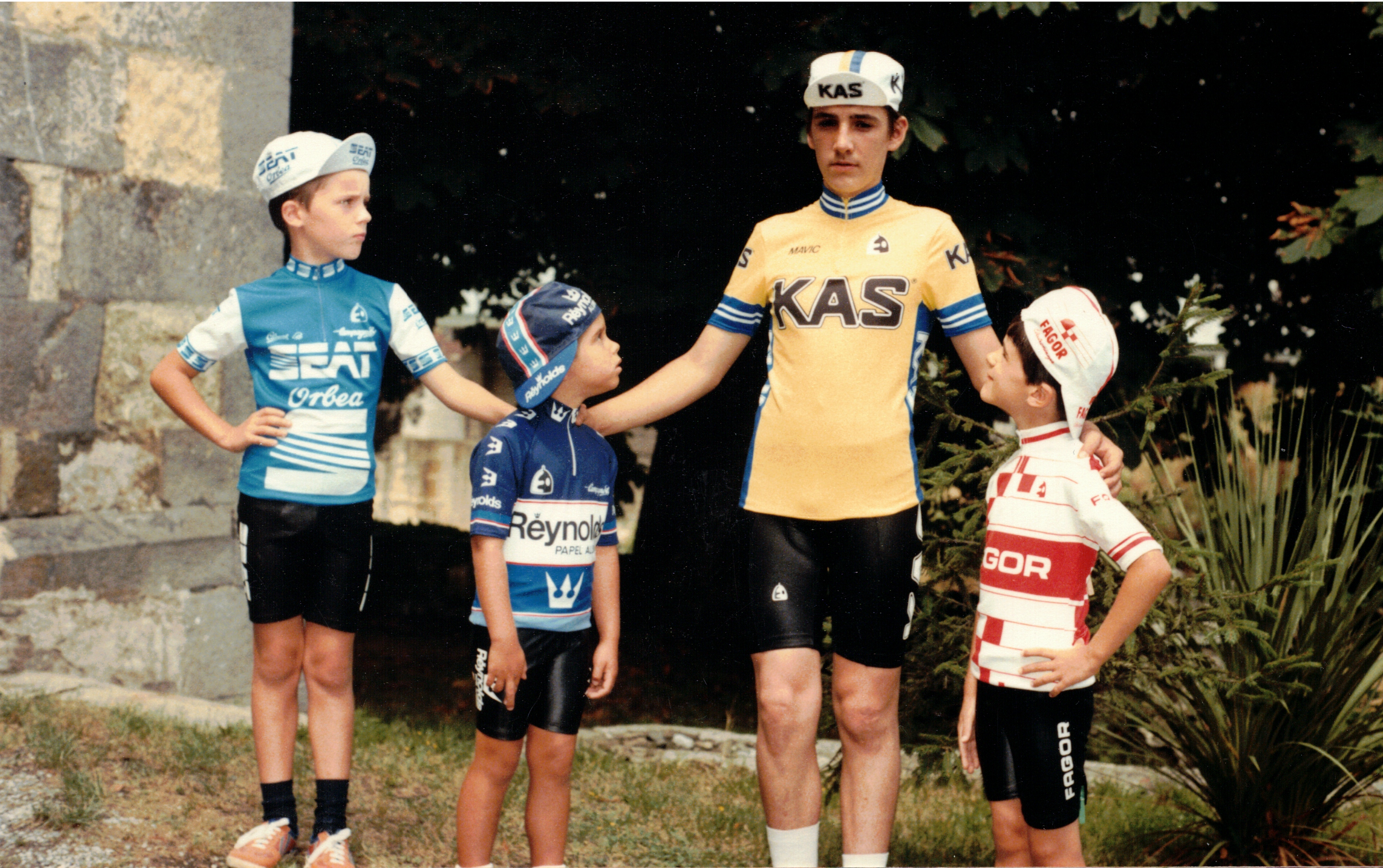
In 1986, four teams rode the Tour in Etxeondo kit: Orbea, Fagor, Kas and Reynolds — two based in Gipuzkoa, one in Álava and one in Navarra.

“Marketing has changed now,” says Paco Rodrigo. “Back then the most important thing was putting jerseys on pro teams’ backs and winning races. We had everything here: strong riders, strong companies willing to invest, big signings… We had so many cyclists winning it was hard to keep track. I remember Jean-Luc Vandenbroucke. He was riding for Kas — at first I barely knew who he was — and suddenly he was winning time trial after time trial, even taking the leader’s jersey in the Vuelta prologue.”

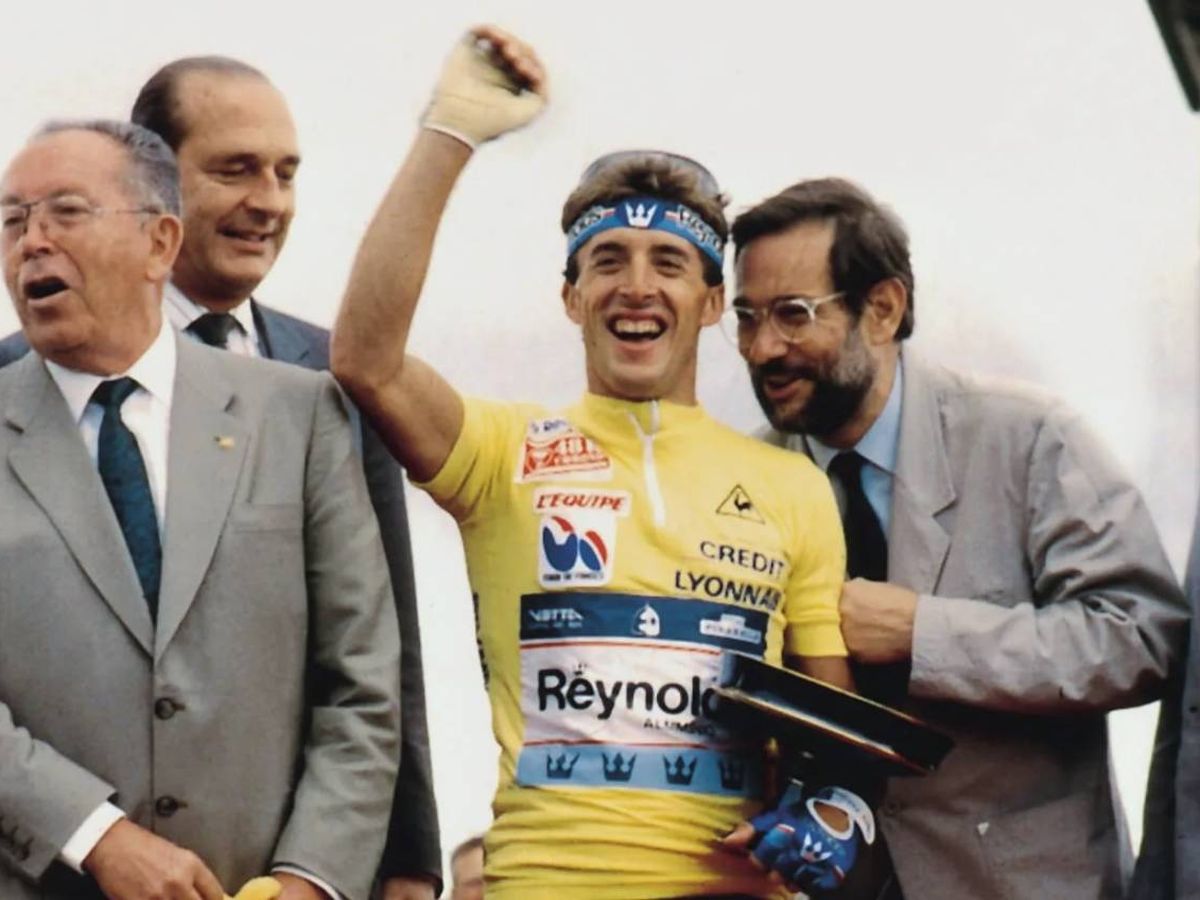
In 1988, Etxeondo would win the Tour with Pedro Delgado and the Vuelta with Sean Kelly, but those victories didn’t come easily. Paco devoted endless hours to perfecting Kelly’s shorts. The Irishman suffered recurrent boils — more accurately, abscesses — and in 1987 he had abandoned the Vuelta while leading with four stages to go, the pain of sitting on the saddle having become too much to bear.

“People say boils, but it was an abscess,” explains Mendiburu. An abscess is a gland infection that produces pus, swelling and fever. When it occurs in the perineum, sitting on a bike saddle becomes agony.

Kelly had the 1987 Vuelta all but wrapped up, Mendiburu recalls. He was half a minute behind the climber Lucho Herrera and seemed certain to take the lead in the Valladolid time trial. The day before, his perineal sores worsened and he endured 220 kilometres of torture. The papers reported that Kelly rode up to the race doctors’ car asking for a steak filet to place on the inflamed area, but it was Sunday and no butcher was open.

“It wasn’t a filet,” Mendiburu says firmly. “Kelly put on a chunk of sirloin that I bought myself in Ponferrada.”

That night the Vuelta doctors lanced the infection to drain it and reduce the swelling, but it wasn’t enough.

“It was hugely swollen, bright red — awful. The next day he rode the time trial with a steak in his shorts. He suffered terribly. He finished second and took the leader’s jersey. But we knew he couldn’t go on. I called Don Luis Knörr, the Kas owner, and told him we had the Vuelta in our hands but Kelly would abandon the next day. I told Kelly to start the stage as normal to avoid the swarm of journalists, and after ten kilometres he climbed into my car.”

Paco remembers Kelly always had trouble in exactly the same spot.

“I made him special shorts. I built chamois pads with slightly thicker cushioning around the area that flared up, so there was no direct pressure. In the 1988 Vuelta he had some issues again, but thanks to those chamois it didn’t get worse — and he won.”

Paco knew Kelly’s, ahem, perineum down to the millimetre.

“Of course,” he laughs. “I even kept the pattern. Somewhere I’ve still got the template of Kelly’s backside.”

That forensic attention to detail wasn’t reserved for only team leaders.

“If a rider came to me with a problem, I’d put in whatever hours were needed to fix it. Didn’t matter if he was a captain or a domestique. Shorts are delicate. One tiny imperfection can ruin a race. Everyone has their issues and their quirks. Some wanted huge chamois they didn’t really need, and I had to convince them otherwise. It’s personal. Each rider needs the right solution for him.”

And that meant a lot of work.

“Imagine the year we had four teams at the Tour. We had to fine-tune the shorts of forty riders for the biggest race of the season, make sure none of them had problems over three weeks — in the heat, with the punishment they took…”

Txomin Perurena jokes that Kelly’s problems came from clenching harder than anyone.

“I was his director at Lotus-Festina in 1992. At Tirreno–Adriatico, Kelly would finish a stage, get a quick massage, then go back out to ride extra kilometres to build endurance for Milan–Sanremo the following Saturday. And he won it — at nearly 36.”

“I remember a Critérium International,” Paco adds. “In the morning stage Kelly came in with a group of five or six — Roche, Fignon, Bernard, the very best — and beat them in the sprint. While he was getting a massage in the car he told Mendiburu, ‘Don’t worry, I’ve saved energy for this afternoon’s time trial. You’ll see.’ That confidence impressed me. Think of the guys he was up against. But he was certain. And he delivered.”

“He was extremely professional,” Mendiburu confirms. “Quiet. Humble. Attentive.”

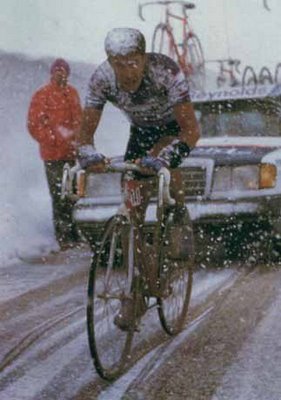
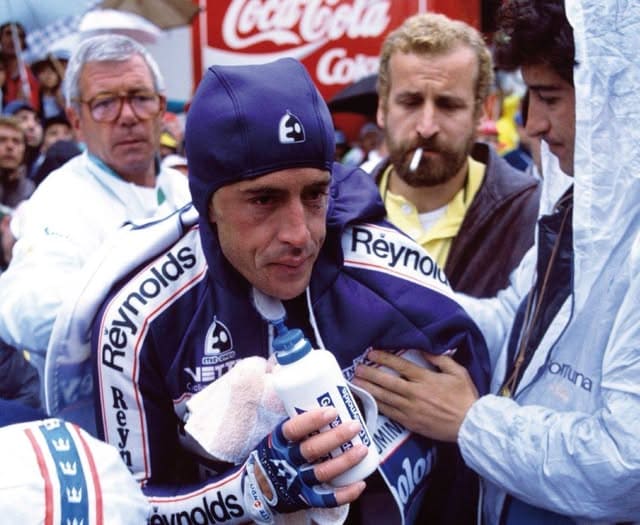
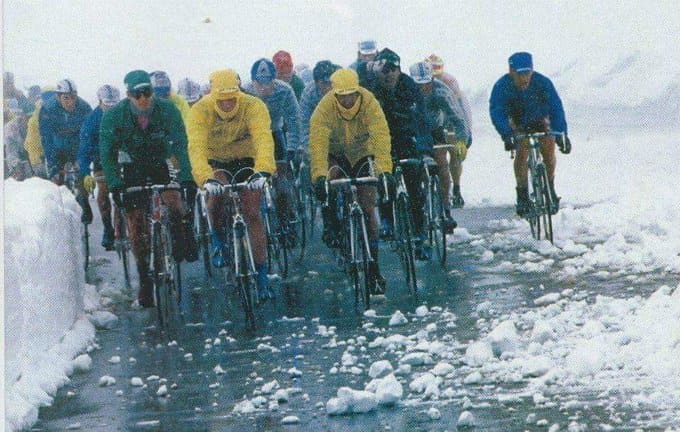
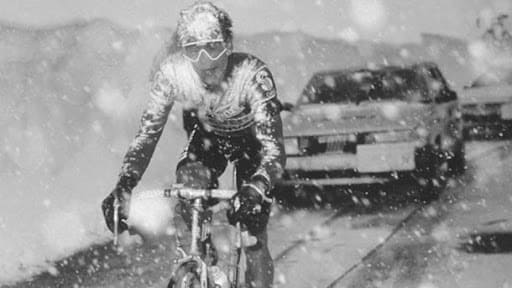
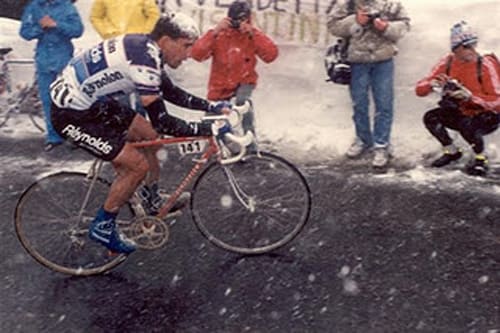
In that remarkable 1988 season — with the Tour and Vuelta winners both wearing Etxeondo — the Giro d’Italia encountered an epic, infamous snowstorm on the Gavia Pass. Pedro Delgado, tenth that day, doesn’t believe the clothing was inadequate. The problem was the extreme conditions: 2,621 metres above sea level, five degrees below zero, heavy snowfall blanketing the road, followed by a 25-kilometre descent with wind-chill close to minus thirty.

“We knew it might snow,” Delgado recalls. “Early on there was talk of neutralising the stage, but we carried on. I started the Gavia with neoprene gloves — new at the time, very good — but they were too warm, so I put them in my pocket. Higher up it got colder and colder. I reached the top shaking. I stopped. The Reynolds staff gave me a bottle of hot tea and one of those Etxeondo thermal jackets with a hood — very good jackets. I tried to put the gloves back on but couldn’t. My hands were frozen, I couldn’t get my fingers in. So I went down without gloves. I don’t even know how I managed to brake into the corners. We already had good winter clothing then — neoprene, thermal garments — but you can’t prepare for conditions like that. Maybe you learn that soigneurs should bring bigger gloves so you can slide frozen hands inside. But that wasn’t normal.”

“We were already making thermal shorts and base layers then,” Paco explains. “We used a special hollow-fibre fabric — an advance in thermoregulation. I always made friends with textile engineers. I found the only people producing those fibres and bought from them. When they stopped and were about to dismantle the machines, I’d buy them myself so we could keep making the fabric. We also used water-repellent fabrics. We sold huge numbers of cold- and wet-weather garments. We were always alive to technical advances.”


Image alt 1
Image alt 2
Image alt 1
Image alt 3
Image alt 2

The Seamstresses of Castejón

There is no champion without a chamois. No podium in Paris without the workshop in Castejón. No Sean Kelly without Amparo Martí.

During Etxeondo’s expansion into international cycling, Paco Rodrigo opened a workshop in his hometown of Castejón, in Navarra’s Ribera region. Around ten people worked there, with others sewing from home as freelancers.

“They used to bring work to my house,” recalls Amparo Martí, who has been making Etxeondo garments for 36 years. “I started sewing Kas caps and Reynolds gloves. It suited me perfectly — I had two young daughters — and later we all moved into the workshop.”

Today thirty women work there, producing all the clothing for professional teams and every pair of Etxeondo shorts.

“Shorts are our speciality, our flagship product,” Martí says. “At the start we had to learn a lot because Lycra isn’t easy to work with — it’s very elastic, it stretches, it tears. The first machines would rip the fabric. We had to bring in specialised ones. And then there’s the chamois. It’s extremely delicate. If it’s half a centimetre out of position, you can ruin a rider’s race. New seamstresses spend three or four months just learning how to place chamois before sewing their first pair. We always tell them: we don’t pay for quantity, we pay for quality.”

Martí is 65 and close to retirement. She says she will miss the workshop deeply.

“It feels like it’s mine now. It’s my life. We’ve worked so hard here, and it’s been such a joy to see the results. We always follow the races. We see the riders on TV wearing our clothes and we comment on it: ‘Did you see how well that zipper sat? How good the skinsuit looked?’ That matters. In life, it’s important to feel proud of doing things properly.”

Share this post

¿TE HA GUSTADO?

Suscríbete para no perderte ninguno de nuestros artículos aquí

TAMBIÉN TE PUEDE INTERESAR

Guía de cómo vestir este Otoño-Invierno 24/25 Not just a ride
En savoir plus
VOLVER A LA MAGAZINE

Commentaires (0)

Aucun commentaire pour l'instant
Vous devez être connecté pour ajouter un commentaire.

ABONNEZ -VOUS À NOTRE NEWSLETTER

Nous pouvons t'aider?
  • Guide des tailles
  • FAQ
  • Contact us
  • Stores
Orders
  • Conditions d'expédition
  • Retours et échanges
  • Méthodes de paiement
  • Order history
Catégories
  • Vetement cyclisme homme
  • Vetement cyclisme femme
  • Accessoires cyclisme
Offres
  • OUTLET
  • Fin de saison
  • BLACK FRIDAY

© Tous droits réservés.

Etxeondo 2026
  • Politique de confidentialité
  • Politique de cookies
  • Conditions générales
Ajouté au comparateur
Aucun autre produit ne peut être comparé.
Warning - Commercial B2B