Anmelden

The Audacious Era (1983-1988) 1st part

by de Ander Izagirre

“How many riders got off their bikes because they couldn’t stand the chafing from the saddle anymore…” says Pedro Delgado.

It happened more often in the days of leather chamois pads, which were rough and tended to crease. After hours and days in the saddle, the combined effects of sweat, dust and potholed roads could turn a substandard chamois into sandpaper and could leave a rider’s most delicate area red raw. The friction caused boils, abscesses, infections. Riders endured a form of martyrdom often abbreviated with three letters: DNF, standing for “Did Not Finish”.

“I think I had some problems like that when I was a junior, but by the 1980s we’d turned the page,” Delgado continues over the phone. “Etxeondo came along and everything changed. Paco was obsessed with shorts and chamois pads. He was always looking for ways to improve them. We moved to Lycra shorts and synthetic pads and, at least in my case, the problems disappeared. But in the earlier days… phew. The veterans will tell you stories about putting steaks on the sores to soothe the chafing…”

The veterans are Txomin Perurena and Ramón Mendiburu, who gather with Paco Rodrigo, founder of Etxeondo, to reflect on the modernization of cycling — and cycling clothing in particular — during the 1980s. First, Paco wants to clear one thing up:

“We still call them chamois, but what we use now aren’t really chamois anymore.”

The dictionary confirms that chamois originally meant tanned sheepskin. Strips of that leather were sewn into the inside of hats to absorb sweat. They were also used as padding for horseback riding, and from there made their way into cycling.

“Chamois was the lowest-grade leather, the coarsest,” Paco continues. “The finest was caloyo — from newborn lambs. They wanted the skin of a lamb that had never even gone out into the fields, that hadn’t so much as seen sunlight. It wasn’t better than today’s synthetic fabrics, but it was incredibly soft, the most delicate material there was — and it cost a fortune. High-end leatherwork. I’ve always been obsessed with texture. And I saw that in cycling shorts they often used skins from older lambs, from sheep — tougher hides. Sometimes they even had tiny thorns stuck in them. Those chamois were rough, they itched — and with little spikes in the pad, you can imagine what that meant for the rider.”

Delgado straddles two generations, beginning his career alongside riders who would go nowhere without a jar of skin cream in their suitcase.

“Until the synthetics arrived, the chamois were always a worry. You had to lather on the cream so they wouldn’t go stiff — but not too much, or it would turn into a paste. And then it was: what cream do you use, and how much?”

Perurena, who won 158 races between 1966 and 1979 with Fagor, Kas and Teka, remembers that riders “packed light” out of necessity rather than choice.

“We’d go to a three-week stage race with just two or three pairs of shorts. At the end of each stage we were supposed to wash them in the hotel sink with a bar of soap. But we didn’t always bother — after a brutal day, you didn’t feel like doing laundry. Sometimes you wore the same shorts the next day. Hygiene wasn’t exactly our top priority.”

Paco is appalled. “Shorts have to be washed after every use, even if you’ve only ridden twenty kilometers. If you leave them sweaty, bacteria spread, the pad deteriorates — and so do you. That’s where the infections come from.”

Mendiburu, a rider in the 1960s who later became national coach, Vuelta a España official and UCI executive, remembers one of his worst moments on the bike.

“In the 1967 Tour I suffered terribly from furunculosis,” he recalls. “I developed several boils, and some teammates did too — it was like an epidemic. I couldn’t even sit down. I had a fever.”

Boils are inflammations caused by bacterial infection, typically occurring in areas of the body with hair, moisture and friction from clothing.

“I abandoned in the Pyrenees, near the end of the Tour,” Mendiburu says. “I went back to San Sebastián and was treated by Dr. Echavarren, a sports doctor. He saw how red and inflamed everything was and said, ‘You fool — how can you keep riding like this? You could end up with a serious infection!’ He drew blood from my arm and injected it into the affected area, and it began to heal almost immediately.”

To the rough chamois, poor hygiene and dust from the roads was added another toxic agent: the brutal heat of that 1967 Tour.

“At the stage start in Marseille the sun was beating down mercilessly. I’ll never forget Tom Simpson scooping water from a ditch with his cap and pouring it over his head. I remember thinking: ‘If you’re already roasting now, how are you going to feel in two hundred kilometers?’ During the stage Jesús Aranzábal stuck his head into a watering trough and came out with green slime hanging from his ears… and two bottles of champagne someone had left there to cool.”

Two hundred kilometers later, the peloton rode onto the lower slopes of Mont Ventoux.

“I was climbing in a small group with Jean Stablinski. With a couple of kilometers to go, in that rocky wasteland, we saw a crowd gathered by the roadside around a rider lying on the ground. Dr. Dumas was giving him mouth-to-mouth. Stablinski asked, ‘Qui est-ce que c’est?’ — ‘C’est Tom, c’est Tom!’”

“I ALWAYS HAD BOLD PEOPLE AROUND ME”

In the early 1980s, Spanish cycling modernized rapidly. For the first time, national television broadcast the Vuelta a España live. Newspapers and radio suddenly started expanding their race coverage. The exposure brought in sponsors, budgets increased, equipment improved.

Mendiburu, then technical director of the Vuelta, was one of the agents of change.

“Televisión Española used to show only a twenty-minute highlights package at night. When the 1982 Vuelta finished, they told us: ‘If you bring Hinault next year, we’ll broadcast the race live.’ I went to Paris to ask Félix Lévitan, the Tour organizer, to help me. He convinced Guimard, Hinault’s director, and told me it was a done deal — that I should speak with him to agree the conditions. We brought Hinault. It was the first Vuelta shown live, and it was a huge success: Hinault battling Lejarreta, Gorospe, Alberto Fernández, the first summit finish at Lagos de Enol… Hinault won, but it cost him his knee. He had surgery, missed the Tour, and the following season he wasn’t the same…”

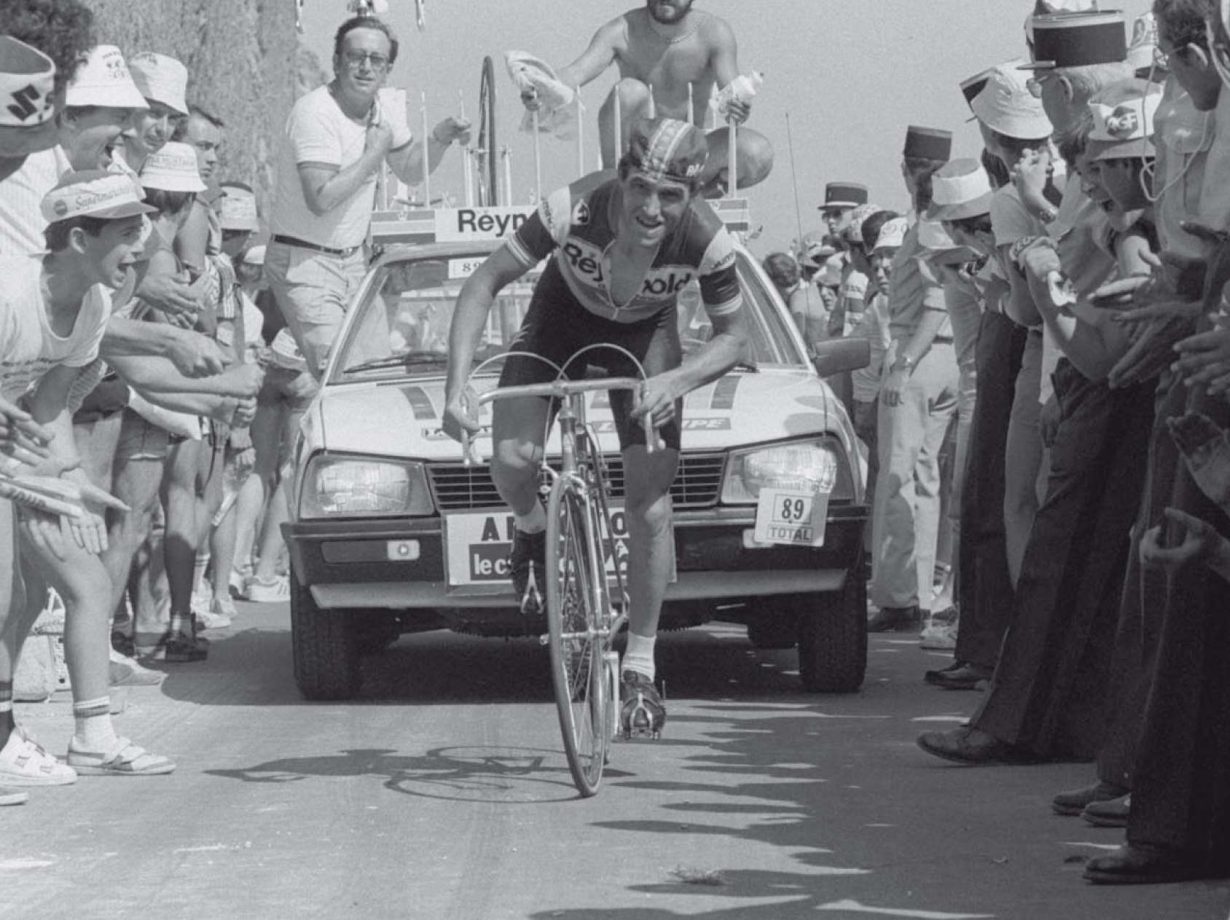
“After that, everything moved very quickly,” says Paco Rodrigo. That same year, 1983, Etxeondo sponsored its first pro riders and was worn on the podiums of both the Giro and the Tour. “We’d been printing T-shirts in our farmhouse, supplying the amateur Orbea-Danena team — and suddenly we were in the front row of world cycling. Sometimes events overtook us. We had more success than we had any right to expect, and from our small workshop we had to attend trade fairs across Europe and set new standards. But I didn’t feel daunted — I felt energised. Zor and Reynolds gave us huge exposure. We sold a lot. We were making more money and I could see the brand also earning prestige, proving we could compete. Just look at the riders we had: Alberto Fernández, Chozas, Pino, Gorospe, Arroyo, Delgado… It was a generation that had shed its inferiority complex. So did we.”

Pedro Delgado was 23 at the time. He rode his first Tour and dazzled with three second places in mountain stages. Delgado even briefly threatened Fignon’s yellow jersey before cracking in the final week.

“We went to the Tour because José Miguel Echávarri insisted,” he says. “Spanish teams hardly raced abroad — there were races year-round at home, so they didn’t feel the need. Echávarri was young and ambitious. He applied for a place in the Tour, and off we went — full of insecurities. The first stages were ridden at crazy speed; we were petrified. Every time there was a crash, the peloton would shout at the Spaniards and Colombians: ‘You don’t know how to ride!’ We were second-rate cyclists. In that first week, just getting to the finish felt like a victory. Then the mountains changed everything. Arroyo won the Puy-de-Dôme time trial, I was second, and that evening in the hotel Peter Post, the director of the mighty Dutch Ti-Raleigh team, came over to congratulate us. I didn’t think much of it. But Echávarri said: ‘Do you realize who just congratulated you? We’ve earned the peloton’s respect.’”

Delgado suddenly found himself fighting to win the Tour.

“Our mentality changed quickly. Until then we felt we were racing with a handicap— the French, Belgians and Dutch had better bikes, better clothing, more professional teams. In reality the gap wasn’t that big, but we carried that complex with us. We got rid of it fast.”

One of the advances Delgado remembers was in clothing.

“Etxeondo arrived and, finally, we had a jersey instead of a blanket,” he laughs.

Until then they had worn coarse wool jerseys, poorly fitted, hot in summer and heavy in the rain. Lycra transformed performance apparel.

“Paco was meticulous. He’d prepare a lighter jersey for hot days and a thicker one for cold days. That was new. We were the envy of the peloton: shiny Lycra shorts, tight time-trial skinsuits, headbands to keep sweat out of your eyes… Our clothes were like second skins.”

Delgado remembers how often Paco would badger the riders for their feedback.

“In those first Lycra shorts, for example, the chamois would crack and come unstitched almost immediately. We’d say, ‘Come on, Paco — this is a disaster!’ And he would work until he solved it. He was always obsessed with improving. We were all young — the directors, the riders, the clothing guy. We learned together.”

“We grew together, yes,” Paco Rodrigo confirms. “Trial and error. Changing machines. That’s how we learned. There were no digital technologies, no biomechanical studies, nothing so precise. Our work had something romantic about it — intuition, creativity, the craftsman’s touch. I loved that. I put in a huge number of hours. The good thing is I always had bold people around me. They inspired me. Peli Egaña and Patxi Alkorta, who founded the Orbea team, pushed me hard. They demanded that we compete with the best.”

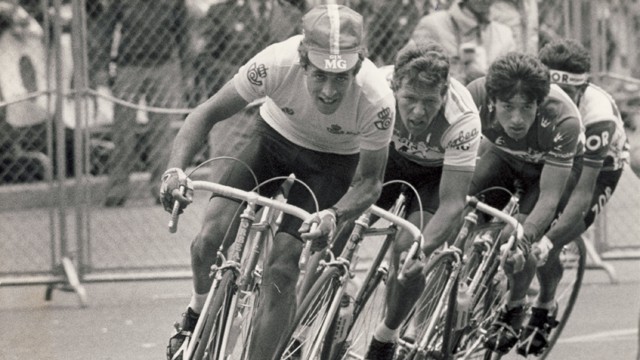
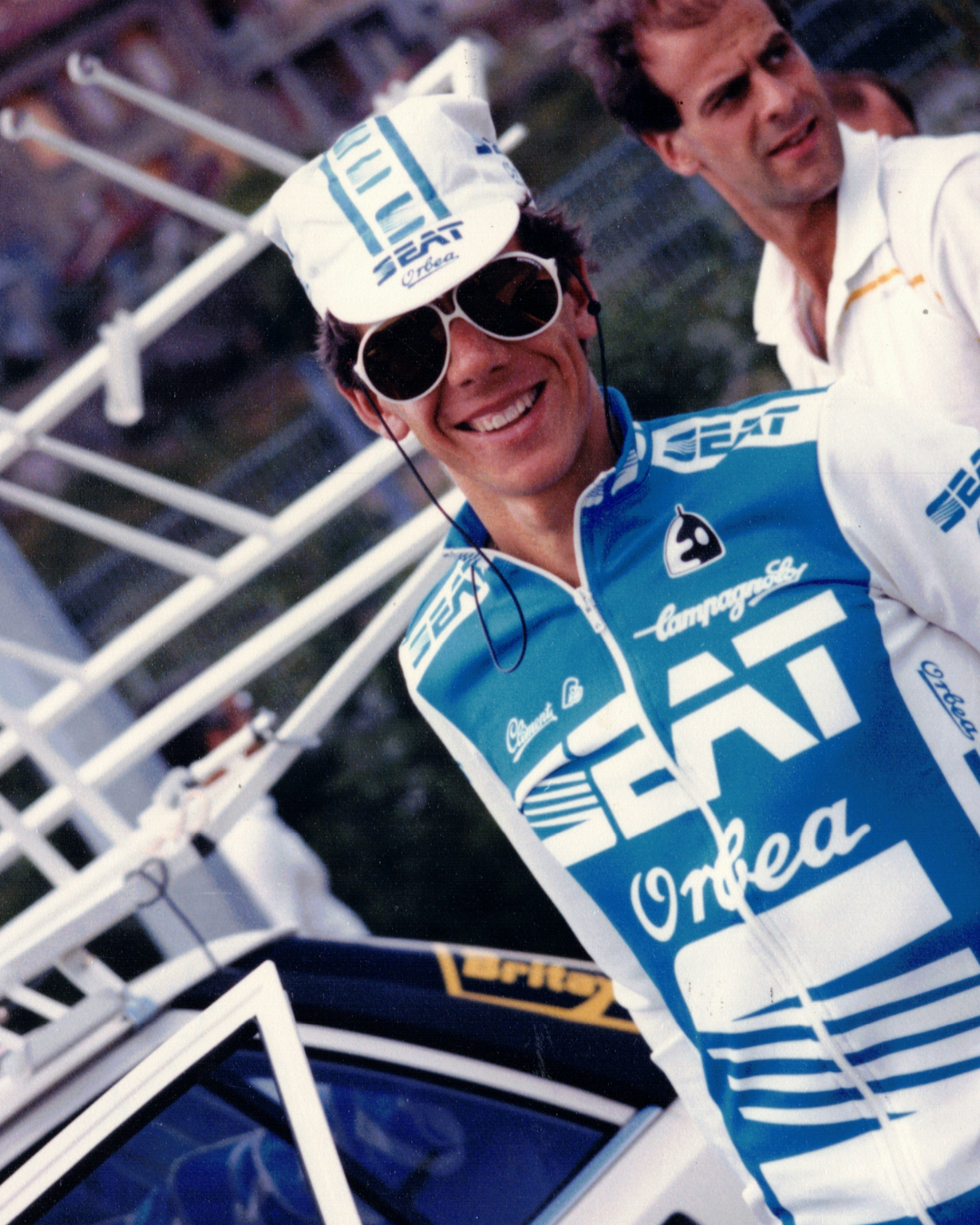
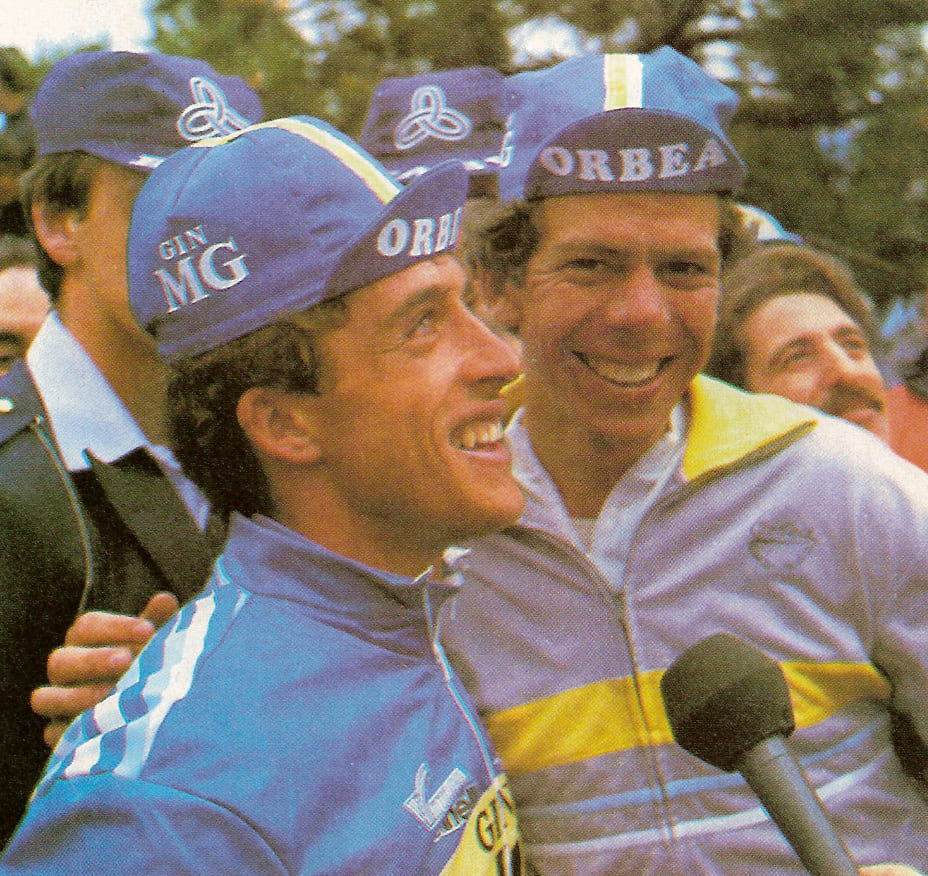
The Orbea amateur team, led by youngsters like Pello Ruiz Cabestany and Jokin Mujika, turned professional en bloc in 1984. Etxeondo had supplied their kit for five years and joined them in their graduation to the international peloton.

They hired Txomin Perurena as sporting director.

“Txomin knew every trick in the book,” Rodrigo says. “Sometimes we’d meet important people — sponsors, company bosses — and when we arrived he’d stand behind me and gently nudge me forward: ‘Come on, Navarro, step up.’ He wanted them to know me, to hear me talk about Etxeondo.”

One day they went to a trade fair.

“In Milan,” says Perurena.

“Yes, Milan. We went to see fabrics, then to a factory. We met the textile engineers, who asked us what we were looking for. I said: ‘Elastomers.’”

Perurena laughs. “I was impressed. Bloody hell, Paco — elastomers!”

“Of course. You probably thought, ‘Where’s this hillbilly from Navarra going with this?’ And then you saw I could talk with the engineers in Milan in their own language.”

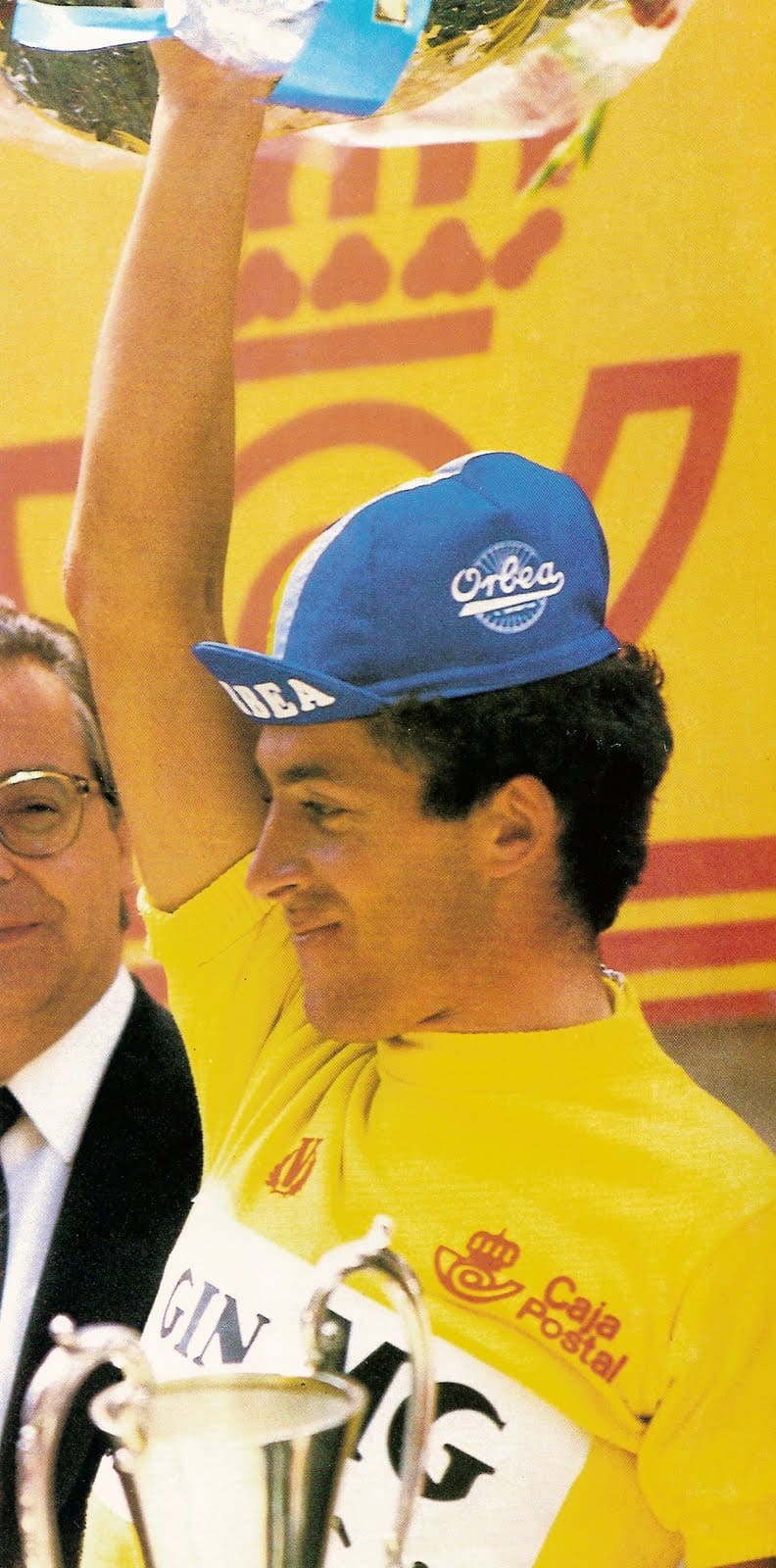
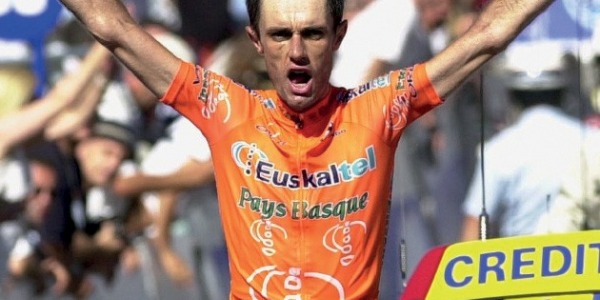
Orbea was growing fast. Cabestany won the 1985 Tour of the Basque Country, causing an explosion of local pride: the hometown boy, on the hometown team, in hometown clothing, winning the hometown race against stars like LeMond, Kelly and Delgado. That same year Cabestany wore the yellow jersey for several days at the Vuelta and won a stage; the following season he took a stage in the Tour. Sponsorship from Gin MG, Seat and later Caja Rural allowed signings such as Delgado, who in 1985 crowned a legendary Orbea day in Luz Ardiden.

Rodrigo traveled in the team cars during that Tour as a sort of odd-job-man. One day in the week of San Fermín, when the race was heading towards the Pyrenees, Colombian journalists from Radio Caracol leaned through the team car window for an interview.

“We’re live with Don Domingo Perurena, legendary cyclist, director of Team Orbea…”

Perurena answered a couple of questions, then changed the subject.

“In the car with us is Paco Rodrigo, ‘the Nightingale of the Bardenas,’ a great jota (folk song) singer from Navarra. Paco, sing something for our friends in Colombia.”

“Live for you, all of Colombia, the jota singer don Paco Rodrigo!”

Paco bursts out laughing. “I sang that jota about tears…”

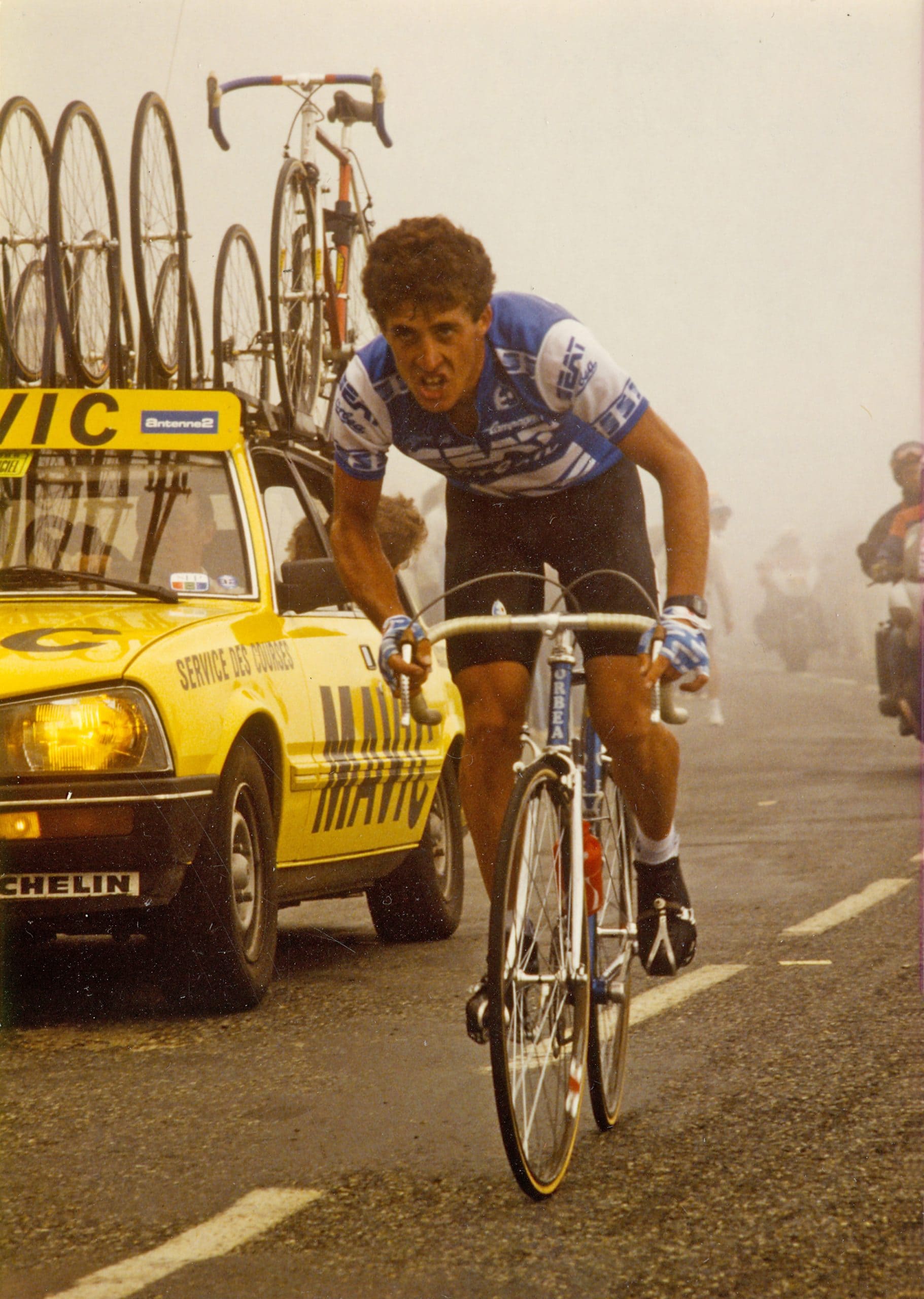
But there were also tense moments in that Tour — notably the Pyrenean stage often remembered as a masterpiece of team tactics. Three major climbs (Aspin, Tourmalet, Luz Ardiden) saw three staggered attacks from Seat-Orbea riders (Del Ramo, Cabestany and Delgado), and victory for Perico.

“Of course we had a strategy,” Perurena says. “We arrived in the Pyrenees with the whole Basque fanbase waiting. The plan was for Jokin Mujika to attack first, but he didn’t have the legs. So Pepe del Ramo went instead, just before the Aspin. He did his job.”

On the descent Ruiz Cabestany attacked. Delgado countered on the Tourmalet and went clear among the favorites. With one Orbea rider up the road and another chasing, the director had a decision to make.

“Tell Peio to wait for Perico,” came the order over the radio.

Cabestany later admitted he thought he could win the stage and cried when he was told to wait. He then emptied himself for Delgado on the slopes of Luz Ardiden before making way for his leader.

“He gave everything,” Perurena recalls.

Behind them, Lucho Herrera attacked and flew up the mountain. Thick fog enveloped Luz Ardiden; there were no television images, no clear time gaps.

“If Herrera had caught Perico, I’d have been out of a job,” Perurena says. “No wonder Peio still has a bee in his bonnet about that stage — he might have won it. We’ll never know. But I made the decision, and it worked.”


¿TE HA GUSTADO?

Suscríbete para no perderte ninguno de nuestros artículos aquí

TAMBIÉN TE PUEDE INTERESAR

Guía de cómo vestir este Otoño-Invierno 24/25 ROOTS AT HOME, BRANCHES OPEN TO THE WORLD
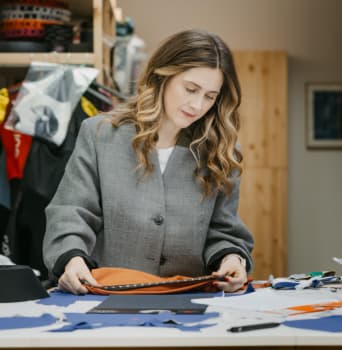
While expanding internationally, Etxeondo also took care to maintain and nourish its deep roots in its home region, supporting the growth of teams such as Kern Pharma and the new Euskaltel-Euskadi. In 2026 the company celebrates its fiftieth anniversary while ushering in a new phase in the company’s history and renewing its commitment to sustainable growth, a strong historical identity and the enduring quality of its cycling kit.  

Mehr
Guía de cómo vestir este Otoño-Invierno 24/25 The Evolution of Excellence: Etxeondo’s New Spring/Summer Collection

Every new Etxeondo collection is the result of a meticulous process, where tradition and innovation converge in perfect harmony.

Mehr
Guía de cómo vestir este Otoño-Invierno 24/25 Alde Metalic, Design und Leistung vereint in einem Trikot.

Jede Linie, jede Kurve, fügt sich nahtlos in die städtische Landschaft ein und wird zu einem integralen Bestandteil der Umgebung, die durch Technologie und Design neu definiert wurde.

Mehr
VOLVER A LA MAGAZINE

Comments (0)

No comments at this moment
Zum Vergleich hinzugefügt
Es können keine weiteren Produkte verglichen werden.