“We grew together, yes,” Paco Rodrigo confirms. “Trial and error. Changing machines. That’s how we learned. There were no digital technologies, no biomechanical studies, nothing so precise. Our work had something romantic about it — intuition, creativity, the craftsman’s touch. I loved that. I put in a huge number of hours. The good thing is I always had bold people around me. They inspired me. Peli Egaña and Patxi Alkorta, who founded the Orbea team, pushed me hard. They demanded that we compete with the best.”
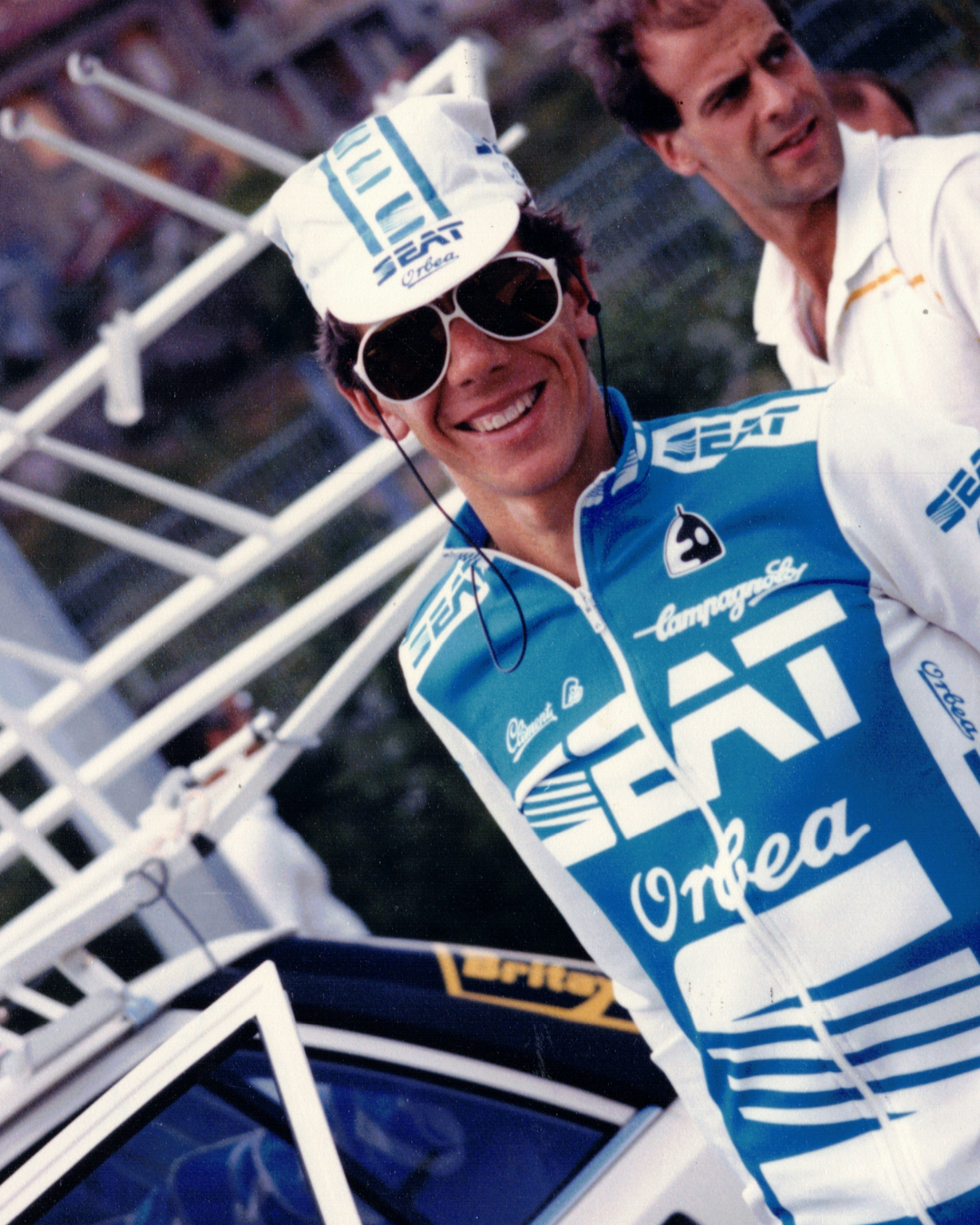
The Orbea amateur team, led by youngsters like Pello Ruiz Cabestany and Jokin Mujika, turned professional en bloc in 1984. Etxeondo had supplied their kit for five years and joined them in their graduation to the international peloton.
They hired Txomin Perurena as sporting director.
“Txomin knew every trick in the book,” Rodrigo says. “Sometimes we’d meet important people — sponsors, company bosses — and when we arrived he’d stand behind me and gently nudge me forward: ‘Come on, Navarro, step up.’ He wanted them to know me, to hear me talk about Etxeondo.”
One day they went to a trade fair.
“In Milan,” says Perurena.
“Yes, Milan. We went to see fabrics, then to a factory. We met the textile engineers, who asked us what we were looking for. I said: ‘Elastomers.’”
Perurena laughs. “I was impressed. Bloody hell, Paco — elastomers!”
“Of course. You probably thought, ‘Where’s this hillbilly from Navarra going with this?’ And then you saw I could talk with the engineers in Milan in their own language.”
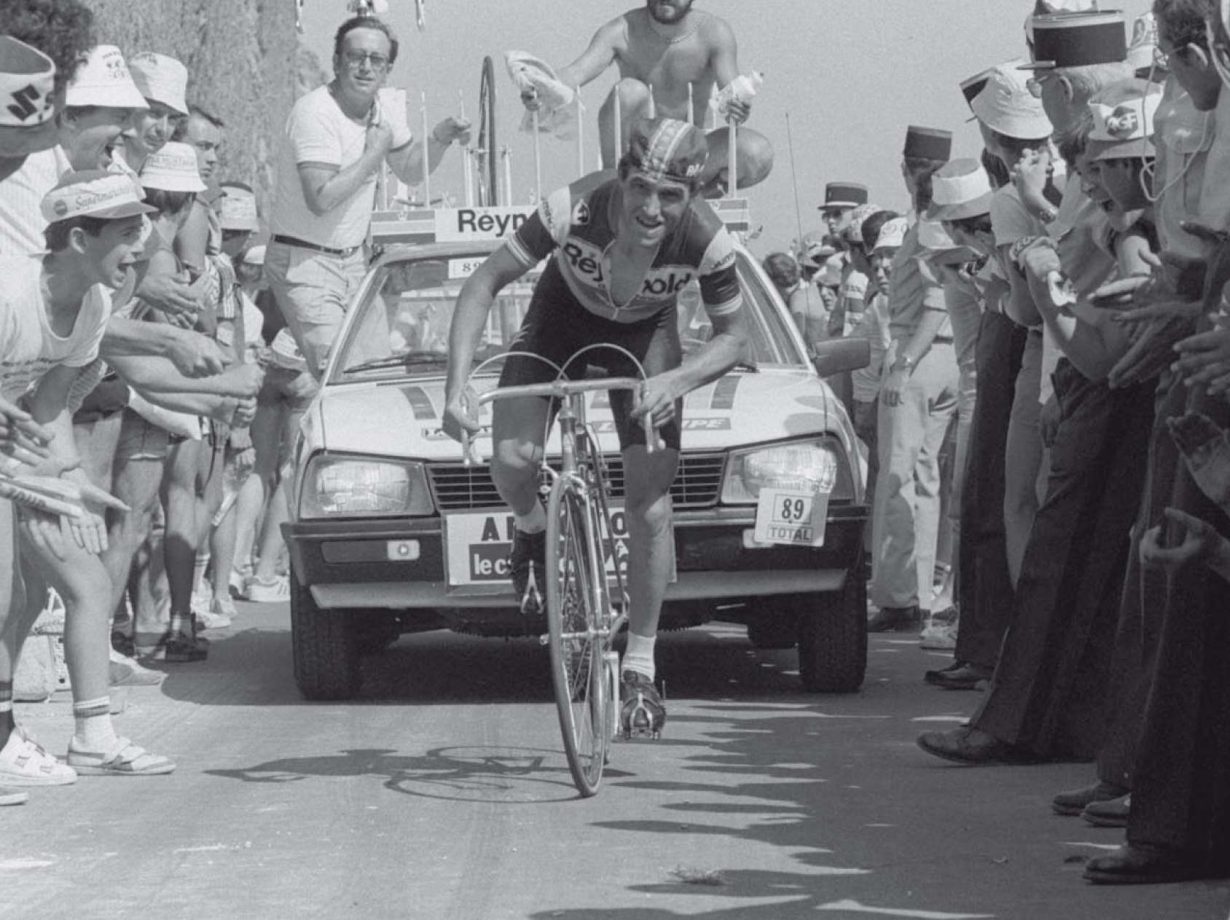
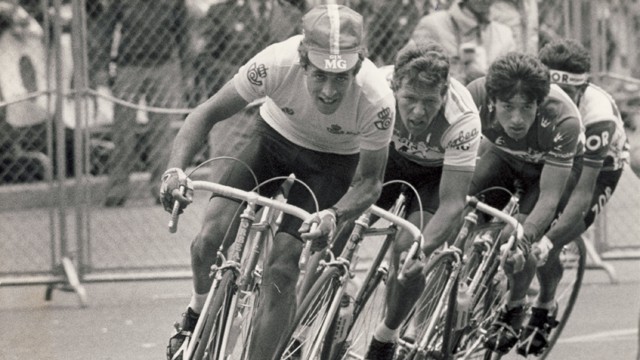
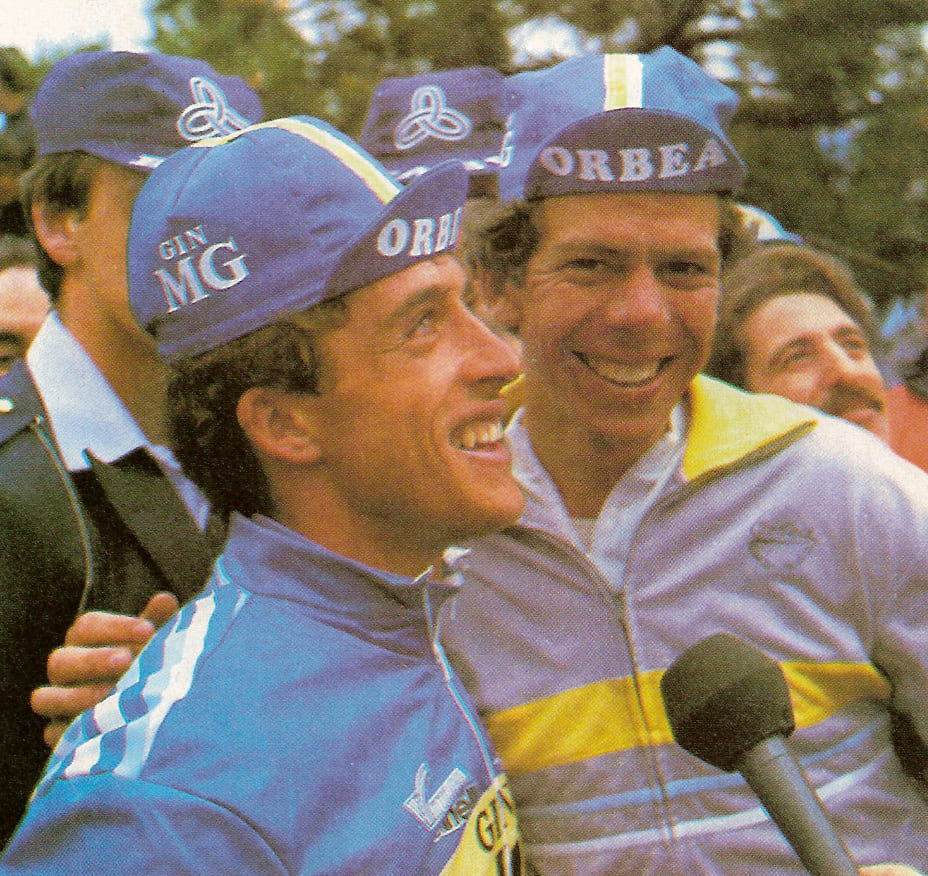
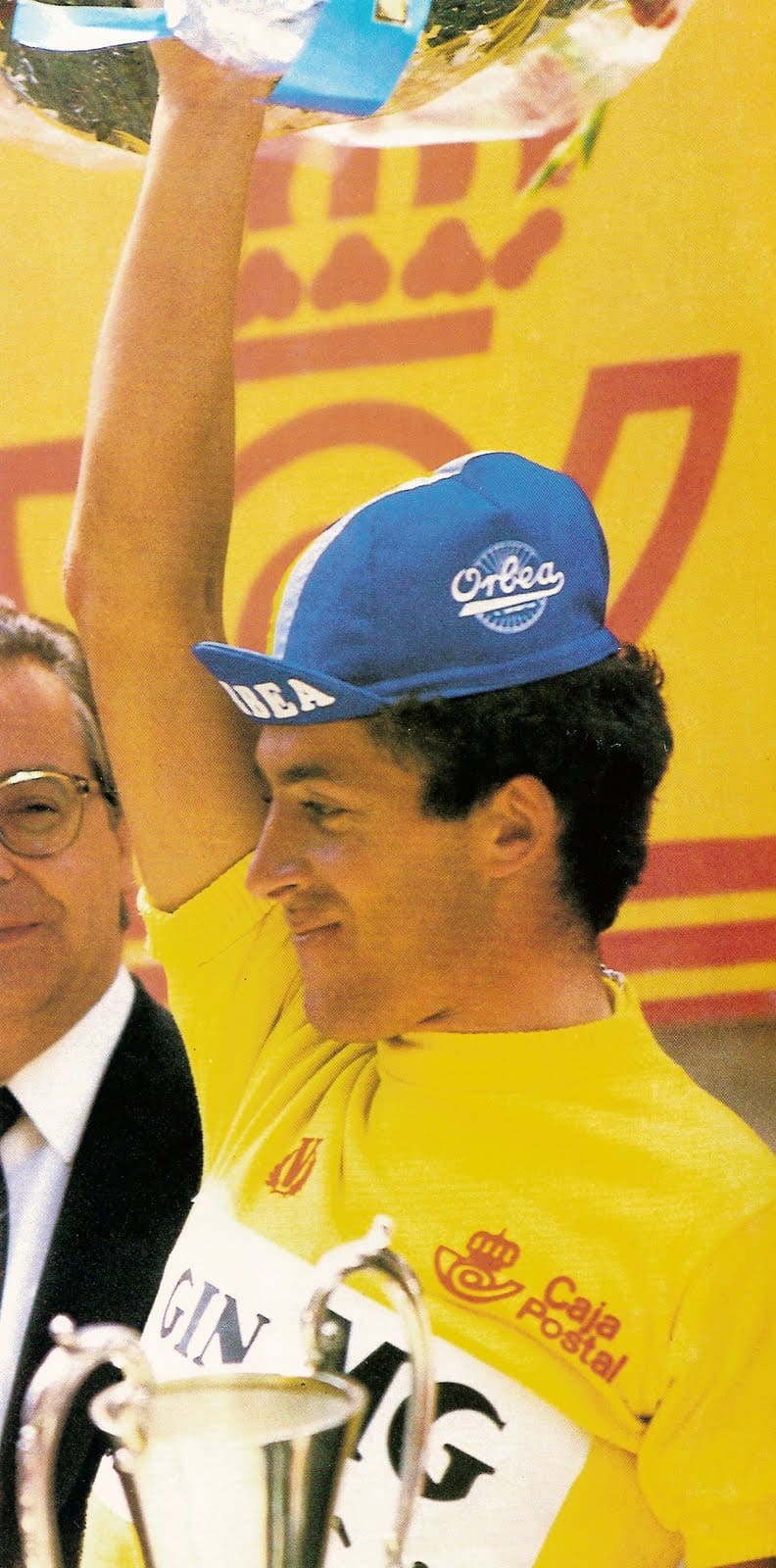
Orbea was growing fast. Cabestany won the 1985 Tour of the Basque Country, causing an explosion of local pride: the hometown boy, on the hometown team, in hometown clothing, winning the hometown race against stars like LeMond, Kelly and Delgado. That same year Cabestany wore the yellow jersey for several days at the Vuelta and won a stage; the following season he took a stage in the Tour. Sponsorship from Gin MG, Seat and later Caja Rural allowed signings such as Delgado, who in 1985 crowned a legendary Orbea day in Luz Ardiden.
Rodrigo traveled in the team cars during that Tour as a sort of odd-job-man. One day in the week of San Fermín, when the race was heading towards the Pyrenees, Colombian journalists from Radio Caracol leaned through the team car window for an interview.
“We’re live with Don Domingo Perurena, legendary cyclist, director of Team Orbea…”
Perurena answered a couple of questions, then changed the subject.
“In the car with us is Paco Rodrigo, ‘the Nightingale of the Bardenas,’ a great jota (folk song) singer from Navarra. Paco, sing something for our friends in Colombia.”
“Live for you, all of Colombia, the jota singer don Paco Rodrigo!”
Paco bursts out laughing. “I sang that jota about tears…”
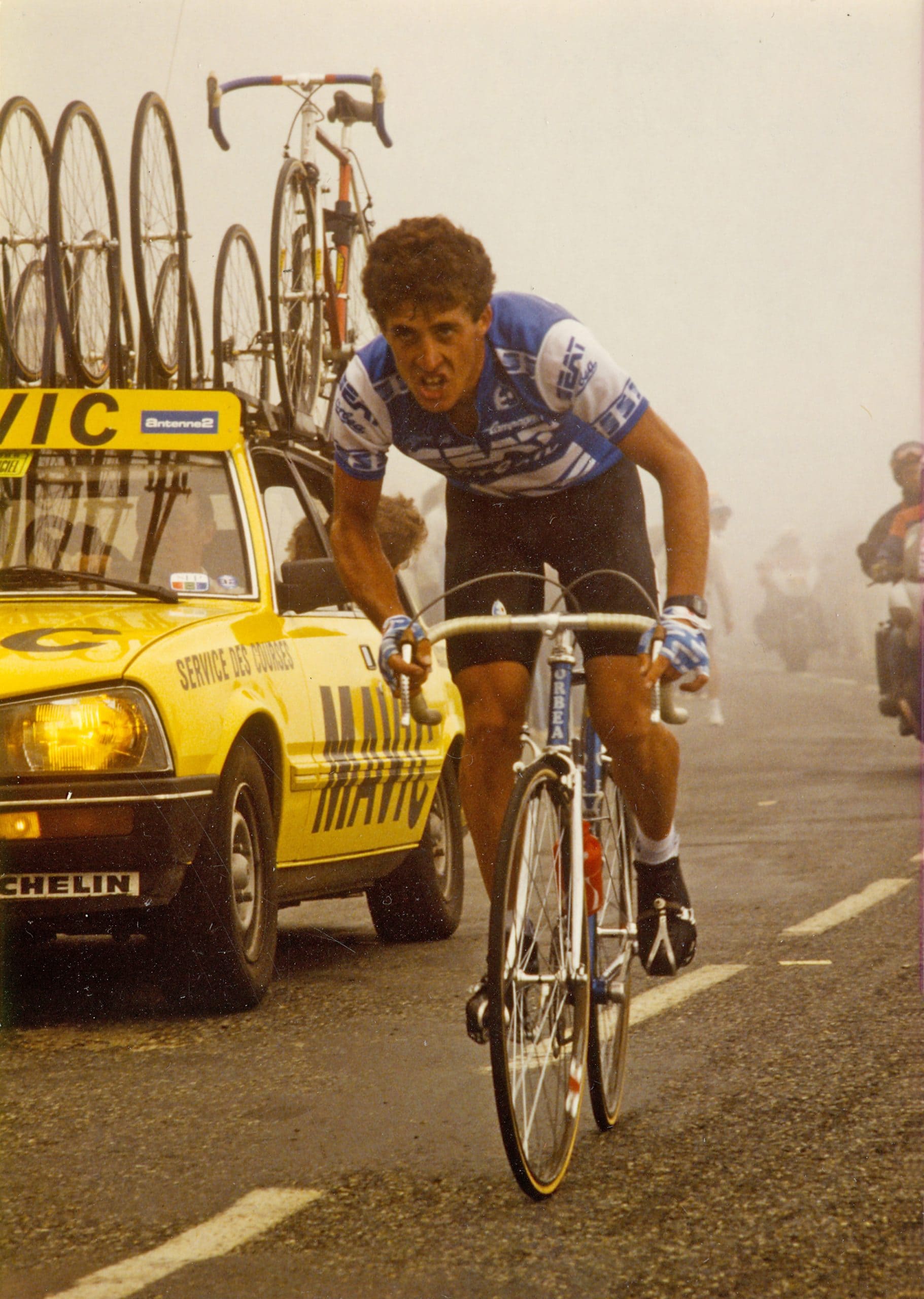
But there were also tense moments in that Tour — notably the Pyrenean stage often remembered as a masterpiece of team tactics. Three major climbs (Aspin, Tourmalet, Luz Ardiden) saw three staggered attacks from Seat-Orbea riders (Del Ramo, Cabestany and Delgado), and victory for Perico.
“Of course we had a strategy,” Perurena says. “We arrived in the Pyrenees with the whole Basque fanbase waiting. The plan was for Jokin Mujika to attack first, but he didn’t have the legs. So Pepe del Ramo went instead, just before the Aspin. He did his job.”
On the descent Ruiz Cabestany attacked. Delgado countered on the Tourmalet and went clear among the favorites. With one Orbea rider up the road and another chasing, the director had a decision to make.
“Tell Peio to wait for Perico,” came the order over the radio.
Cabestany later admitted he thought he could win the stage and cried when he was told to wait. He then emptied himself for Delgado on the slopes of Luz Ardiden before making way for his leader.
“He gave everything,” Perurena recalls.
Behind them, Lucho Herrera attacked and flew up the mountain. Thick fog enveloped Luz Ardiden; there were no television images, no clear time gaps.
“If Herrera had caught Perico, I’d have been out of a job,” Perurena says. “No wonder Peio still has a bee in his bonnet about that stage — he might have won it. We’ll never know. But I made the decision, and it worked.”




.jpg)
.jpeg)
.png)
 ROOTS AT HOME, BRANCHES OPEN TO THE WORLD
 The Evolution of Excellence: Etxeondo’s New Spring/Summer Collection
 Alde Metalic, Design und Leistung vereint in einem Trikot.


Comments (0)